Get Full Government Meeting Transcripts, Videos, & Alerts Forever!
Get email alerts on the Land Conveyance topic
No spam. Unsubscribe anytime.
Board accepts 160-acre Monroe Bridge tract, approves canoe-and-kayak public launch
Summary
The Southampton County Board of Supervisors unanimously approved accepting a 160-acre conveyance for the Monroe Bridge tract and the deed of dedication of open-space land to create a public canoe and kayak launch; the landowners sold the parcel to the county at a substantial discount and Jamie Craig said the project would cost the county nothing up front.
The Southampton County Board of Supervisors on a unanimous voice vote accepted a conveyance of 160 acres known as the Monroe Bridge tract and approved a deed of dedication to preserve the property as public open space with a canoe-and-kayak launch.
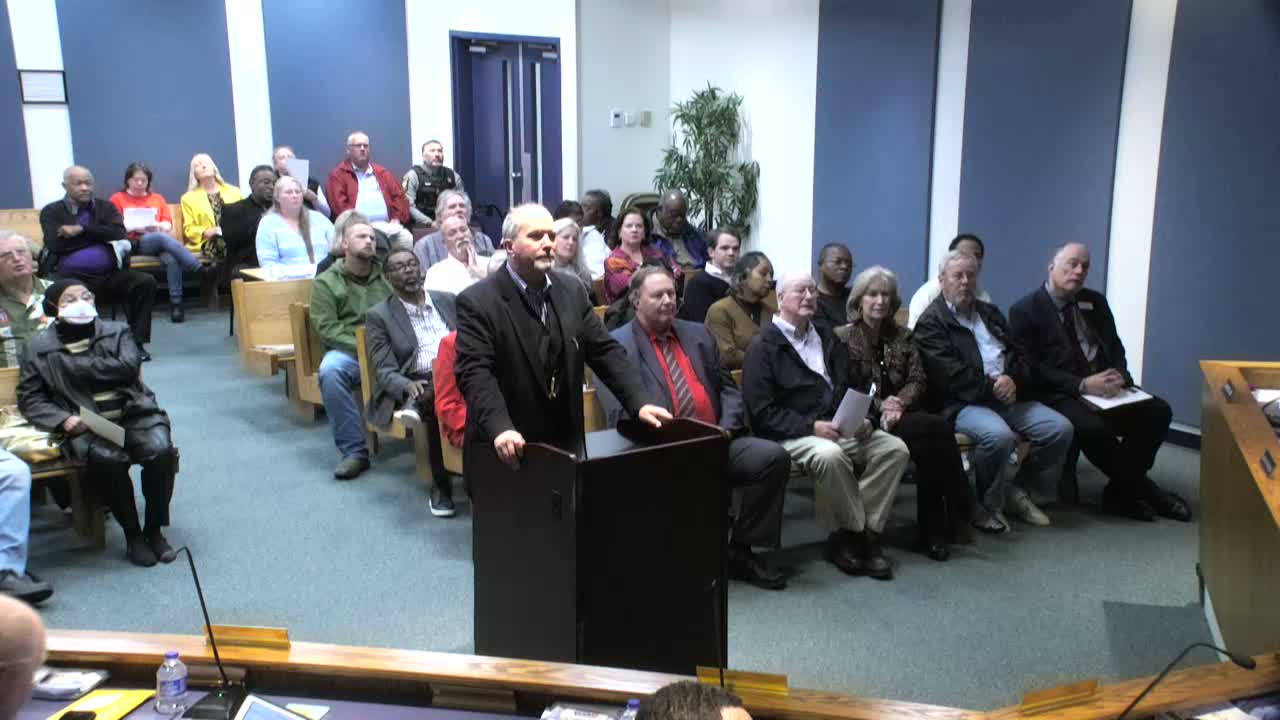
Jamie Craig, the project principal, told the board he had written the grants to buy the land and to build the canoe ramp and said the acquisition would “cost you exactly 0.” He said the Monroe Bridge tract will provide a public-access water trail roughly five miles downstream from the Hercules boat ramp and will be operated with conservation protections, including a deed restriction that the property remain a single parcel in perpetuity.
Craig described design details intended to limit unauthorized vehicle launches — bollards and a keyed gate — and said he had worked with a wetlands attorney to certify the project would comply with permitting requirements. Supervisors and the public also heard that the Virginia Outdoors Foundation will hold the conservation easement.
Supervisor [mover] made the motion to accept the conveyance and approve the deed of dedication; the motion was seconded by another board member and approved by voice vote. The board record shows the motion language named the property (tax map number 105-11 along the Nottoway River) and authorized acceptance of the conveyance and the deed of dedication as presented.
Next steps discussed included finalizing the deed language, confirming ongoing management responsibilities, and implementing a county management plan before public access is widely advertised. Craig asked residents to contact him for project follow-up and noted that, pending management decisions, gates may remain locked through winter.
The board’s action preserves wetlands, creates a new public-recreation access point for canoeists and kayakers and places the tract under a permanent conservation commitment.