Lifetime Citizen Portal Access — AI Briefings, Alerts & Unlimited Follows
York County supervisors warn state housing bills could curtail local land-use control; ask staff to study development impact fee
Loading...
Summary
Supervisors debated proposed state bills (referenced as HB804/HB816/SB488) and concluded the measures could reduce local control over rezoning and outcomes; the board asked staff to return with an analysis and a potential development-impact fee for high-density housing.
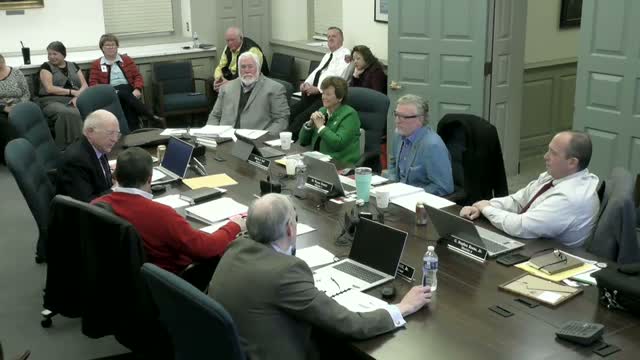
At a Feb. 3 York County Board of Supervisors work session, board members voiced strong concerns that recent state housing legislation under consideration could significantly limit local land-use authority and create fiscal burdens for counties.
A committee member raised the bills (referred to in the meeting as HB804, SB488 and HB816), saying the measures would allow higher-density residential conversions of commercial and industrial land and shift some approval authority away from locally elected supervisors. "It takes it completely away from all of us," the member said, arguing the change could permit by-right development that the county would not be able to condition with proffers.
Board members warned that increased density without offsetting infrastructure funding would force counties to pay for schools, fire stations and public safety. The speaker estimated the cost of an elementary school at $50–$80 million and argued that expanded high-density housing could generate hundreds more students and require new capital investments.
As a local response, the chair asked staff to study a development-impact fee targeted to high-density housing to recover infrastructure costs for schools, fire, courts and other county services. "I would propose that we have staff look at adding a development impact fee into our building regulations," the chair said, asking staff to return with a recommendation.
No formal resolution was adopted. The board’s request instructs staff to analyze likely infrastructure costs tied to high-density projects, propose fee structures that could be applied to multifamily/high-density developments, and return with a policy recommendation for the board’s consideration.
Board discussion noted that delegates and senators in Richmond are advancing the bills and that local staff and elected officials would need to evaluate mitigation options and fiscal tools.
The board did not take legislative action but directed staff to prepare an impact analysis and options regarding developer fees and other fiscal mitigations.