Get Full Government Meeting Transcripts, Videos, & Alerts Forever!
Get email alerts on the Reserve Policy topic
No spam. Unsubscribe anytime.
Council debates 25%–50% reserve range, trade-offs between cuts and new revenue
Summary
Councilors parsed what a 25% reserve floor and a 50% ceiling would mean, disagreed about whether above-floor funds should be 'discretionary' or reallocated to capital, and weighed expense cuts (freeze FTEs, reduce community grants) against tax options.
Councilors spent substantial time clarifying what a 25% reserve floor and a proposed 50% ceiling concept would mean in practice and how "discretionary" funds should be defined and used. Several members urged clear guardrails so future councils would not be "set up for failure," asking staff to draft language and operational definitions rather than rely on loose terminology.
A finance staff speaker offered historical context: the reserve peaked during the COVID period and is seasonally variable; staff estimated current dollar reserves roughly in the $15–18 million range and noted investment returns had been approximately 4% recently. Sinclair underscored that reserves function as both a cash float and an emergency fund and suggested that if reserves exceeded the top of a range, the council could transfer money to capital funds or other earmarked accounts.
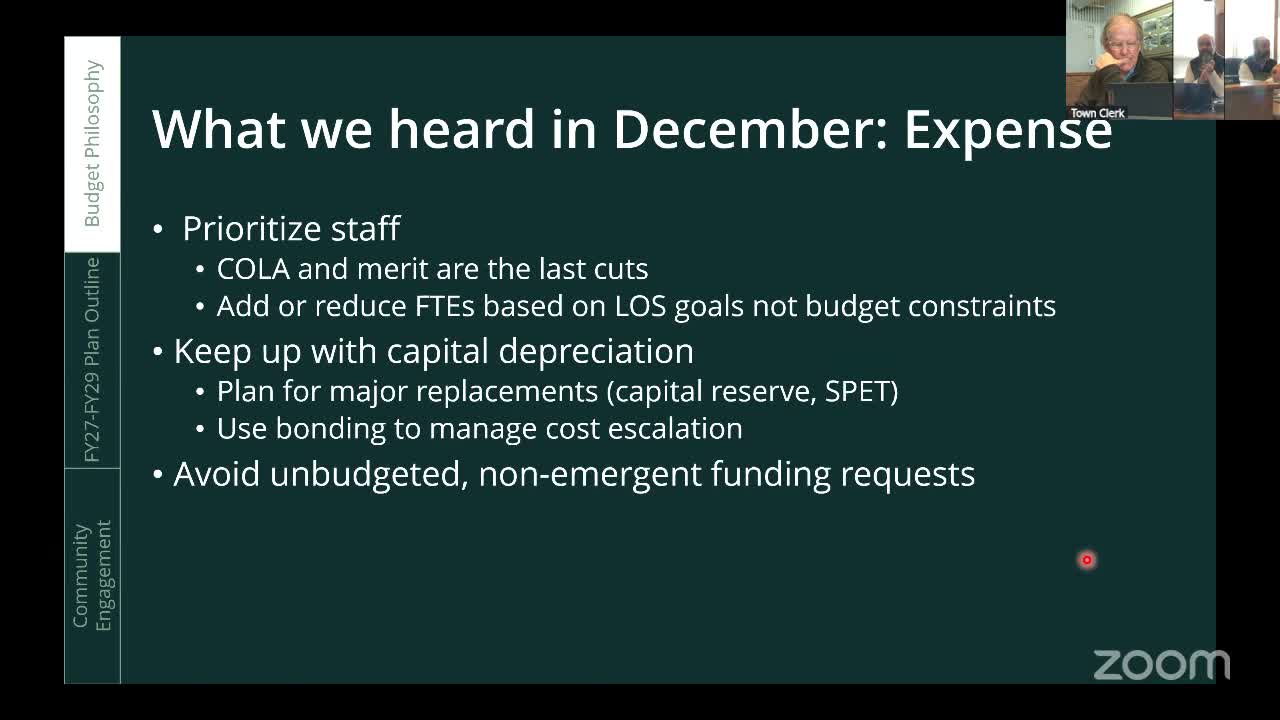
Council views split on remedies: some councilors argued raising property tax or lodging tax now would be politically risky and favored focusing on expense reductions (freeze FTE growth, pause new programs, reduce capital transfers short-term). One councilor described the political message of austerity — "we're doing everything we can, we've tightened our belt" — as a way to demonstrate discipline before asking voters for new revenue. Others cautioned that cutting community health and human services funding would reduce services for vulnerable residents and urged careful impact assessments.
Operational questions flagged for staff: define how the reserve percentage is computed (point-in-time vs. annual average), quantify how many months of operations a given reserve would fund under various revenue shortfalls, and produce a menu of combinations (e.g., partial capital-transfer reduction plus modest revenue options) that meet the balanced-budget Goal B without large drop-offs in service.
Quote and attribution: "The 25% is essentially untouchable unless there's a crisis," Sinclair said, framing the floor as an emergency threshold. On trade-offs he added: "If you approach 50, start to have a conversation about whether you want to move money out of here into something else or buy something else or do something different with it."
Next steps: Staff will return with a draft reserve policy and clearer definitions in the budget-philosophy document, include concrete dollar magnitudes for each proposed tool, and identify which funds could be segregated to fund capital projects rather than remain in a single general reserve.