
MSD Southwest Allen County Schools board hears year‑one progress on academic pillar; CTE center planned for 2028
Get AI-powered insights, summaries, and transcripts
Subscribe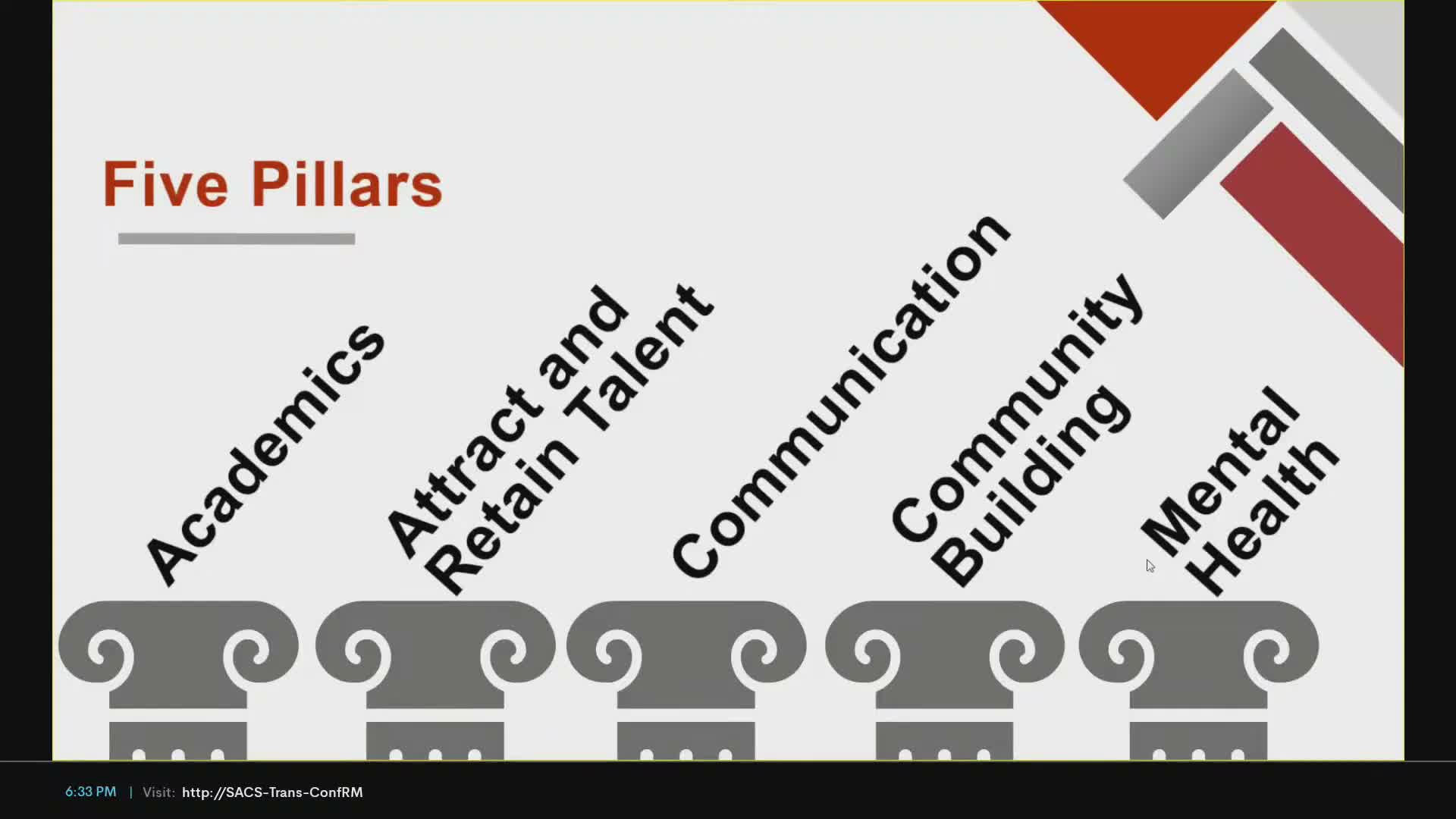
Summary
Superintendent Dr. Saint John and district staff presented year‑one progress on the academic pillar of the strategic plan, including elementary signature program exploration, curriculum adoptions, technology/AI guidelines, expansion of CTE pathways and a proposed CTE center with a tentative 2028 opening.
District leadership told the MSD Southwest Allen County Schools board that year one of the district strategic plan has focused on alignment and initial implementation of the academic pillar, with five explicit strategies: differentiation and choice; purposeful technology and consistent instruction; experiential learning and CTE expansion; family engagement; and formal curricular material adoption. Dr. Saint John framed the work as moving "from vision to implementation."
Administrators described three elementary signature programs in an exploration phase: Covington Elementary (STEM), Whispering Meadows Elementary (a one‑way Spanish dual‑language immersion option) and Lafayette Meadows (leadership and service learning, pursuing a Leader in Me curriculum). Covington interim principal Jessica Harris and Whispering Meadows principal Nicole Veidt summarized early visits, committee work and professional development steps aimed at ensuring capacity and fit for each school.
The district highlighted the Spartan Success Center (an alternative learning program for grades 6–12), reporting 245 students served, 514 high‑school credits earned and seven diplomas awarded since the program began. Leaders said the center has offered instruction across dozens of unique courses and provides a flexible model to support students.
On CTE, staff outlined plans for a career and technical education center targeted to open in 2028, with schematic design underway and a tentative November groundbreaking; the district plans to expand pathways from 12 to about 26 in high‑demand fields. District staff reported partnerships with local institutions (Ivy Tech, Purdue Fort Wayne) and potential grant opportunities (including a NASA grant for aerospace engineering) to add pathways before the building opens.
Instructional leaders noted recent curricular adoptions already in use: Envision mathematics, Twig Science (K–5), and the Amplify ELA adoption for K–8 literacy. The district is implementing new iLearn checkpoints and district collaboration days to advance vertical and horizontal alignment. Nicole Barris briefed the board on technology strategy and said the district has developed AI guidelines and professional development funded by a digital learning grant approved last summer. Staff emphasized slowing digital renewals to align tools with instruction and said some instruction may return to more paper‑and‑pencil practices when appropriate.
Board members praised the work and asked for continued reporting; the presentation closed with staff noting year two will focus on refinement and year three on acceleration. The district did not seek a board vote on these strategic initiatives at the March meeting; several items (signature‑program explorations, CTE planning and curricular adoptions) will continue through implementation phases and future board agenda items.