Get Full Government Meeting Transcripts, Videos, & Alerts Forever!
Get email alerts on the Public Safety Surveillance topic
No spam. Unsubscribe anytime.
Speakers urge Huntsville council to end cooperation with ICE and to review city surveillance agreements
Summary
During a lengthy public‑comment period residents and advocacy groups pressed the council to terminate partnerships with ICE and reexamine the city's use of private surveillance camera vendors; speakers cited concerns about detention conditions, local law‑enforcement cooperation with federal immigration agencies, and opaque contracts for camera systems.
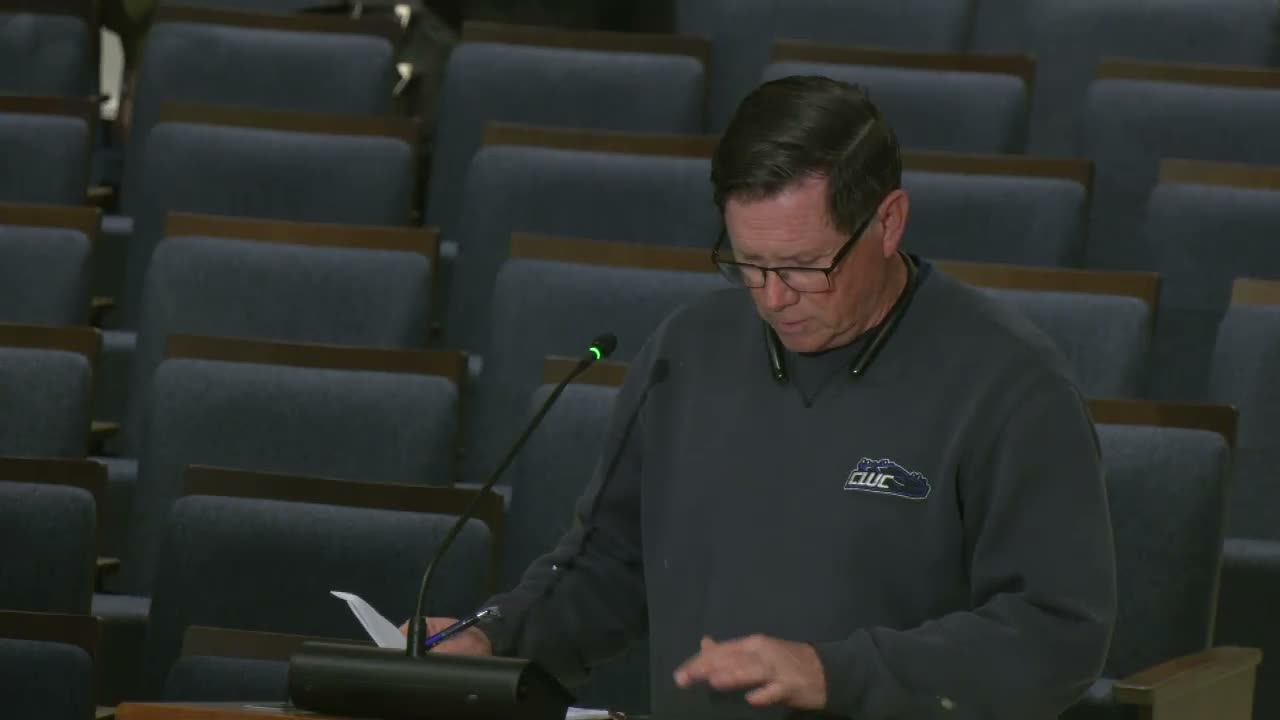
A series of public speakers on Feb. 26 pressed the Huntsville City Council to end local cooperation with U.S. Immigration and Customs Enforcement (ICE) and to reconsider city surveillance contracts and camera networks.
Jacob Morrison, president of the North Alabama Area Labor Council, urged the council to use its appointing authority over the hospital board to press Huntsville Hospital for measurable commitments around wages and patient care in light of its planned acquisition of Crestwood. “We would like to see the hospital answer questions before this body and the public in good faith,” Morrison said.
Several speakers then focused on law‑enforcement cooperation with ICE and the city’s surveillance systems. Will Ennis (speaker 29) referenced sworn testimony by a former federal attorney and asked the city to require federal officers operating in Huntsville to sign in with HPD and show evidence of training. “We must have oversight of these officers in this jurisdiction at every step,” he said.
Speakers raised concerns about camera networks and data access. Dr. Marissa Allison (speaker 33) said the city uses hundreds of vendor‑managed cameras (Flock and others) and that outside jurisdictions have found side‑door access and data sharing to federal partners; she urged the city to follow jurisdictions that have deactivated similar systems. David Snyder (speaker 30) described the appearance of short, turret‑style cameras at a local intersection and identified a system called NoTraffic; he asked the council for clarity on placement and use.
Alyssa Ekelberger (speaker 32) and other residents delivered emotional appeals asking the council to cut ties with federal immigration enforcement, citing reports of mistreatment in detention facilities and accusing the city of facilitating removals. Ekelberger said, “We’re not here because we’re bored... Do something.” Several speakers noted they had received a written response from city leaders that said local tax dollars are not used to fund ICE, and they asked for greater transparency about agreements (MOUs) and data‑sharing arrangements that may allow federal access to locally collected information.
City officials did not present a policy response during the public‑comment period; the meeting record shows that the council has existing intergovernmental agreements with various federal partners (the council approved an FBI MOU for a child exploitation task force at this meeting), and speakers called on the council to review MOUs and camera contracts. Advocacy speakers asked the council to place camera‑vendor contracts and any data‑sharing agreements on a future agenda for review and to require HPD to report publicly on partnerships with federal immigration and enforcement agencies.
The meeting record shows no immediate council action on those requests; the council adjourned after the second‑roster public comments and will meet again March 12.