Get Full Government Meeting Transcripts, Videos, & Alerts Forever!
Get email alerts on the Utility Billing topic
No spam. Unsubscribe anytime.
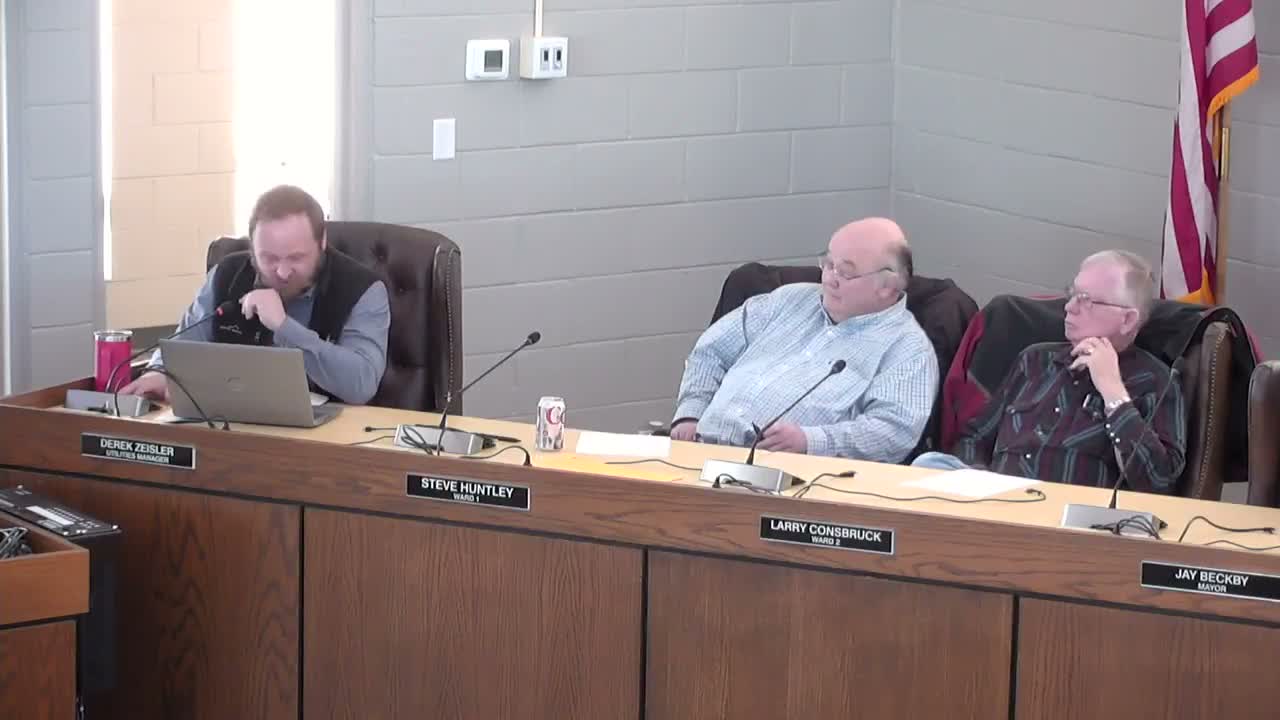
Hastings Utility Board discusses proposed 3% delinquent charge, waivers for assistance agencies
Summary
The board reviewed a proposal to add a 3% delinquent charge on overdue utility bills, heard staff estimates of potential revenue and operational costs, and directed staff to refine implementation details and waiver protocols for agencies that assist customers.
The Hastings Utility Board discussed a proposed 3% delinquent charge on overdue utility bills during its meeting, with staff urging caution about timing and a continued emphasis on waivers for customers working with assistance agencies.
Carl, the utility customer-service lead, told the board the city has eliminated door postings after switching billing software and now reaches customers by text, email and phone. He said the only fee currently added is a $50 charge for customers who are actually disconnected — down from $75 previously — in part because many remote disconnects now can be handled from the office. “That fee has been applied,” Carl said of the post-shutoff charge, noting the city must collect the cost once a shutoff occurs.
On the proposed delinquent charge, Carl presented staff’s analysis and a peer benchmark that showed about a 3% average delinquency fee among comparable utilities. “3% is where we believe that we’re going to propose, when we do come back with an actual proposal to implement the late fees,” he said. Using the city’s average residential bill of just over $200, staff estimated an illustrative $144,000 in revenue if delinquencies did not change, and cautioned that they expect customers’ behavior to change if a fee is adopted. “I don’t expect that the 144,000, dollars in revenue generated from the 3% delinquent charge would necessarily come to fruition,” Carl said.
Board members pressed staff on operational details. One member asked whether applying the fee would require manual calculations; Carl said it would be automated in the billing software and run by established parameters. The presentation also included a staff estimate that sending delinquent notices by mail costs the utility about $0.716 per mailing — a hard cost that drove part of the analysis about recouping expenses.
Members emphasized preserving coordinated assistance with local agencies. Carl said staff works with at least a dozen local organizations, including United Way, Salvation Army and Catholic Social Services, to delay shutoffs when agencies are arranging help; in those cases, staff will often delay disconnection and not impose the shutoff fee. “We will say, we’re going to delay your shut off … and we will allow the service agency time to evaluate the situation,” Carl said.
Derek, who led several portions of the meeting, commended Carl and his team’s outreach to customers and agencies while stressing that the utility is a business that must recover costs. “I really appreciate all the work Carl and his team have put into working with the agencies,” he said, adding the city should aim to cover costs rather than profit from delinquency fees.
Next steps: staff will return with a formal proposal that specifies the fee parameters, the mechanics of waiver and agency coordination, and recommended timing for implementation (options discussed included starting with the new budget year or rolling the fee out midyear).