Get Full Government Meeting Transcripts, Videos, & Alerts Forever!
Get email alerts on the Micro Mobility topic
No spam. Unsubscribe anytime.
Hastings council adopts amended ordinance restricting e-scooters, adds education and diversion measures
Summary
The Hastings City Council unanimously adopted an amended ordinance (No. 4815) limiting lightweight e-scooters, e-bikes and hoverboards on parts of downtown and on certain trails, replacing a fixed speed limit on trails with a 'safe and reasonable' standard and directing education efforts in schools and the community.
The Hastings City Council on a unanimous vote adopted an amended ordinance regulating lightweight e-scooters, e-bikes and hoverboards, restricting where the devices may be ridden downtown and establishing an education-first enforcement approach.
Council voted 8-0 to take the measure to final reading and adopt Ordinance No. 4815 after staff outlined targeted changes to language passed on first reading. Jesse, a city staff presenter, said the amendments add a definition for an 'electric personal assistant mobility device' (motorized mobility aids like powered wheelchairs) and exempt those devices from enforcement provisions. The ordinance specifically bars lightweight e-scooters, e-bikes and hoverboards from operating on 2nd Street between Burlington Avenue and East Minnesota Avenue, although riders may cross that stretch at marked intersections.
The amended ordinance removes a previously proposed fixed 15 mph limit for bike/pedestrian trails and replaces it with a requirement that riders travel at a speed "deemed safe and reasonable," a change staff said was made because the council raised enforcement concerns. Jesse told the council that police were consulted while drafting the changes and that a map showing restricted downtown sidewalks and streets, prepared by GIS, will support outreach.
Members pressed staff about public education. Adam, identified in the meeting as a police-department representative, described an education plan that will include social media, media interviews and outreach in schools; staff and council members discussed recording school presentations for broader access at the public library and on the city website. The mayor proposed diversion-style education for juveniles on repeat offenses instead of permanently impounding or destroying devices; staff said diversion would remain an option for juveniles.
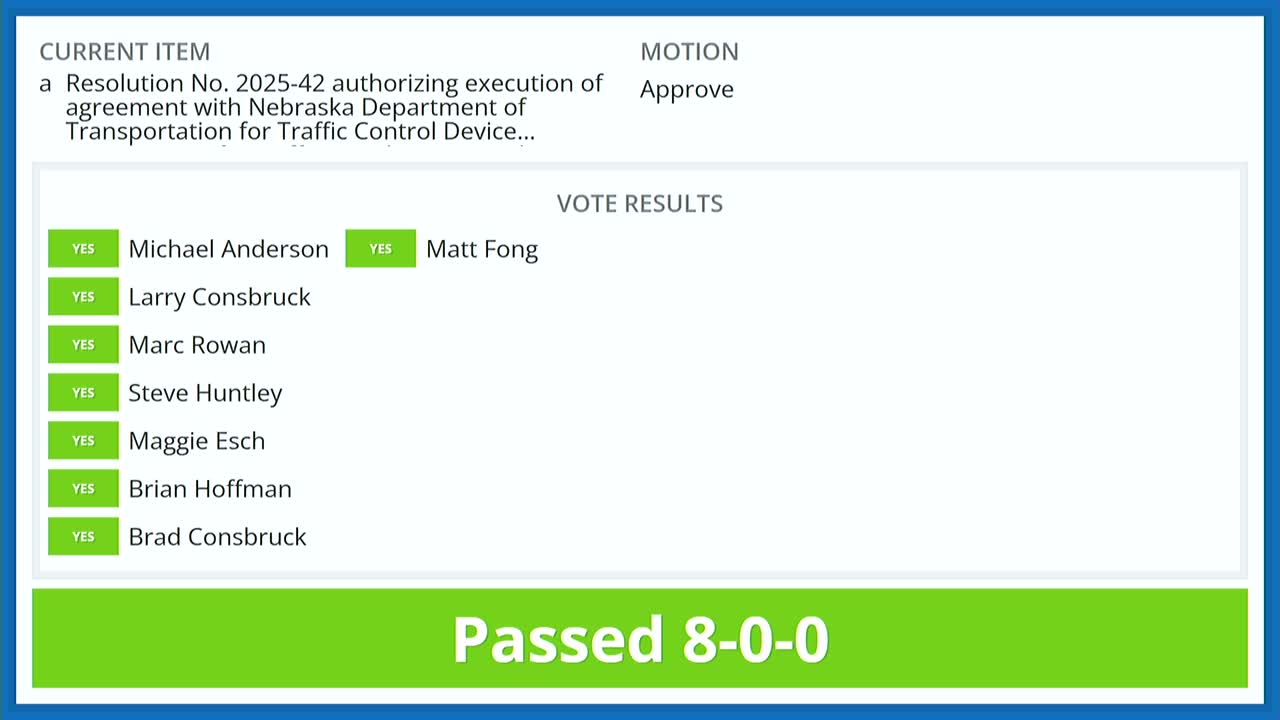
Council Member Hoffman moved to adopt the amended ordinance and Brad Konsbrook seconded. The council voted to suspend the rules for final reading (motion by Fong, second by Huntley) and then approved final adoption, 8-0. The mayor said the ordinance will be enacted 15 days from the meeting date.
Why this matters: The ordinance formalizes where lightweight motorized devices can and cannot be used in the downtown core and shifts enforcement toward education and discretion for juveniles. The city's outreach plans aim to inform residents, visitors and institutions such as Hastings College about the new rules.
What’s next: Staff will distribute the GIS map of restricted areas, roll out school- and library-focused education materials and implement enforcement consistent with the amended ordinance once it becomes effective.