Get Full Government Meeting Transcripts, Videos, & Alerts Forever!
Get email alerts on the Tax Policy topic
No spam. Unsubscribe anytime.
Albany commission adopts county-backed split for flexible local option sales tax after debate on special districts and service delivery
Summary
The Albany City Commission on Feb. 12 adopted a joint-resolution approach (referred to in the meeting as Option 2) for apportioning a proposed flexible local option sales tax ahead of a possible May referendum, with staff to memorialize service‑delivery and reevaluation commitments in an intergovernmental agreement.
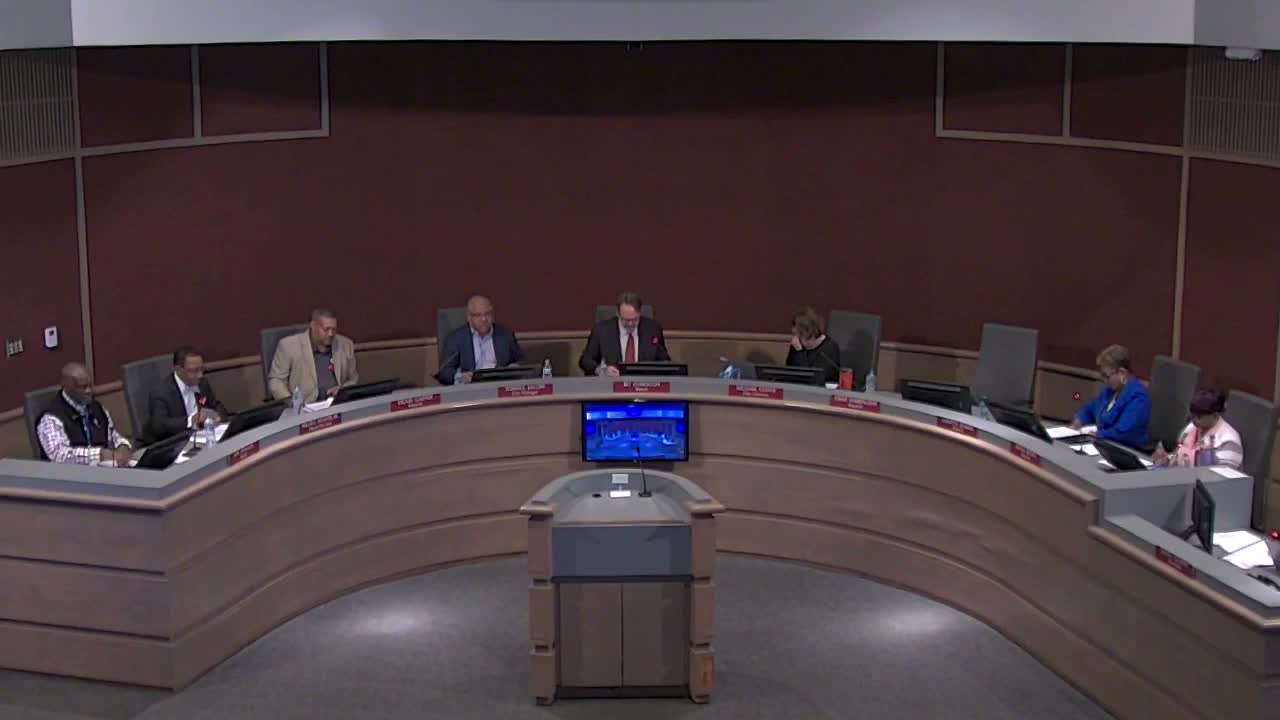
The Albany City Commission voted to adopt the county’s allocation approach for a proposed flexible local option sales tax (FLOST) during a special call meeting on Feb. 12, advancing an intergovernmental framework staff said would be memorialized in an IGA before any referendum.
City manager Terrell Jacobs and staff outlined two main allocation options and the tradeoffs for Albany taxpayers and county residents. Staff framed the decision as choosing between a county-proposed proportional split tied to property-tax collections and a city-focused split that would fold “special district” millage into the countywide calculation.
Mr. Eaton, the staff presenter, walked commissioners through the spreadsheet options and projected impacts, saying: “So with those factors, it would impact the millage rate for the city of Albany by 3.435,” and using example impacts for a $150,000 home and a $200,000 home to illustrate the differences between options. Eaton emphasized the approach was intended to be revenue neutral, with sales tax proceeds used principally to reduce millage rates rather than to generate net new revenue.
The discussion focused on three recurring concerns: whether to include special service tax districts in the allocation, how service delivery (stormwater, recreation, public safety) should be organized if revenue is shifted, and how the state-required property reevaluation and homestead protections in House Bill 581 affect homeowner impacts. City manager Terrell Jacobs told the commission that staff and the county had discussed including service-delivery commitments in the IGA: “We can memorialize that in the IGA in relationship to this going forward.”
Several commissioners raised equity and political questions about the voting public’s reception. One commissioner argued the 75/25 city-county approach would provide the “most benefit for the city,” while others said the county proposal would better help residents in unincorporated areas and special districts. Commissioners also flagged that the legislative environment at the state level was changing, with potential future changes to who may be required or permitted to opt into flexible sales taxes.
After questions and amendments were discussed, a motion to adopt the county’s allocation option (referred to in the packet as Option 2) was moved and seconded and approved by roll call. The motion adopted staff’s recommendation that the IGA include specified commitments on service delivery, timing for county property reevaluation, and proposed contributions for prioritized cultural and parks projects. The city manager said staff would memorialize those conditions in the IGA and provide the draft language to county counterparts.
Next steps: staff will finalize the IGA language and transmit the joint resolution and proposed intergovernmental terms to the county (which had a separate meeting scheduled the next day). If the jurisdictions agree, the measure would advance to the ballot process the commission discussed; final placement on a May ballot depends on remaining procedural milestones for legal advertising and certification.
Vote and procedural note: the commission adopted the resolution on Option 2 by roll call during the meeting; the transcript records that the motion passed but does not include a full, unambiguous vote tally in the text of the meeting transcript provided to the assistant.