
Senate approves 'medical freedom' bill after clashes over vaccines and ivermectin access
Get AI-powered insights, summaries, and transcripts
Subscribe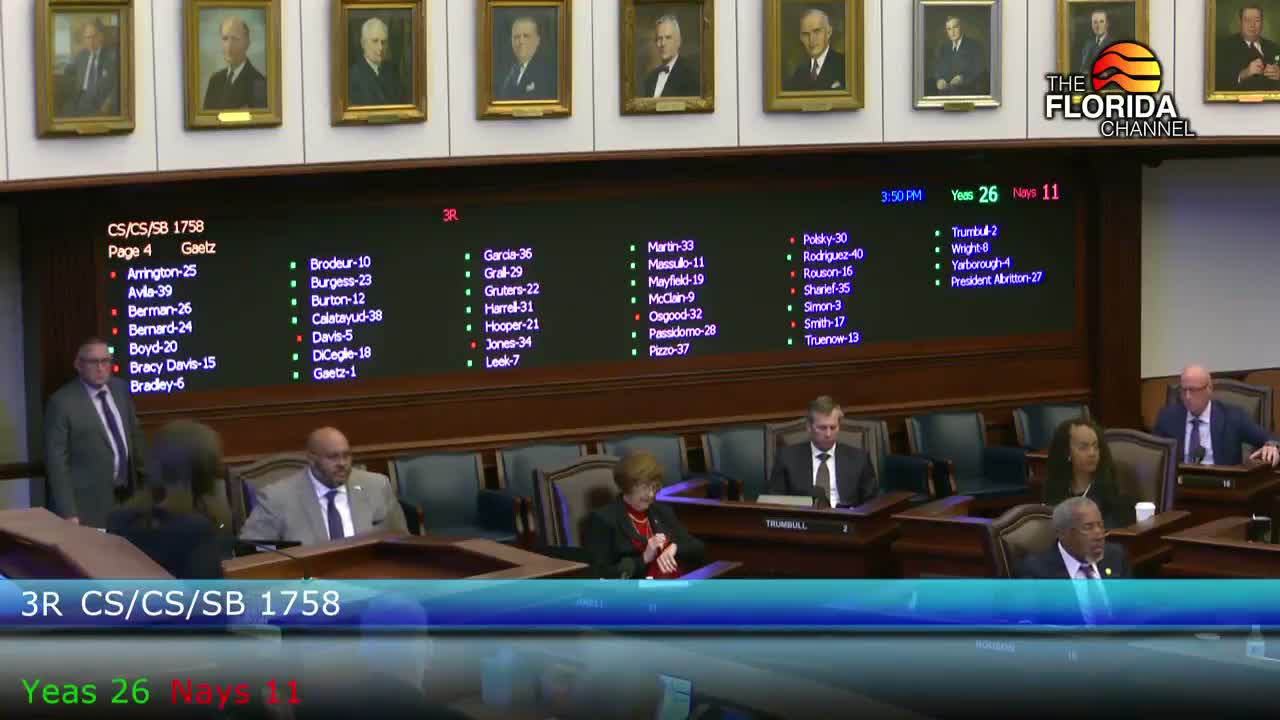
Summary
After a contentious debate expecting public‑health experts to warn of disease‑control risks, the Senate passed a medical‑freedom measure (23‑15) that expands conscience/religious options and allows limited behind‑the‑counter access to ivermectin for adults; sponsors said it protects parental choice while opponents warned of public‑health harms.
The Florida Senate approved a ‘medical freedom’ bill, presented as a package of parental‑choice and conscience protections for school immunization exemptions and limited retail access rules for ivermectin and other treatments. The vote, taken March 9, was 23 ayes to 15 nays.
Sponsor Sen. Yarbrough framed the measure as an attempt to restore trust and provide parents additional informed‑consent options. "This bill doesn't change anything in the table that's in statute that's required before children go into school," he told colleagues, adding the bill does not directly alter the statutory immunization schedule.
But the bill drew sustained opposition from medical professionals and senators citing public‑health risks. Sen. Polsky questioned the focus on a single drug (ivermectin) and warned of dangerous drug interactions if people self‑medicate. Physician‑senator Sharif and others recounted the practical medical risks: increased measles and pertussis cases, and the danger to immunocompromised schoolchildren and staff. "We have kids out there that are on chemotherapy... We provide immunity for all of them because we were vaccinated early on," Sen. Sharif said.
Supporters argued for conscience protections and more parental information; Sen. Grol said the bill promotes informed consent and might improve voluntary compliance by engaging parents rather than mandating action. Sponsors acknowledged the bill lacks a House counterpart expected to pass this session and may not become law.
The Senate recorded 23 ayes and 15 nays. Members who opposed the measure urged the Department of Health to produce epidemiological modeling to project effects on hospitalizations and outbreaks if exemptions expand. Supporters said the bill preserves statutory school vaccine requirements while expanding how parents may seek exemptions.