
Finance director: tax timing and special-education costs weigh on Lincoln County Schools; proposed state formula could cut local aid
Get AI-powered insights, summaries, and transcripts
Sign Up Free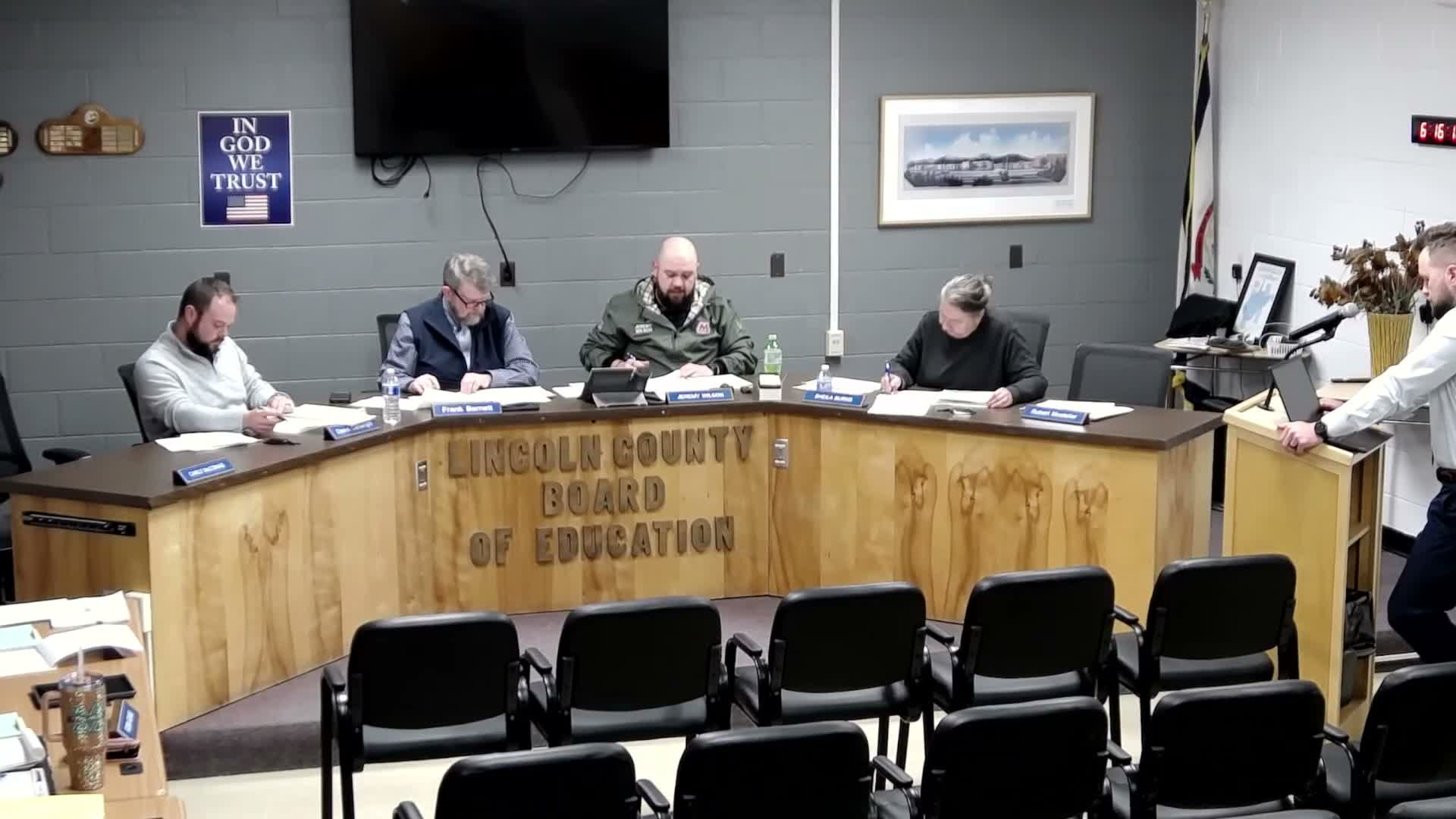
Summary
Finance director Austin told the Lincoln County Board of Education that tax collections are timing-dependent and that transportation and special-education costs are pressuring the budget; he warned a House committee bill proposing a flat per-student state funding rate (cited in his remarks as about $6,100) could reduce Lincoln County's state aid and cost the district an estimated amount if enacted.
Lincoln County Schools’ finance director reported to the board on March 3 that the district’s financial position remains stable but is under pressure in several areas, including transportation, special education and transfers related to the Duval capital project.
Austin said current tax collections are tracking at about 60% of budgeted receipts at the time of the presentation, a shortfall the finance office attributed to timing around the county tax cycle. He said the district expects a large tax remittance following the tax deadline and that timing, not an immediate structural shortfall, explains much of the current collection percentage.
On expenditures, Austin identified transportation as a major pressure point: higher fuel costs and several large bus repairs (including at least one engine replacement) increased spending in the bus department. Special-education costs were also elevated because some students’ Individualized Education Programs require classroom aides; when a classroom’s aid-to-student ratio crosses the district threshold the district must add staff, increasing local personnel costs.
Austin told the board he transferred $2.5 million from a bond account into the district treasury to cover HVAC and related labor costs for the Duval project and said the Duval capital work remains about 72% complete.
The finance director flagged a bill he said recently advanced out of a House committee that would alter the state school funding formula by setting a flat per-student rate (Austin described the figure discussed in conversations with other treasurers as roughly $6,100 per student). Austin said Lincoln County currently receives about $7,400 per student in state aid and that a lower flat rate could materially reduce state aid for counties now funded at higher rates. He estimated that, under some versions of the proposal, Lincoln County could face a multimillion-dollar reduction—his remarks included an illustrative calculation of roughly $1,300 per student times the district’s student population as an example. Austin emphasized the proposal’s details and final numbers remain uncertain and are being monitored by the superintendent’s office.
Superintendent Barnett said he and staff are communicating with legislators and other county treasurers to gather data and better understand the bill’s potential effects. The board did not take formal action on the state funding matter but recorded it as an item to monitor.
Next steps: finance staff and the superintendent will continue outreach to legislators, gather data, and report back to the board as more definitive information becomes available. Any formal fiscal response would return to the board for consideration.