
House preserves emergency preparedness trust fund after heated floor fight
Get AI-powered insights, summaries, and transcripts
Subscribe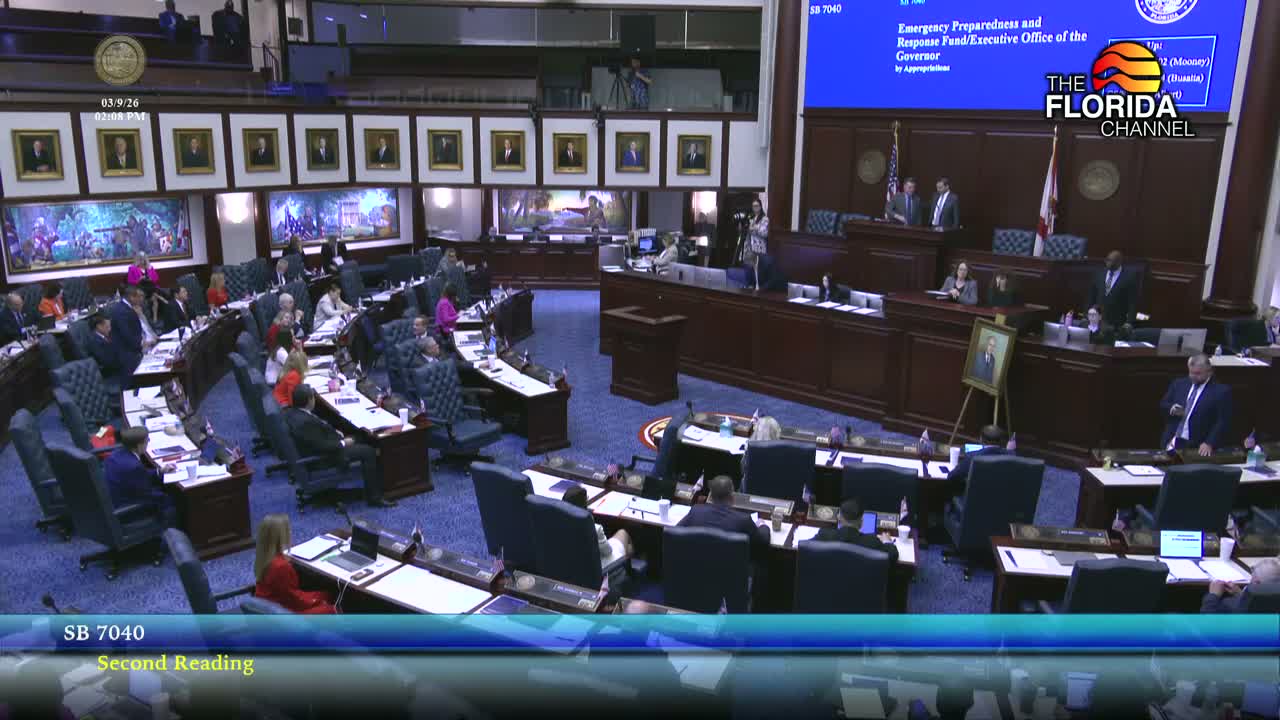
Summary
Lawmakers rejected an amendment to let a wide-ranging emergency trust fund expire and approved SB 7040, which recreates and expands the state’s emergency preparedness and response fund to include man-made and technological emergencies; final passage was 82–25.
The Florida House on March 9 preserved a controversial emergency preparedness and response fund, passing SB 7040 after extended floor debate and a failed amendment to allow the fund to expire.
Representative Griffiths, the bill sponsor, argued the trust fund ensures the governor can act quickly in declared emergencies and pointed to new accountability provisions in the bill including quarterly reporting and asset tracking. "When Florida faces a hurricane, flood or a man-made emergency, the governor has immediate access to dedicated funding to act quickly and protect lives," Griffiths said in closing.
Representative Anna Eskamani urged colleagues to let the fund lapse, calling it a "slush fund" and pressing for legislative oversight. On the House floor she said, "We have nearly $600,000,000 that has been used to operate the detention camp in the Everglades," and later framed a broader figure, saying in totality the spending had reached "$4,000,000,000," assertions that drew rebuttals from several members. Supporters disputed the characterization and stressed that the bill includes new guardrails intended to strengthen oversight.
Debate centered on the tension between speed of executive response and legislative control over large, flexible funding. Lawmakers voting against the expiration amendment argued that removing the fund would slow disaster response and could force the Legislature into special sessions to appropriate emergency funds.
The House defeated the amendment and the bill passed on final passage with a recorded vote of 82 yeas and 25 nays. The bill includes reporting and attestation requirements assigned to the Emergency Management Director and directs federal reimbursements back to General Revenue; implementation oversight will fall to the governor’s office and relevant agencies.