
Florida House clears wide special-order calendar; emergency fund fight and school sports debate draw most floor time
Get AI-powered insights, summaries, and transcripts
Subscribe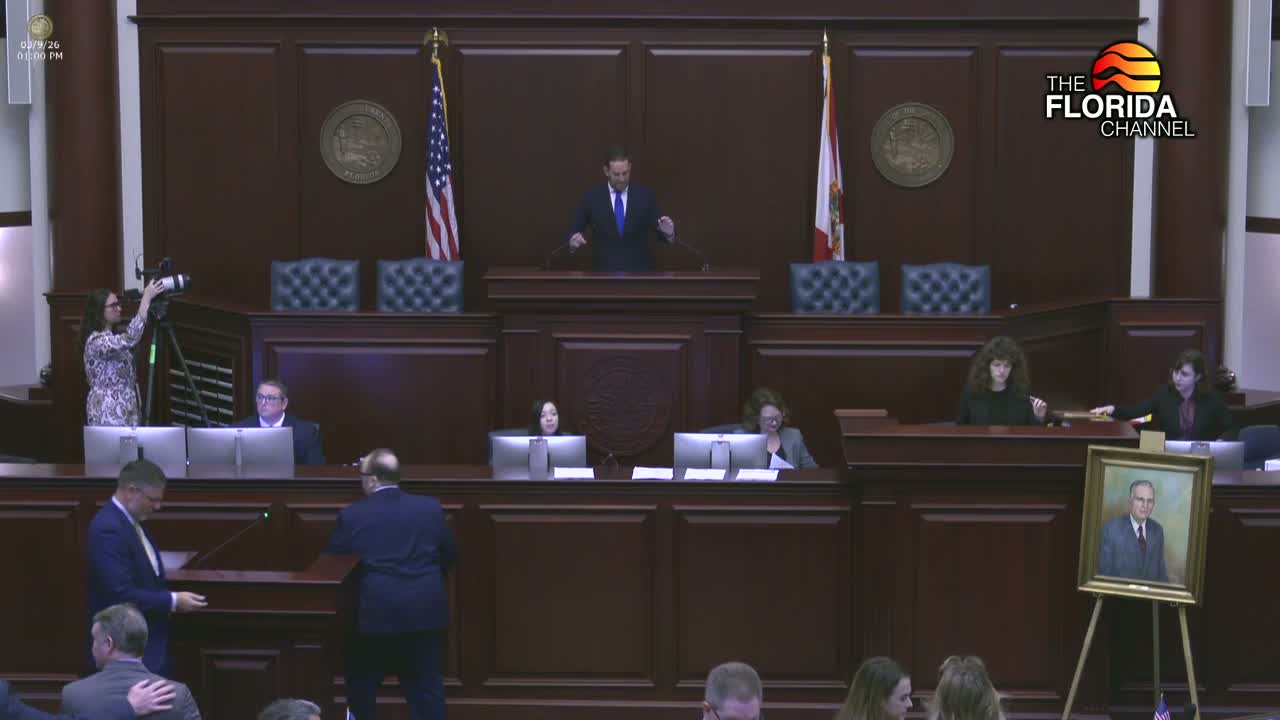
Summary
The Florida House on March 9 approved scores of bills on a special-order calendar — including many open-government exemptions and policy packages — after hours of debate on the emergency preparedness trust fund, extracurricular compensation for coaches and a commercial clearinghouse for Citizens insurance.
The Florida House met in special order on March 9, 2026, passing a long slate of Senate bills and two days' worth of business in a single session while several members delivered farewell remarks.
Key floor fights centered on how the state spends emergency preparedness dollars and whether schools should allow booster clubs to compensate coaches. Lawmakers also advanced a set of changes affecting Citizens Property Insurance and several public-record exemption renewals under the Open Government Sunset Review Act.
Representative Daniel Perez presided over the session and opened the day with remarks laying out the special-order calendar and the legislative schedule for the week. The House quickly disposed of procedural items and moved into third-reading votes, approving numerous reviser’s and sunset-review bills that preserve public-record and meeting exemptions for various agencies.
The session’s most sustained debates included SB 7040, the emergency preparedness and response fund bill, where Representative Anna Eskamani pressed to let the fund expire and accused the executive branch of using large sums on a detention facility. "We have nearly $600,000,000 that has been used to operate the detention camp in the Everglades," she said during floor debate, adding later an estimate of "$4,000,000,000" in total spending tied to past actions. Supporters, including bill sponsor Representative Griffiths, said the fund is necessary to allow the governor to respond quickly in natural and man-made emergencies and that reporting and spending safeguards in the bill would strengthen accountability. The amendment to allow the fund to lapse failed and the bill passed on final passage, 82–25.
Another high-profile measure, CS/CS/CS for SB 538, reworked extracurricular activity rules to allow school districts to accept voluntary donations and allow booster clubs to compensate coaches and sponsors. Sponsors framed the bill as a way to better support student activities and mentors; opponents warned it could create inequities between wealthy and poorer districts and trigger Title IX or labor-law questions. Representative Bartleman warned that the bill could send the wrong message about what the state values in public education. The bill passed 148–6.
On insurance, CS for CS for SB 1028 would create a commercial clearinghouse mechanism designed to move some commercial policies out of Citizens Property Insurance and into the private surplus-lines market if comparable offers are available within defined pricing thresholds. Supporters described the change as returning Citizens to its role as insurer of last resort and protecting taxpayer exposure; critics raised conflict-of-interest and consumer-protection concerns. Lawmakers approved the measure 88–19.
Other bills that passed included measures on coastal resiliency (CS/CS for SB 302), micro-mobility safety (CS for SB 382), firefighter cancer benefits (CSCS for SB 984) and measures expanding public-record exemptions where the legislature voted to preserve or extend those exemptions under the Open Government Sunset Review process.
The session also included a number of ceremonial items: several members gave farewell remarks, the House retired the portrait of former Speaker Lacy Day Edge for display at the historic capitol, and the chamber adjourned with plans to reconvene March 10.
The House’s actions produce a mix of clear winners and legislative language that will require implementation guidance from agencies and, for some bills, further rule-making; several measures passed with narrow majorities or leftover questions about implementation, signaling follow-up work in committees and agency rulemaking.