
Committee advances bill requiring local jails to honor ICE detainers up to 48 hours after debate and public testimony
Get AI-powered insights, summaries, and transcripts
Subscribe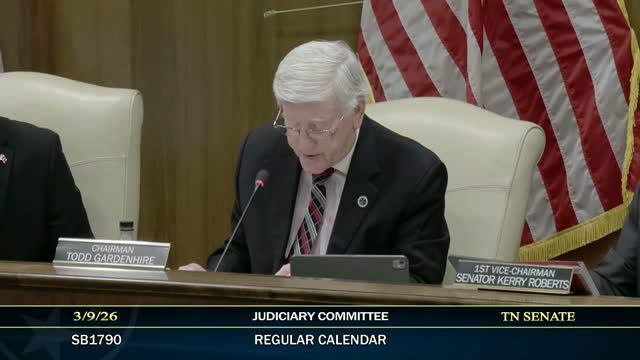
Summary
The Tennessee Senate Judiciary Committee voted to advance an amendment to SB 14‑86 that would require sheriff’s offices and local jails with ICE MOUs to hold detainees for up to 48 hours after an ICE detainer is issued; a witness warned the change could increase local costs and staffing pressures.
A Tennessee Senate Judiciary Committee advanced an amendment to SB 14‑86 on a voice and roll vote that would require sheriff’s offices and any local jails that have ICE 287(g) memoranda to honor federal immigration detainer requests for up to 48 hours or until federal authorities take custody.
Sen. Taylor, sponsor of the amendment, told the committee the language directs local sheriff’s offices to hold a person for the full 48‑hour detainer period when ICE issues a detainer, rather than releasing the person within hours as sometimes happens. He said the provision is intended to give ICE “an opportunity to come and pick up the defendant.”
The proposal drew questions from committee members about scope and cost. One lawmaker asked whether the bill applies to municipal police and local holding facilities; the sponsor said the requirement would apply when a municipality maintains a jail and has an agreement with ICE. Other members asked why weekends and holidays were excluded; the sponsor replied that ICE officials are often not available on weekends, which informed the drafting choice.
Amanda Hernandez, who testified in respectful opposition during the public‑comment portion, said she has reviewed 287(g) MOUs for Tennessee and believes the bill largely restates existing MOU language while adding obligations that could change training and fiscal burdens. "This bill seeks to require all agencies that sign one of these agreements, regardless of enforcement model, to accept and honor any detainer put forward by federal immigration authorities," Hernandez said. She told the committee that the fiscal analyst had already flagged the bill as likely unnecessary and warned that requiring comprehensive training for all officers could increase overtime and travel costs for understaffed departments.
After the exchange, the committee voted on the amendment. The roll call showed seven ayes and two noes; committee paperwork recorded the amendment as passing and the amended bill was sent to the finance committee for further review.
What’s next: SB 14‑86 as amended will go to the finance committee for a fiscal review and further consideration. The committee did not adopt broader changes to training language during the hearing.