Get Full Government Meeting Transcripts, Videos, & Alerts Forever!
Get email alerts on the Waste Management topic
No spam. Unsubscribe anytime.
Planning board approves Shops of Parkland trash compactor after debate over drainage, maintenance and tenant behavior
Summary
The City of Parkland Planning & Zoning Board approved Resolution 2025-024 on Feb. 12 to install a 30‑yard trash compactor at the Shops of Parkland. The applicant said the compactor will reduce truck trips and overflow charges; board members pressed the owner, staff and code enforcement to ensure maintenance, drainage and tenant compliance.
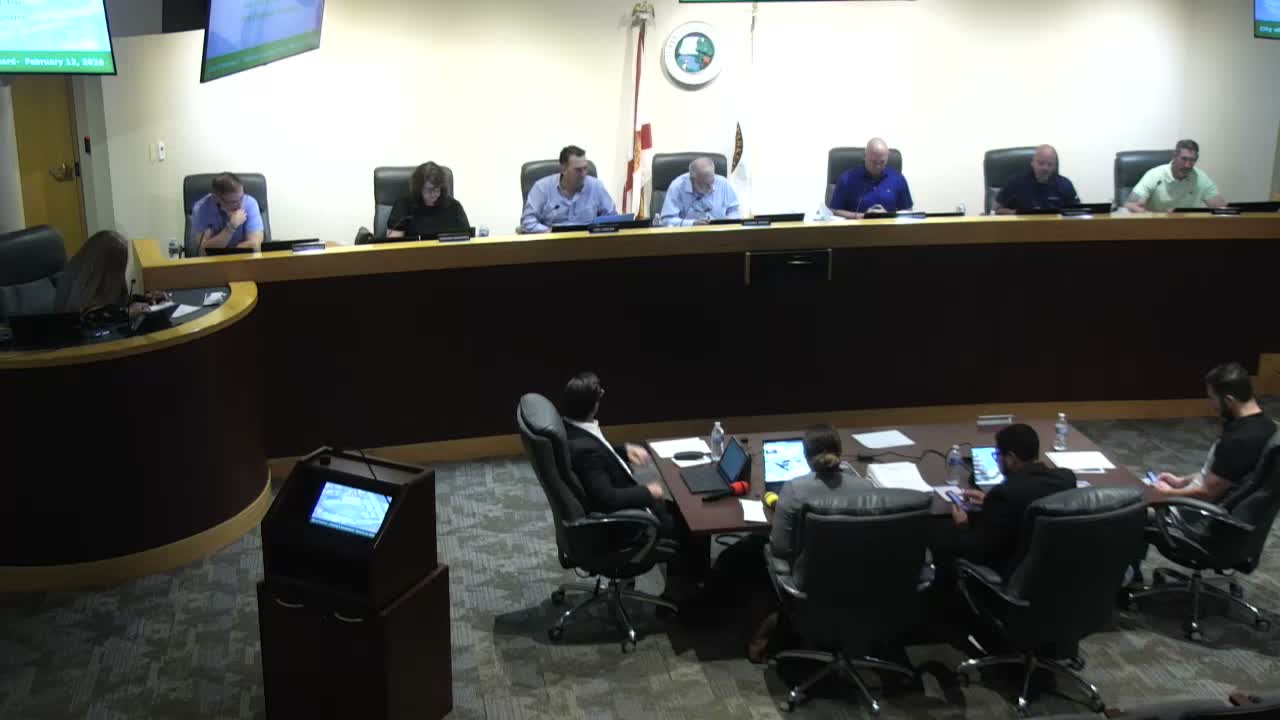
The Planning & Zoning Board of the City of Parkland voted to approve Resolution 2025-024 on Feb. 12, authorizing a site‑plan amendment to install a trash compactor at the Shops of Parkland, a retail plaza west of State Road 7. The motion carried on a roll‑call vote after a lengthy public hearing and board discussion.
The applicant and city staff presented the compactor as an operational fix for chronic overflow at a plaza with seven tenants, five of which serve food. Applicant representative Liz Summerstein said the compactor increases trash capacity “from 8 yards of trash to 30 yards of trash in this compactor,” and that consolidating containers would cut total weekly service trips from 13 to 7, with trash service reduced to one trip and recycling remaining at six. She said the compactor will be screened by a masonry wall, hedges that mature to about nine feet and palm plantings to match existing landscaping.
Board members pressed the applicant and staff on several operational and health‑code issues. Multiple board members asked whether the compactor requires a sewer drain or a grease‑trap connection for restaurant waste; William Tracy, the city’s building official, said “a standard dumpster does require, typically a trench drain, often tied into the grease trap,” but added that many modern compactors are self‑contained and “do not need that.” Staff and the applicant said compactor specifications and permitting will detail whether a drain is required.
Tenant concerns surfaced during public comment. Adam Kaplan, owner of Parkland Bagels and Deli, said he has observed early‑morning overflow and asked what would happen if the compactor did not solve the problem: “If this doesn't work, that's my question ... are we gonna go back to the dumpster?” City staff and the applicant replied that code enforcement remains available to issue citations for maintenance violations and that the owner has hired a porter who makes routine visits and pressure washing when needed.
The project drew questions about noise, odor and visibility. The applicant said the compactor uses an ozone odor‑control system and estimated site noise at roughly 60 decibels — “about the noise of an office” — and noted that the fire department reviewed site triangles and adjusted stop‑bar locations to address sightline concerns. Board members also recommended operational solutions such as keyed tenant access, repairs to broken dumpster hinges, and improved porter procedures; the applicant said it would coordinate with the property manager and the trash hauler before the item goes to the city commission.
At the vote the motion to approve was presented by Derek (motion) and seconded by Fabio Rodriguez. Roll call recorded the following votes: Fabio Rodriguez — yes; Jordana Goldstein — yes; Todd Rogers — no; Eric Bigsby — yes; Phil Kaplan — reluctantly yes; Vice Chair Tony Vello — yes; Chairman Marie Zweig — yes. The motion carried and the board recommended the site‑plan amendment and community appearance board application for the Shops of Parkland to move forward to the City Commission.
Next steps: staff said the item will proceed to the City Commission and that the applicant will follow up with the city and property management on operational safeguards, compactor specifications and any necessary permitting to confirm drainage and equipment requirements.