Get Full Government Meeting Transcripts, Videos, & Alerts Forever!
Get email alerts on the Landscape Bonding topic
No spam. Unsubscribe anytime.
Parkland board backs ordinance tightening common‑area landscape bonds, adds 2‑year CO trigger
Summary
The Parkland Planning & Zoning Board unanimously recommended approval of Ordinance No. 2026‑001, which formalizes a 125% performance bond for required common‑area landscaping and requires a maintenance bond held for two years after the final certificate of occupancy.
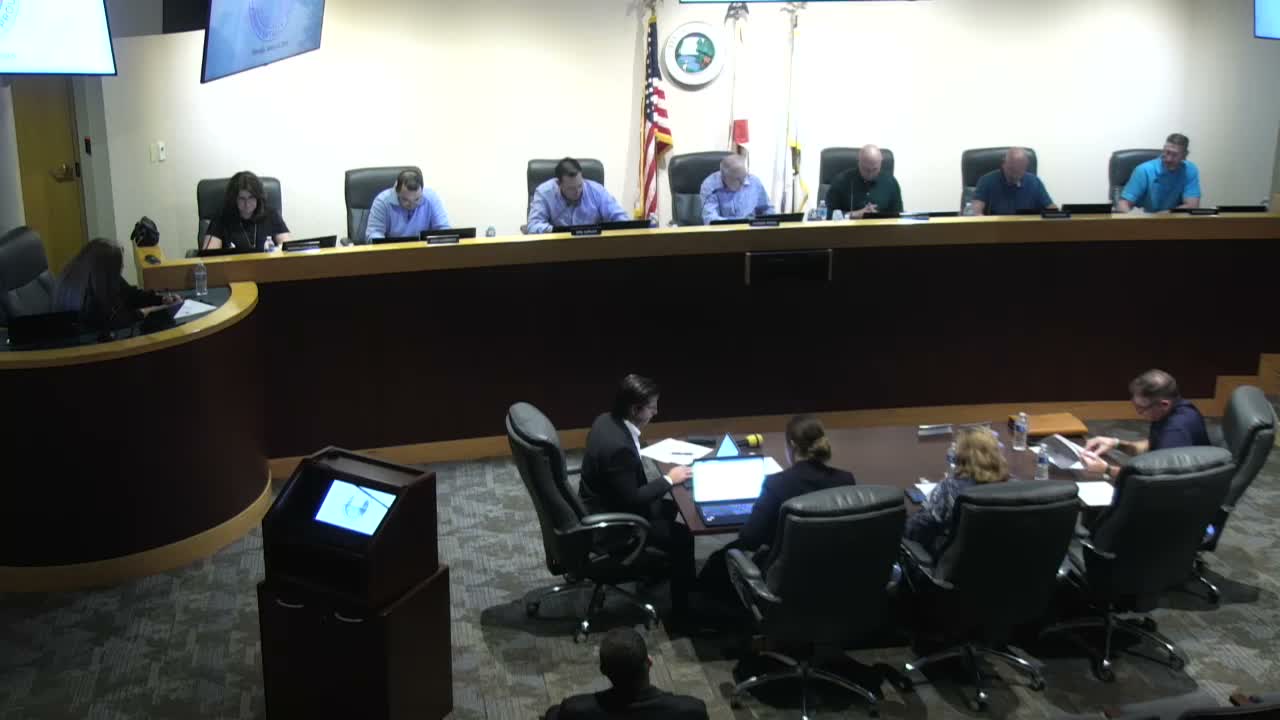
The Parkland Planning & Zoning Board on Jan. 8 voted unanimously to recommend that the City Commission adopt Ordinance No. 2026‑001, a revision to the City of Parkland land development code that clarifies bonding requirements for required common‑area landscaping and tree preservation.
City Attorney Anthony Siroca told the board the ordinance requires developers to post a performance bond “in an amount equal to 125% of the value of the required landscaping improvements” to secure installation, and that the performance bond would not be released unless the developer provides a maintenance bond. Siroca said the maintenance bond is intended to ensure the landscaping is properly maintained after installation.
The change responds to staff concerns about ensuring long‑term maintenance of landscaping that remains common area under homeowners associations. Caitlin Forbes of the planning department introduced the item and also introduced the city’s new director of development services, Carlos Vega, who greeted the board.
Board members asked whether the proposed bond levels are common in other municipalities and how enforcement would work. Siroca and planning staff said the city would administer bonds as conditions of permit approval and could call bonds if developers default; Patty, the planning inspector, explained the inspection workflow and timelines and said final landscape permit closeout typically follows a series of inspections that can take six to 12 months, after which the maintenance clock begins. “The overall landscaping usually does finish within the first 12 months of development,” Patty said; after final inspection the two‑year maintenance period would run.
Several members proposed tightening the language on when the maintenance period begins. Some favored tying the maintenance bond to statutory turnover to a homeowners association; the board ultimately agreed to a compromise recommended by staff: tie the maintenance bond to the project’s final certificate of occupancy for the development’s homes. Under the motion that passed, the maintenance bond must be held for two years from the date of the last certificate of occupancy issued for homes in the development.
Board member Jordana Goldstein moved to recommend approval of the ordinance with that clarification; Anthony Siroca seconded the motion. The board then approved the recommendation by roll call vote; all members present voted yes.
The board noted the ordinance is intended to give residents an additional avenue to ensure common‑area landscaping is completed and maintained, supplementing code enforcement and HOA responsibilities. Staff said draft bond forms and permit language will be refined before the item goes to the City Commission.
The Planning & Zoning Board’s recommendation now goes to the City Commission for final consideration. The board adjourned with no further action on the ordinance at this meeting.