Get Full Government Meeting Transcripts, Videos, & Alerts Forever!
Get email alerts on the Transit Funding topic
No spam. Unsubscribe anytime.
Waukesha transit reports 27% recent cut in weekly service hours, rising paratransit demand and a projected 2030 funding gap
Summary
Staff told the commission fixed-route weekly service hours will fall from just over 880 in 2020 to 640 after January reductions (a 27% drop) and projected federal relief funds will be depleted by 2029, potentially creating a roughly $300,000 annual shortfall by 2030; Metrolift ridership has risen about 50% over three years, pushing occasional need for a fourth vehicle.
Staff presented an overview of service levels and funding and warned of declining fixed‑route service hours, increasing paratransit demand and an emerging funding gap.
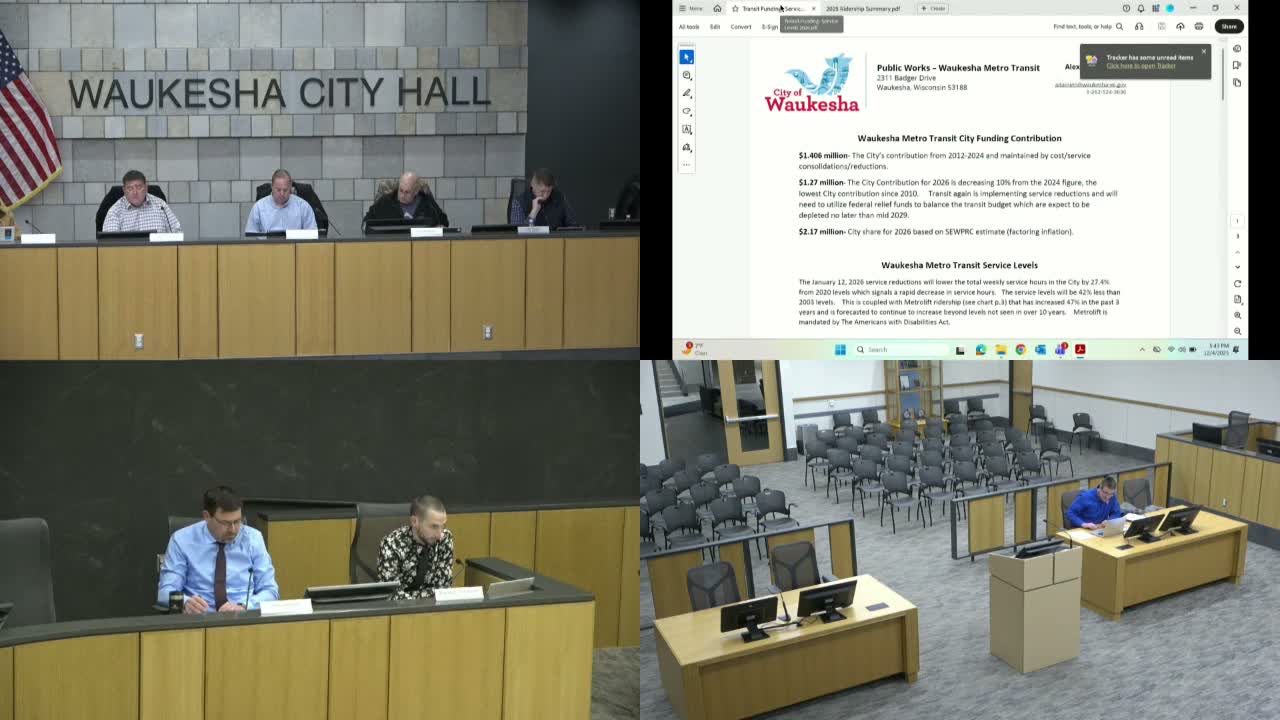
Brian said the city’s contribution to transit has been roughly $1.4 million and that the financial management plan asked the transit agency to reduce the city share to about $1.27 million (a 10 percent reduction). He said reductions in federal operating dollars for 2026 mean the agency will again rely on federal relief funds to balance the budget and that staff project those relief funds will be exhausted by 2029.
On service levels, staff said fixed‑route service hours were just over 880 per week in 2020 and will drop to 640 with reductions taking effect in January — a 27 percent decrease in that period and a roughly 42 percent reduction compared with 2003. Brian said staff estimate that to maintain the reduced 2026 service level in 2030, the city share would need to rise by about $300,000 (bringing the contribution to roughly $1.57 million) unless other revenue is secured.
Commissioners asked about using county capital dollars to purchase a Metrolift vehicle; staff said county funds referenced in the county agreement are restricted to corridor projects (Blue Mound Road) and therefore cannot be used for Metrolift. When asked about reserves, Brian said the transit reserve fund balance is about $1,100,000 and could be used to cover shortfalls if authorized.
Staff also reported ridership efficiency improvements: passengers per revenue hour rose from just over 6 post‑COVID to about 8.5 year‑to‑date and 9.1 since June consolidations. Metrolift ridership rose roughly 24 percent from 2024 and about 50 percent over three years; operations have required a fourth vehicle on some days, and staff said continued growth would likely require additional equipment and staff time.
A commissioner asked whether elementary‑school consolidations will alter stops or routes; staff said no immediate changes are planned but expressed concern that a move of the Waukesha Transition Academy could affect riders dependent on transit. The meeting adjourned with no additional action on the reports.