Lifetime Citizen Portal Access — AI Briefings, Alerts & Unlimited Follows
McKinney planning commission tables request to remove 36 floodplain trees at Airport Crossroads
Loading...
Summary
The Planning & Zoning Commission delayed a decision on a developer’s request to remove 36 quality trees within a city floodplain at McKinney Airport Crossroads, directing the applicant and staff to discuss mitigation and design alternatives before the March 10 meeting.
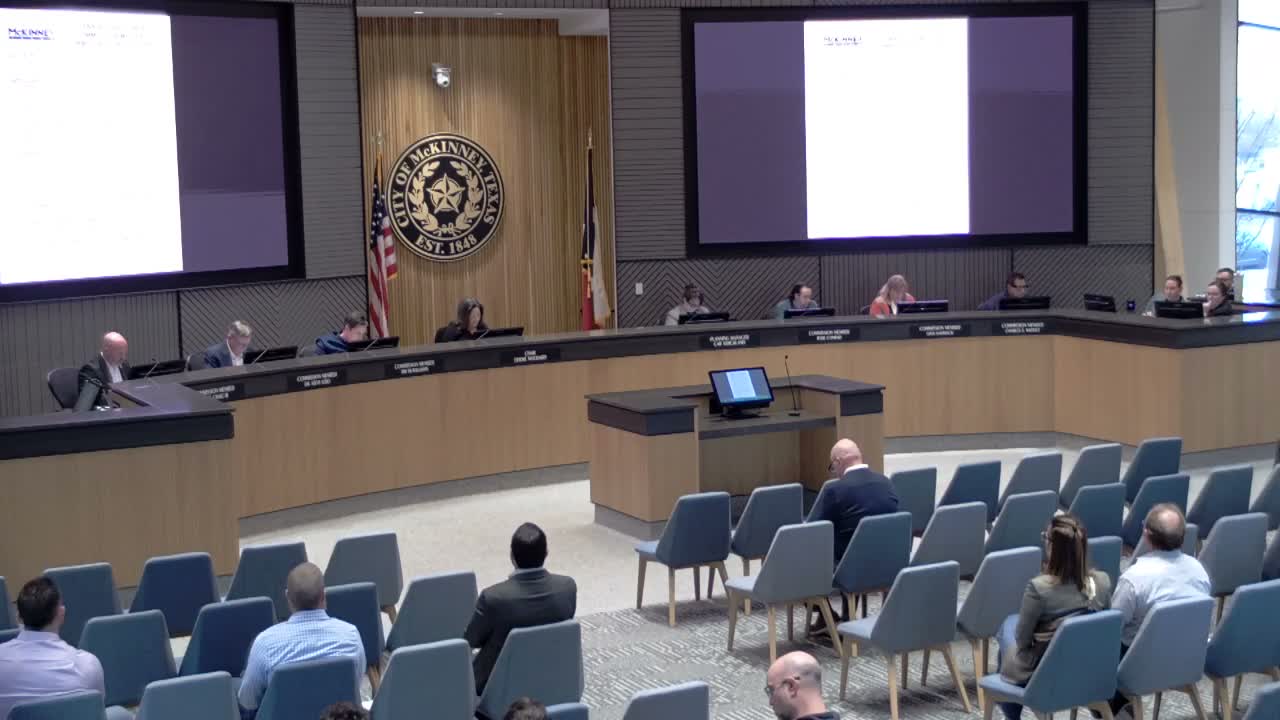
The Planning & Zoning Commission on Feb. 24 continued a public hearing and voted unanimously to table a design‑exception request that would allow a warehouse site plan to remove 36 quality trees from a city‑designated floodplain at the McKinney Airport Crossroads site. The commission set the item for re‑consideration at its March 10 meeting so the applicant and city staff can work on possible mitigation and design changes.
Staff pitched the denial. Planning staff member Araceli told commissioners the applicant was requesting "to remove 100% of the quality trees within the flood plain, which exceeds the city's 30% limit," and recommended denial “due to the significant deviations from the ordinance standards and the potential ... adverse impacts to the flood plain.” That recommendation emphasized concerns about flow velocity, water surface level, erosion control and loss of floodplain functionality.
The applicant, represented by Rocco Kersey of Committed Industrial and civil engineering consultant Kimley‑Horn, argued the site constraints and existing right‑of‑way for future Spur 399 limit alternatives. Kersey said the team "aimed to prioritize the aesthetic of the project by delivering above code amount of trees to the project rather than just paying the mitigation credits," and the engineer said the city floodplain delineation (blue on exhibits) reflects the fully developed limits that triggered the ordinance.
City urban forester Ian Erickson told the commission trees in the floodplain provide multiple benefits — filtering pollutants, helping stormwater quality and reducing urban heat‑island effects — and explained the mitigation approach. Erickson said the developer is proposing 20 four‑inch caliper replacement trees on site as part of mitigation; staff and commissioners discussed how replacement requirements are calculated in caliper inches. Erickson noted the report’s numbers for removed caliper inches and how mitigation fees and replacement trees would be applied.
Commissioners asked whether a detention pond proposed on the site would address flow concerns; the applicant’s engineer said the pond is a detention (dry for the warehouse design) that releases flow slowly but would not fully replicate a functioning floodplain. Commissioners also pressed staff on whether floodplain trees are exempt from mitigation if they are within areas that will be graded for building or parking.
After extended questioning and exchanges about mitigation math, exemptions, and possible design alternatives, Chair proposed tabling the matter so the applicant could meet with staff. Commissioner Whatley moved to table; Commissioner Hammock seconded. The applicant said it was willing to work with staff. The motion to table passed unanimously and the item was continued to the March 10 Planning & Zoning meeting.
Next steps: the applicant and staff will confer on possible alternatives or mitigation options before the March 10 hearing; the commission will take a final vote then. No final design exception was approved on Feb. 24.