Get Full Government Meeting Transcripts, Videos, & Alerts Forever!
Get email alerts on the Strategic Priorities topic
No spam. Unsubscribe anytime.
McKinney council retreat narrows strategic priorities to infrastructure, financial health and parks
Summary
At a Feb. 20 retreat staff and council prioritized infrastructure, financial health and parks & trails after breakout exercises; staff will translate council direction into measurable objectives for May and flagged annexation, funding gaps and staffing as primary constraints.
City Manager Grimes and facilitator Andy Duke led council through a workshop-style retreat on Feb. 20 that ended with council consensus around four immediate priority areas and several cross-cutting fiscal concerns. "Prioritization is how we protect ourselves," Grimes said, framing the retreat as the start of a process that will produce SMART (specific, measurable, achievable, relevant and timebound) objectives for May.
Facilitator Andy Duke emphasized the difference between strategic and operational roles: "Our role is to think with the big game in mind," he said, urging council to set direction while staff develops implementation plans. Using rotating small groups, council and staff surfaced consistent priorities: infrastructure (roads, long-term maintenance and tradeoffs), financial health (reserves, revenue strategies, and the risk of plateauing sales- and property-tax growth), parks and trails (staffing and lifecycle maintenance), and customer satisfaction/trust.
Council members and staff converged on several specific themes. On infrastructure, spokespeople warned the city faces ongoing replacement costs and will likely need to have harder conversations about prioritization and funding if growth slows. Regarding finance, staff quantified that state changes to annexation authority have reduced the city's unilateral annexation power and shifted more negotiating leverage to large property owners; council asked staff to develop policy parameters for annexation discussions and to evaluate financing mechanisms such as public improvement districts and municipal management districts.
On parks and trails, staff and council discussed balancing new projects with maintenance of aging assets, seeking alternative funding and increasing passive, low-maintenance open space. Grimes and department spokespeople noted recent accomplishments (national parks accreditation, a traveling library exhibit with 34,000 visitors) but said staffing and lifecycle costs remain constraints.
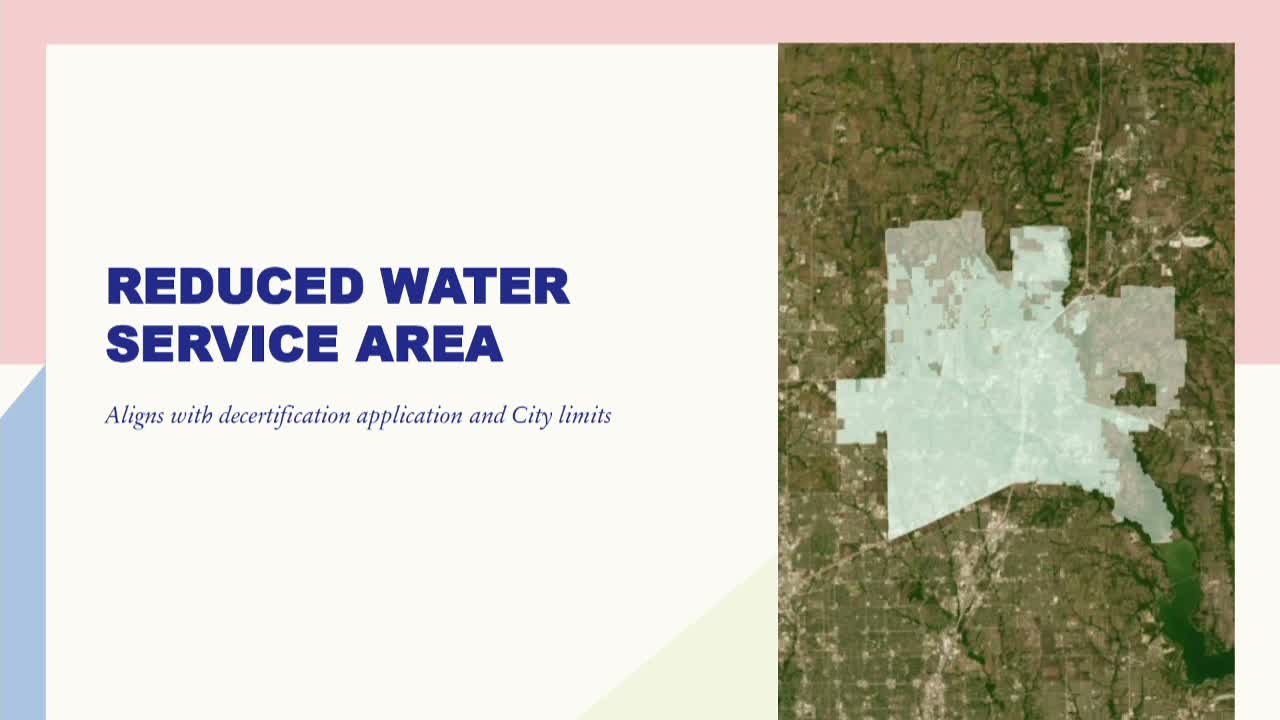
Council directed staff to return in May with measurable objectives and recommended staff include: (1) clearer parameters for annexation negotiations; (2) a 20-year perspective for road maintenance and capital spending; (3) objective-based measures for customer service and communications; and (4) updated impact-fee assumptions tied to the reduced water service footprint. Staff said they will incorporate the input and present objective language for adoption ahead of the budget process.
The retreat produced no formal votes or policy adoptions; it was oriented toward direction-setting and drafting of measurable staff objectives for later council action.