Get Full Government Meeting Transcripts, Videos, & Alerts Forever!
Get email alerts on the Special Assessments topic
No spam. Unsubscribe anytime.
Parkland hears methodology to assess Ranches homeowners for $4.77M roads work; residents urge alternatives
Summary
City staff and consultants presented a proposed non-ad valorem special assessment methodology to pay for roadway and drainage work in the Ranches subdivision; consultants estimated a $4.77 million roads portion of a larger $15.2 million project and said the resident-funded portion could average about $2,570 annually for a typical 2.5-acre assigned parcel under preliminary assumptions. Residents raised concerns about easements, fairness and use of ARPA funds.
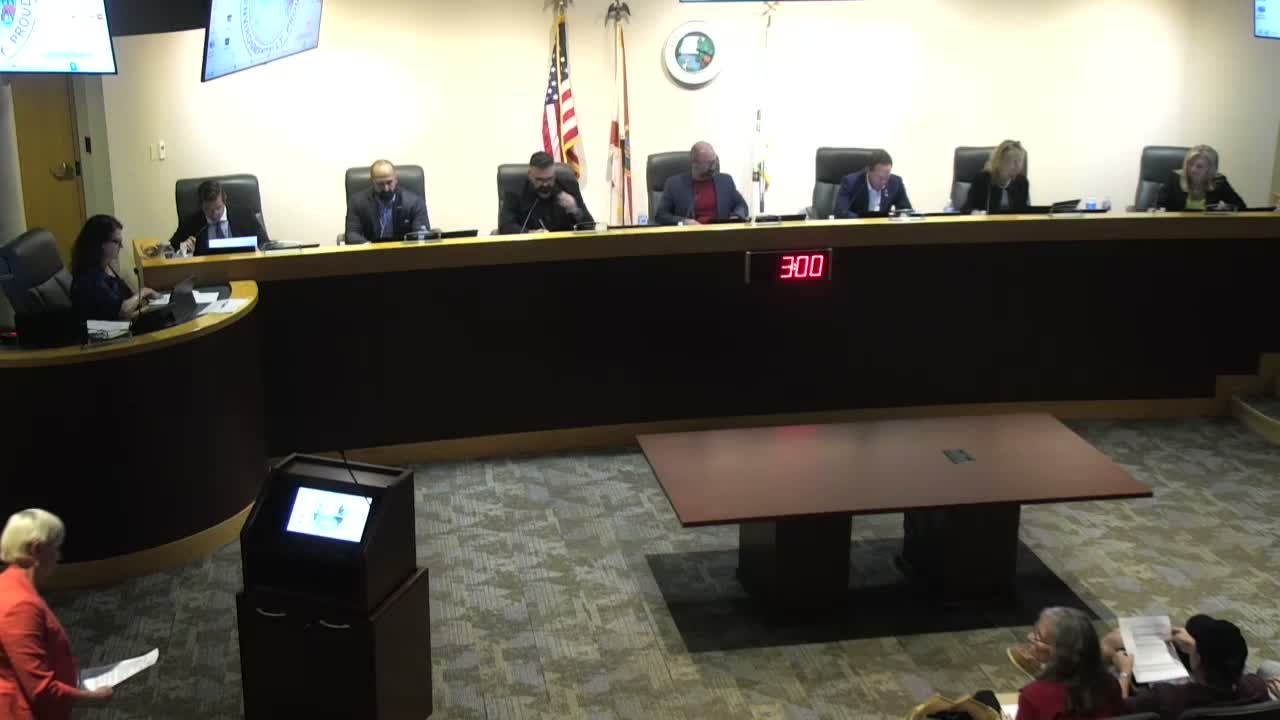
City of Parkland commissioners received a detailed presentation on Wednesday about a proposed non-ad valorem special assessment to fund roadway improvements in the Ranches subdivision, and then heard more than an hour of residents’ questions and objections.
Kelly Schwartz, the city’s finance director, told the commission that staff hired Governmental Management Services South Florida LLC and the law firm Neighbors, Giblin & Nickerson, P.A. to develop a fair-apportionment methodology and provide legal guidance. Consultant Rich Hans described the approach the consultants recommend: define a bounded assessment area, calculate an assigned acreage for each parcel (rounding acreage to the nearest half acre), and apportion costs based on that assigned acreage. Hans said the roadway portion of the project is estimated at $4,768,830; the larger Ranches project that includes drainage and other work is currently estimated just under $15,200,000.
The consultants provided preliminary finance assumptions—a placeholder 5.5 percent interest rate and a 20-year amortization—and an example of how the numbers map to property owners. Using the consultants’ figures, the total note would be roughly $5,387,848, producing a maximum annual debt-service requirement of about $450,852. That works out to a notional maximum annual assessment of about $956.21 per assigned acre before county collection fees and statutory early-payment discounts; when those charges are included consultants presented a tax-bill estimate of roughly $1,028.18 per assigned acre. The average assigned-acreage parcel in the Ranches portfolio is 2.5 acres, which Rich Hans said results in an illustrative maximum annual assessment near $2,570.45 under the assumptions presented. The consultants emphasized these are estimates and that final numbers will depend on note sizing, market interest rates and final project scope.
Kelly Schwartz said the full Ranches project funding would come from three sources: about $5,274,000 of American Rescue Plan Act (ARPA) funds (approximately 35 percent), approximately $5,600,000 in city general funds (about 37 percent) and an estimated $4,300,000 to be paid by affected property owners (about 28 percent) via the assessment methodology discussed. She also outlined the anticipated schedule: a master capital ordinance (two readings) in June–July, an initial assessment resolution in July, mailed notices and advertising in August, and assessment collection beginning in 2026 unless property owners prepay.
Residents who spoke during the public-comment period raised several technical and equity concerns. Heather Meany, a Ranches resident, said the roads “do benefit people beyond just the people who live in the Ranches,” noting walkers, bikers and event traffic. She also described repeated flooding and urged the city not to delay work. Fred Aft asked for clarification on prepayment and the per-acre capital figure; staff confirmed a one-time prepay was presented in the analysis at roughly $10,117 per assigned acre (consultant figures vary by slide). Monique Leccarique challenged the city’s prior spending decisions and asked why some capital and ARPA dollars were not redirected to long-neglected infrastructure; she said, “The grant fund that came in for $17,100,000 should have gone to the infrastructure that has been neglected.”
Several residents raised easement and constructability concerns. Lori Abt and others said some parcels lack recorded easements and warned that a contractor may be unable to complete work in places where access is not secured; city staff acknowledged easement status is an outstanding implementation issue. Other residents, including Alan Trodeck (a bonds professional), encouraged the city to seek lower interest rates when financing to reduce homeowner costs.
Commissioners stressed that the presentation was the first procedural step and that no formal assessment vote would occur that night; Mayor Walker reiterated staff would be available to answer follow-up questions and that the commission remains open to additional grant and funding options. Staff said more detailed reports and the methodology packet are posted in the meeting agenda packet and that staff will return with an ordinance and resolutions along the schedule described.
Next steps: staff will bring a master capital ordinance and initial assessment resolution in the months ahead, send written notices to affected property owners and continue outreach on easements and financing alternatives. Residents were advised on prepayment options and invited to send follow-up questions to the finance director.