Get Full Government Meeting Transcripts, Videos, & Alerts Forever!
Get email alerts on the Ethnic Studies topic
No spam. Unsubscribe anytime.
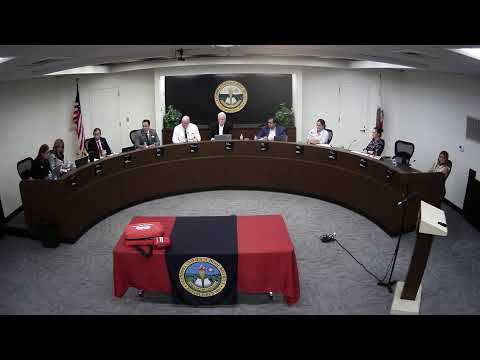
Glendora Unified board rejects locally developed ethnic studies course outline after heated debate
Summary
After more than an hour of public comment and trustee discussion about AB 101, curriculum versus outline, and alleged links to critical race theory, the Glendora Unified School District board voted 3–2 to reject approval of a locally developed ethnic studies course outline that had been proposed as a pilot elective for grades 9–12.
The Glendora Unified School District board on Monday debated and then rejected a locally developed ethnic studies course outline that staff proposed as a one‑semester elective pilot for high school students.
The motion to approve the outline — which staff described as a framework for a semester‑long elective (up to 70 students per semester, grades 9–12) and not a finished curriculum — failed on a roll‑call vote that left two trustees supporting and three opposed. Member Garcia and Vice President Lopez voted yes; Member Munoz, Trustee Cam, and Board President Clifford voted no.
Why it mattered: supporters said the outline would let district teachers pilot and refine classroom lessons ahead of any state mandate; opponents said the board was being asked to approve policy on a course before the full lesson plans and implementation details were available and raised concerns about whether the outline resembled the state model, which some public commenters labeled as tied to critical race theory (CRT).
"It's really not about the critical race," Dr. Prince, the staff presenter, told the board, saying the course was intended as a social‑sciences survey focused on histories and cultural connections rather than a political science or activist curriculum. "You could look at things through a critical lens, but that was not the focus or intent of this outline."
Public comment featured both sharp criticism and support. Mike Baron told trustees the outline "contains both social justice and CRT‑aligned themes even if the terminology has been softened," and Monique Boussaint warned the board the outline amounted to "indoctrination." By contrast, Catalina Valera, a field representative for Congressman Gil Cisneros, read a letter urging approval and noting research that students who see their identities in the curriculum can be more engaged and graduate at higher rates.
Trustees also spent significant time parsing the procedural difference between approving a course outline and approving detailed curriculum or lesson plans. Dr. Prince said the outline is the required document for a locally developed course under AB 101 and that teachers would develop lesson plans during a pilot year to gather feedback before wider adoption. He added the district received roughly $25.47 per student (about $62,000) for initial development work.
Board President Clifford summarized his position before the vote: "I'm a no vote on this... I don't want to create policy on an outline and let that loose without knowing what the curriculum's going to look like." Several trustees said they would prefer to wait for state funding certainty before committing to a district pilot that could become permanent.
What happened next: the motion failed on the roll call, so the outline was not approved. Trustees approved the consent calendar later in the meeting and adjourned at 8:18 p.m.
What to watch: trustees and staff indicated the topic may return for further discussion if AB 101 funding moves forward or as staff refines implementation plans based on teacher and student feedback from any local pilots.