
Ann Arbor board faces surge of public protest as staff explain involuntary transfers used to fill special‑education openings
Get AI-powered insights, summaries, and transcripts
Subscribe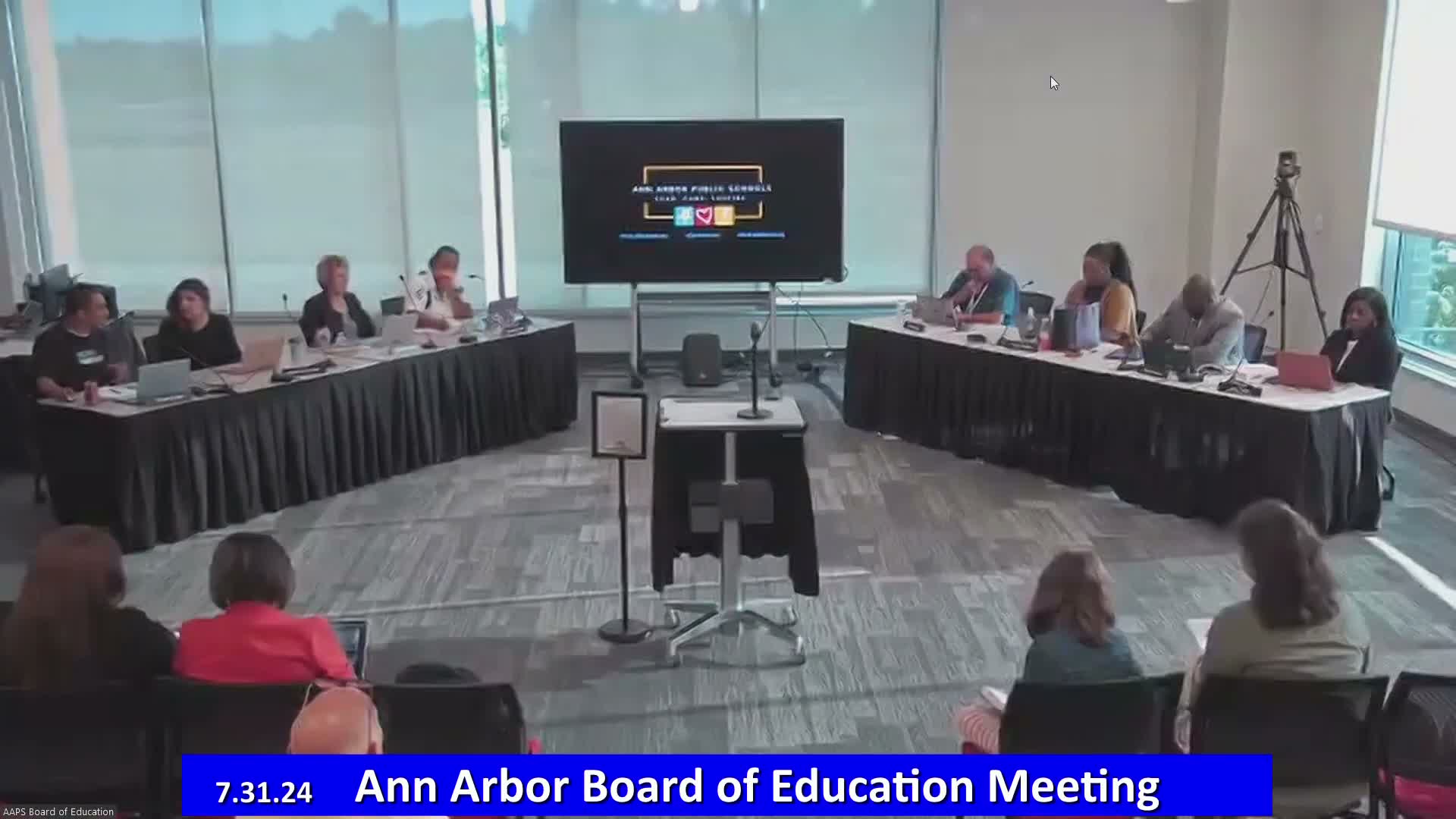
Summary
Hundreds of community comments at the July 24 Ann Arbor Public Schools board meeting criticized involuntary transfers of 10 teachers into special‑education roles amid layoffs and recalls; district staff said transfers filled vacancies so the district could recall 34 of 55 teachers laid off and avoid outside hires.
Ann Arbor — Dozens of parents, students and former pupils urged the Ann Arbor Public Schools board on July 24 to reverse a wave of involuntary teacher reassignments, saying the moves threaten community schools and could drive families and staff away.
A wave of public commentary centered on roughly 10 teachers the district said it reassigned into special‑education roles this summer. “He is Pioneer High School,” said Joe O’Connell, a teacher and neighbor of the high‑school instructor who faces transfer, referring to William “Bill” Bellers. Several speakers said they had filed petitions and gathered hundreds of signatures asking the board to return specific teachers to their prior schools.
Why the transfers happened: district explanation
District HR staff told the board that the transfers were used to fill remaining special‑education openings after attrition and position changes. HR said about 16 special‑education positions emerged at the end of the year for various reasons; of those, the special‑education team concluded 6.1 FTE were not needed and 10 positions still required filling. To avoid hiring externally, the district used involuntary transfers of teachers with appropriate certifications and experience so it could recall the maximum number of colleagues from layoff.
“Because of those moves we were able to recall 34 of the 55 teachers who had layoff notices rather than having to hire externally,” HR staff said during the presentation. That recall count (34 recalled teachers, plus one assistant principal, for 35 staff recalled to date) was repeated by HR during the meeting.
Union and association perspective
Fred Klein, representing the AAAA, told the board that bargaining teams have been working on layoff and recall language and that the association is negotiating protections and remedies. Klein said the parties had restored much layoff/recall language and called for “first right to return” where possible for recalled staff.
Public and trustee concerns
Speakers and several trustees said the transfers appeared to have been a surprise to many families, and they urged greater transparency and consideration of community ties when moving tenured staff. Erin Wright, one of the teachers the district listed as involuntarily reassigned, said all 10 transferred teachers “are deeply invested in our neighborhood schools” and asked the board to reconsider the decisions.
Trustees asked detailed questions about the district’s staffing model. Board members pressed HR on whether the elimination of 6.1 FTE in resource‑room roles reflected fewer IEP‑driven services, a shift to an inclusion model, or other changes; administrators said IEP teams determine individual service levels and that the district would provide additional clarification.
Numbers and process reported at the meeting
- Positions/layoffs: HR reported 88 positions under review/impact (various groups), with 55 teacher layoff notices issued and additional non‑bargained and support staff notices (breakout presented in slides). - Recalls: HR reported recall notices out to 34 teachers and one assistant principal (35 recalled at the time of the meeting). - Special‑education openings: HR said roughly 16 special‑education positions appeared at year’s end; 6.1 FTE were identified as not needed and 10 positions required filling, prompting involuntary transfers of certified teachers who were not currently teaching special education.
HR said the district selected transferees by a three‑part filter: certification in the specialty area, demonstrated experience in that role (not merely endorsement), and then effectiveness rating and seniority to reduce adverse impact and maximize recalls from layoff lists.
What officials said next
Superintendent Parks and HR emphasized the district’s goal of returning recalled staff to their original buildings where feasible and said their recall process follows administrative regulation and bargaining agreements. Parks clarified an unrelated public concern by noting that funds used for the electric‑bus pilot were grant dollars from DTE and not general‑fund expenditures.
Union representative Fred Klein said bargaining teams were meeting and hoped recall and placement outcomes could be resolved quickly; he urged remedies such as a first‑right‑to‑return where appropriate.
Board action and next steps
Trustees voted to add Policy 4830 (layoffs and recall) to the agenda for further discussion. Multiple trustees proposed bringing a policy revision discussion back to the board; one trustee asked that any board evaluation of involuntary transfers proceed carefully because the subject is part of ongoing negotiations and, per counsel, could require closed‑session discussion.
The board approved a motion to adjourn into closed session for attorney‑client privileged discussions and negotiations, signaling the parties expected continued bargaining work before any final policy change.
Why it matters
Trustees and the public framed the transfers as a flashpoint in a larger staffing and budget crisis: families said involuntary reassignments erode trust and harm school communities; administrators said the moves were used to limit layoffs and fill legally required special‑education positions. The board asked staff for more detailed data about IEP‑driven service changes, recall placement destinations and the breakdown of recalls to Title I schools; administration said it will continue to monitor enrollments and staffing and provide follow‑up data.
The board ended the public portion of the meeting and moved into closed session to discuss negotiations and legal advice; no final policy revision was adopted at the July 24 meeting.