
Deputy Superintendent Smith outlines strategic-plan focus-group findings, sets timeline for board review
Get AI-powered insights, summaries, and transcripts
Subscribe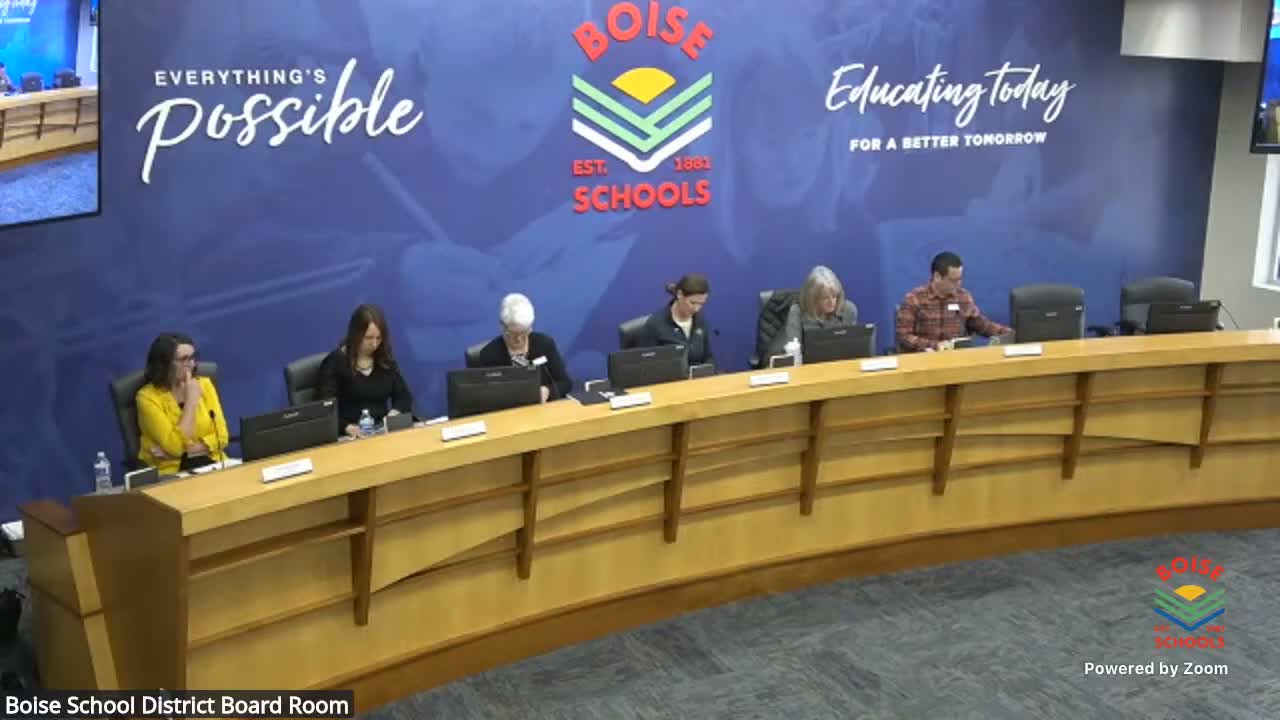
Summary
Deputy Superintendent Nick Smith told the Boise School District board that focus groups of students, staff, parents and principals praised expanded CTE and mental-health supports but flagged communication, facility maintenance and staffing gaps; the district will circulate a draft of the 2026–27 strategic plan in mid‑April with board workshops April 30 and May 28 and final action June 8.
Deputy Superintendent Nick Smith presented results from strategic-plan focus groups on March 9, saying students, staff, parents and principals largely praised expanded career-technical programs, AVID access, mental-health services and recent safety improvements but identified persistent gaps in communication, facilities and student supports.
Smith said students praised expanded opportunities — from athletics to DECA and AVID — and noted appreciation for additional social workers, in‑building therapists and other wellness supports. Staff and principals reported strong professional development and higher retention rates than regional averages but also raised concerns about standards-based reporting rollout, curriculum gaps and uneven implementation of new systems.
"We heard a lot of appreciation for the work we've done — and some blind spots where people don't know about it," Smith said, noting that ParentSquare communication had felt like a "fire hose" for some respondents and that facility maintenance and clearer timelines for strategic goals remain priorities.
Trustees pressed for specifics about next steps and costs. Trustee Gregory said the recurring themes suggested opportunities to engage community volunteers and partners; he also asked for an estimate of the program costs. Smith said many of the services praised in the focus groups exceed state funding levels and are supported by local levies and community investments, and that budget recommendations tied to strategic-plan revisions will be brought forward later in the spring.
Smith outlined the board timeline: staff will finalize the focus-group evidence this week; the district will circulate a draft of the 2026–27 strategic plan in mid‑April for trustees to review ahead of an April 30 board workshop, collect further feedback on May 28, and present a final draft for approval and a KPI progress update on June 8.
Smith also said the district intends to repeat the focus-group approach annually to sustain stakeholder engagement and that the results will be shared with staff through district communications channels.
Board members noted continuing concerns about staffing levels (nurses, counselors and social workers), consistent discipline frameworks, and how standards‑based reporting will interact with AP and dual-credit programs. Smith acknowledged the concerns and said additional implementation support and clearer metrics will be part of the draft plan.
The district has not yet published a line‑item cost estimate tied to specific focus-group recommendations; Smith said cost details and budget implications will accompany later recommendations to the board.