
Averill Park board signals support for a 3.99% tax levy to limit cuts while avoiding voter backlash
Get AI-powered insights, summaries, and transcripts
Subscribe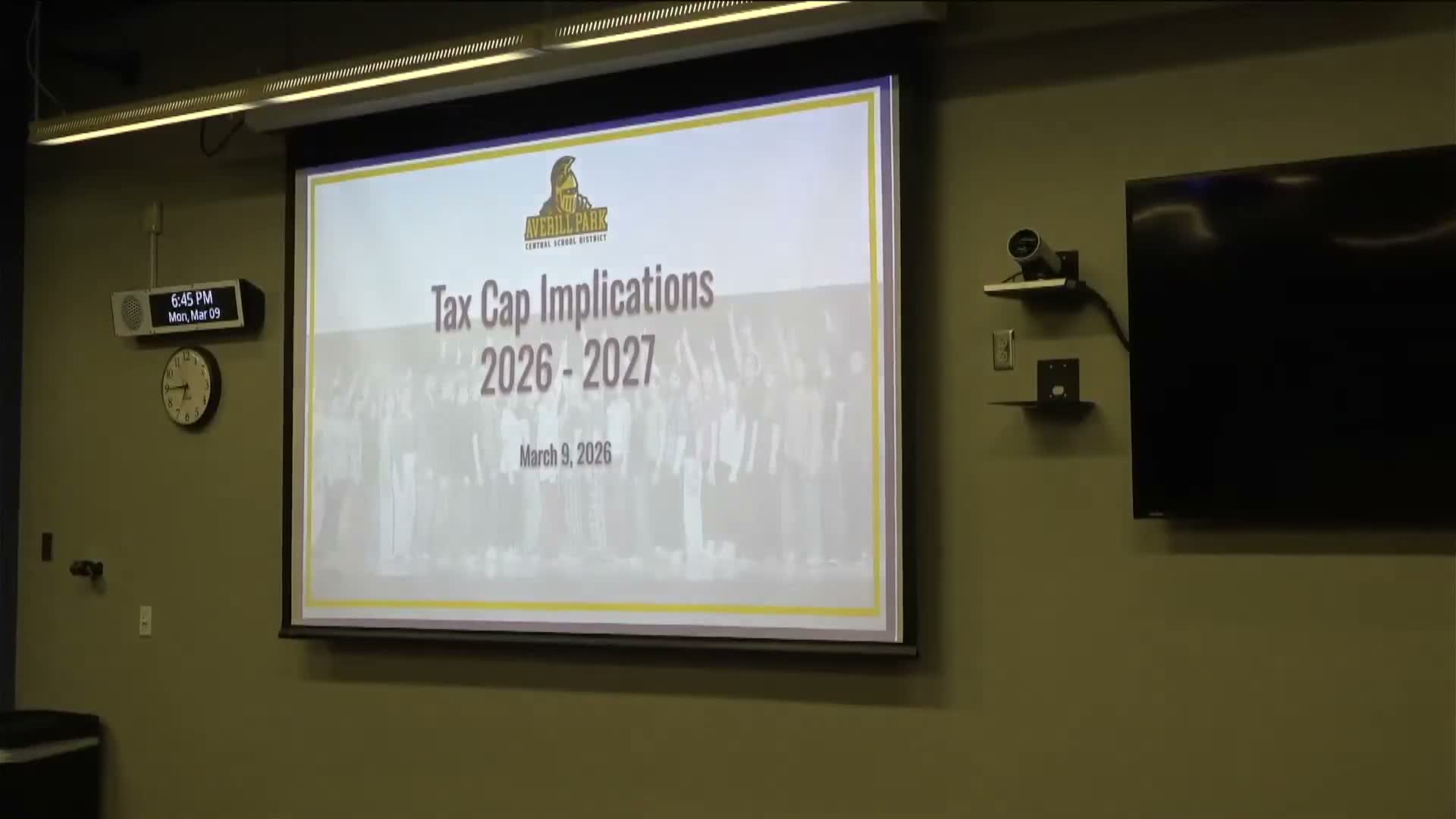
Summary
Board members discussed tax‑levy scenarios and class‑size tradeoffs and signaled consensus to advance a 3.99% levy recommendation that aims to preserve key positions while improving chances the budget will pass, with staff asked to return a recommended budget on March 30.
Members of the Averill Park Central School District board spent more than two hours reviewing levy scenarios, capital‑project financing and class‑size projections before signaling support for moving forward with a 3.99% tax levy recommendation.
Superintendent (speaker identified in the record as the presenter) told the board that two approved capital projects are moving into financing and that the district already must provide roughly $676,000 in revenue to pay for capital work. He said those capital exclusions explain much of the district’s higher tax‑cap number and showed household impacts for multiple levy options, noting examples such as an estimated $187 increase on a $300,000 home at a 4.66% levy versus $141 at 3.5%.
“The capital exclusion is in there very purposefully,” the Superintendent said, explaining that voters approved the debt amounts and that the levy is how the district must pay it. He also walked trustees through modeled long‑term effects, including compounding scenarios over 10 years.
Trustees framed the decision as a risk‑management exercise. Several members said a levy above 4% carries a marketing and perception risk that could lead voters to reject the budget and push the district into contingency. “I just think, going below the 3 9 9 would be irresponsible,” one trustee said in opposition to deeper cuts; another voiced the opposite concern, saying the district risks a rejection if the number starts with a 4.
Board member Megan, noting persistent reductions in state foundation aid, argued the state has shifted more of the funding burden to local taxpayers and that this dynamic constrains district options. “The state of New York continues to abdicate their responsibility,” Megan said, urging trustees to weigh both program needs and taxpayers’ capacity.
Board discussion also focused on concrete program implications: trustees reviewed a “menu” of positions tied to levy thresholds. At 4.66% the district would fund one custodian and two instructional hires (one intermediate, one primary) with no additional cuts; at 4.25% the district would gain fewer positions; at 3.99% fewer additions would be possible and below 3.99% deeper cuts would be required. The presentation included section‑level details: for example, without the proposed additions some third‑grade cohorts would move from three sections to two and class sizes in affected grades could rise into the high 20s.
Trustees did not take a formal roll‑call vote on a final levy number at the meeting, but a clear majority said they would be comfortable moving forward with 3.99% given concerns about voter reaction and the desire to avoid major cuts. The board asked staff to prepare the recommended budget and to return with more detailed figures at the March 30 meeting.
What happens next: staff will produce the recommended budget and levy resolution for the board to consider at the next scheduled budget meeting (presenters referenced March 30 as the date for the recommended budget presentation). The board also invited the public to attend upcoming budget hearings to ask questions about program and fiscal tradeoffs.