Get Full Government Meeting Transcripts, Videos, & Alerts Forever!
Get email alerts on the Ethnic Studies topic
No spam. Unsubscribe anytime.
Glendora Unified board votes 3–2 against approving ethnic studies course outline after hours of testimony
Summary
After a lengthy public comment period and extended board debate about wording such as 'intersectionality,' funding and scheduling, the Glendora Unified Board of Education declined to approve the proposed ethnic studies course outline in a 3–2 roll-call decision on March 10, 2025.
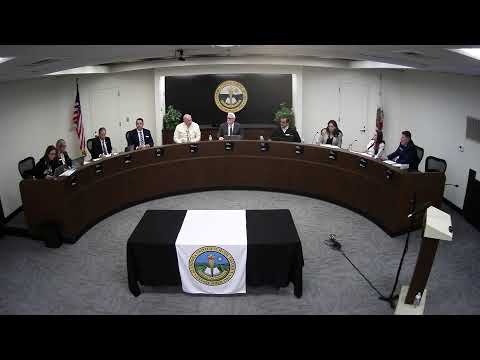
The Glendora Unified School District Board of Education voted 3–2 on March 10 not to approve the district’s proposed ethnic studies course outline, after extensive public comment and a split board discussion about curriculum language, pilot timing and state funding.
Staff argued the outline met the state’s requirement under AB 101 and recommended a pilot in 2025–26. Dr. Prince, the district’s social‑studies lead, told the board that “this outline will meet the California State graduation requirement commencing with pupils graduating in 2029–2030 school year.” The motion to approve the outline was made by Trustee Garcia and seconded by Vice President Paul Lopez.
Public commenters offered mixed views. One speaker who was introduced as Mr. Baron urged quick implementation and said, “It’s the law. We’re gonna have make it happen,” and provided a ready‑to‑use curriculum sample he said aligns with A–G requirements. Kate Hamilton, a member of the ethnic studies community committee, described the committee process and said she was “confident that our teachers take their profession very seriously, and they want to give their students the best experience possible.” By contrast, Wendy Jarvey told the board she feared the posted overview tracks the state model closely and warned it could open the door to activism; she said she would “vote no.”
Board members debated both policy and implementation. Supporters said a locally developed course would help students see multiple perspectives and improve engagement. Trustee Garcia said the class could be especially valuable for Glendora’s sizable Latino student population, arguing it provides representation and a sense of belonging. Opponents focused on specific language in the outline and practical concerns for scheduling and readiness. President Clifford said he had reviewed the document line‑by‑line and told colleagues he was “not ready to support this outline,” citing a lack of the “bookends” he wanted to see around sensitive topics.
Board members also asked whether families could opt out; staff replied that AB 101 does not provide an opt‑out and that implementing the course as a piloted graduation requirement in ninth grade helps with master scheduling and eventual certification for the class of 2030. Trustees raised funding concerns as well: while the state provided start‑up allocations for curriculum work in earlier years, staff said ongoing funding remains uncertain and that the May revise will clarify allocations.
After discussion, the motion to approve the outline failed on a roll‑call vote; the president announced the result as a 3–2 vote not to support the recommendation. Trustees asked staff to continue work, to return with revisions and to keep the community involved in further adjustments.
What happens next: the board did not adopt the outline. District staff said they will continue revision and bring further materials and sample lessons back to the board for additional review and possible future action.