Get Full Government Meeting Transcripts, Videos, & Alerts Forever!
Get email alerts on the Land Use topic
No spam. Unsubscribe anytime.
Council lawyers draft reasons for denying Willows Place PUD application
Summary
City attorneys and councilors reviewed and refined factual findings and multiple independent legal bases for denying the Willows Place PUD, focusing on a site-size requirement (minimum 2 acres for PUD exceptions), whether the site qualified as "redeveloping," adequacy of offered amenities, neighborhood compatibility, and streetscape/parking and emergency access concerns.
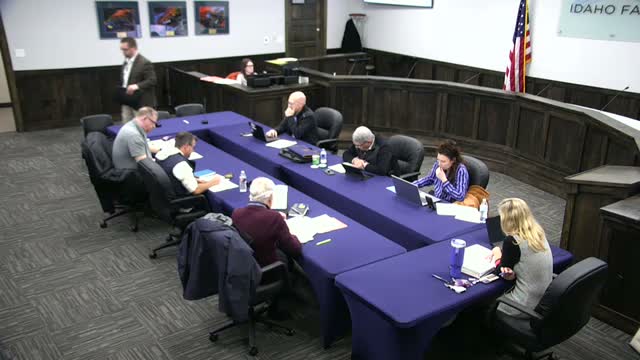
City legal staff and councilors on Feb. 3 worked through a draft findings-and-conclusions memorandum explaining the council’s decision to deny the Willows Place PUD application and to prepare a legal record for Thursday’s agenda.
City Attorney (speaker 10) presented several independent bases staff had drafted so that, in the event of an appeal, the council’s decision could be upheld on one or more independent grounds. The principal, dispositive basis discussed is that the site is under the code’s stated two-acre minimum for PUDs and that council is exercising the discretionary exception review narrowly: even if the site could be considered for a smaller PUD under the redevelopment or public-amenity exceptions, councilors declined to exercise that discretion in this case.
Council debated whether the parcel meets the municipal definition of "redeveloping" (which can include subdivided property with municipal services in place) and whether the amenities the applicant proposed qualify as genuine "public benefits" rather than private amenities that principally serve future residents. Councilors noted an example where an applicant had cited a hammerhead turn or painted basketball area as an amenity and questioned whether amenities located at the end of a private street would meet the public-amenity standard.
Staff also proposed findings on neighborhood compatibility. Legal staff outlined the geographic area considered the relevant surrounding neighborhood and noted that the proposed attached dwellings differed from the detached single-family character and separation between units found in that block. Some councilors argued that the compatibility finding was marginal and could be omitted to avoid weakening the overall record; others favored keeping streetscape concerns in the findings.
Councilors discussed operational concerns—the possibility of on-street parking or a single vehicle blocking access on a private street—and whether evidence in the record supports a factual finding that emergency vehicles could not reliably turn around or access the site. Legal counsel noted that making such factual findings would require evidentiary support in the record (for example, explicit fire-department testimony) and suggested removing or revising any assertions that could not be directly supported.
Council members and staff agreed to refine the draft language, focus on the stronger legal bases (site-size requirement, discretion not to grant an exception, and public-amenity analysis), and prepare the finalized reasons for presentation at Thursday’s council meeting rather than placing the item on consent. Staff flagged the legal processes available to the applicant (a motion to reconsider and, if necessary, a district-court appeal and potential takings claim) and confirmed a notice to the applicant about those rights would accompany the denial.
The legal review closed with direction to staff to prepare the finalized findings and to present the denial and supporting reasons during the next regular council meeting so the council decision is clearly documented and defensible.