Get Full Government Meeting Transcripts, Videos, & Alerts Forever!
Get email alerts on the Stormwater And Sewer topic
No spam. Unsubscribe anytime.
Residents press Cortland council over recurring flooding and sewage lift-station failures
Summary
Residents described repeated basement flooding and lift-station failures over several years and urged the Cortland City Council for short-term fixes such as raising manhole covers; council asked the service department for cost estimates and proposed a broader water study to inform long-term solutions.
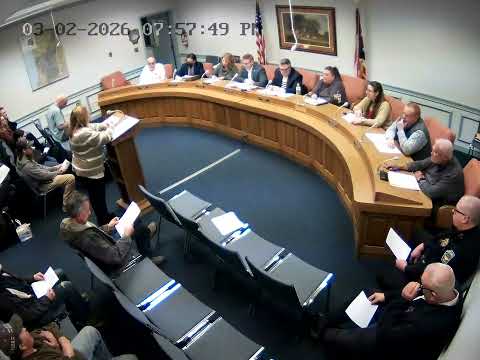
Residents urged the Cortland City Council on March 2 to act on recurring flooding and sanitary sewer overflows that they say have led to sewage in basements.
Don Harper of 120 Hickory Circle said the city's lift station "has probably gone down 10 times in the last 5 years," causing repeated backups and damage. "There's nothing we can do about it," he said, and asked what the city had done after prior meetings about the problem.
Council members acknowledged the problem is longstanding and described immediate, short-term and longer-term responses. The presiding official said the service department identified five manhole locations near the creek where raising manhole covers by an estimated 18 to 27 inches could reduce creek inflow to the sanitary system. "I'm hopeful that we can at least do something in the short term," a council speaker said, and asked the service department for a plan and cost estimate within two weeks.
City staff and council also described the need for a broader water study that would model flows in Cortland and upstream areas, gather data over weeks and identify where county or regional partners could help. Council said some infiltration points previously had been sealed and that reducing stormwater inflow to the sanitary system would limit future basement flooding and backups.
The council did not commit to a construction schedule for larger projects at this meeting but directed staff to return with estimates and to explore county coordination for long-term measures.