Get Full Government Meeting Transcripts, Videos, & Alerts Forever!
Get email alerts on the Parking topic
No spam. Unsubscribe anytime.
Board continues Production Drive parking restriction hearing after business and safety split
Summary
After mixed feedback from property owners, business operators and residents about narrow lanes and large trucks on Production Drive, the board voted to continue the public hearing for 30 days to let staff and owners negotiate targeted solutions rather than adopt a blanket no‑parking ordinance tonight.
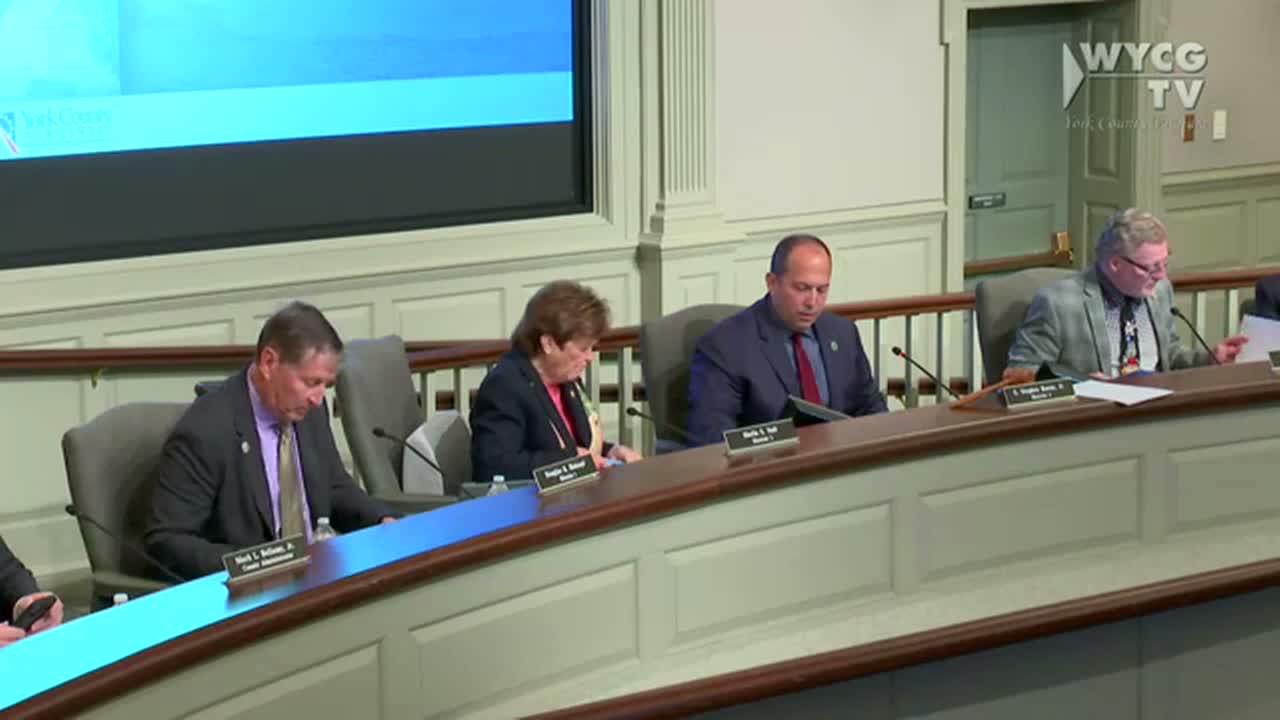
The York County Board of Supervisors continued a public hearing on proposed ordinance 24‑4 (parking restrictions on Production Drive) for 30 days after hearing conflicting testimony from business owners, residents and county staff on March 19.
Public works engineering manager Beth Mertz Mertzquin described a narrow industrial street with multiple locations where large trucks park and vehicles on both sides of the road create two‑way clearance and sight‑line problems. Mertzquin said staff photo documentation showed trucks and vehicles encroaching into travel lanes and that some lots are leased to tenants who do not receive direct notices, making outreach difficult.
Business owners and residents who testified described two competing harms. William Jordan, who operates a business at 130 Production Drive, said large tractor‑trailers and protruding truck bodies create hazardous conditions on the 24‑foot roadway and a sharp curve, producing near collisions and safety risks for motorists and customers. Zach Hancock, who runs a shop at 114 Production Drive, said some photos presented at the meeting reflected cars or vehicles that had since been removed and warned that a broad no‑parking rule could cripple small businesses that rely on curbside space for customer drop‑offs and temporary vehicle staging.
Supervisor Holroyd moved to continue the hearing for 30 days to give staff time to work with property and business owners and to explore narrower fixes — examples discussed included single‑side parking, time‑limited loading, and identifying alternative lots. Board members said they preferred a targeted approach rather than a blanket ban to avoid unintended harm to businesses while addressing emergency‑vehicle access and safety concerns.
The board approved the motion by roll call and continued the public hearing to the April 16, 2024 meeting, asking staff to report back with options and outreach results. Staff and the board suggested business owners may collaborate or propose alternative parking layouts that balance operations and safety.