Get Full Government Meeting Transcripts, Videos, & Alerts Forever!
Get email alerts on the Budget Dispatch Allocation topic
No spam. Unsubscribe anytime.
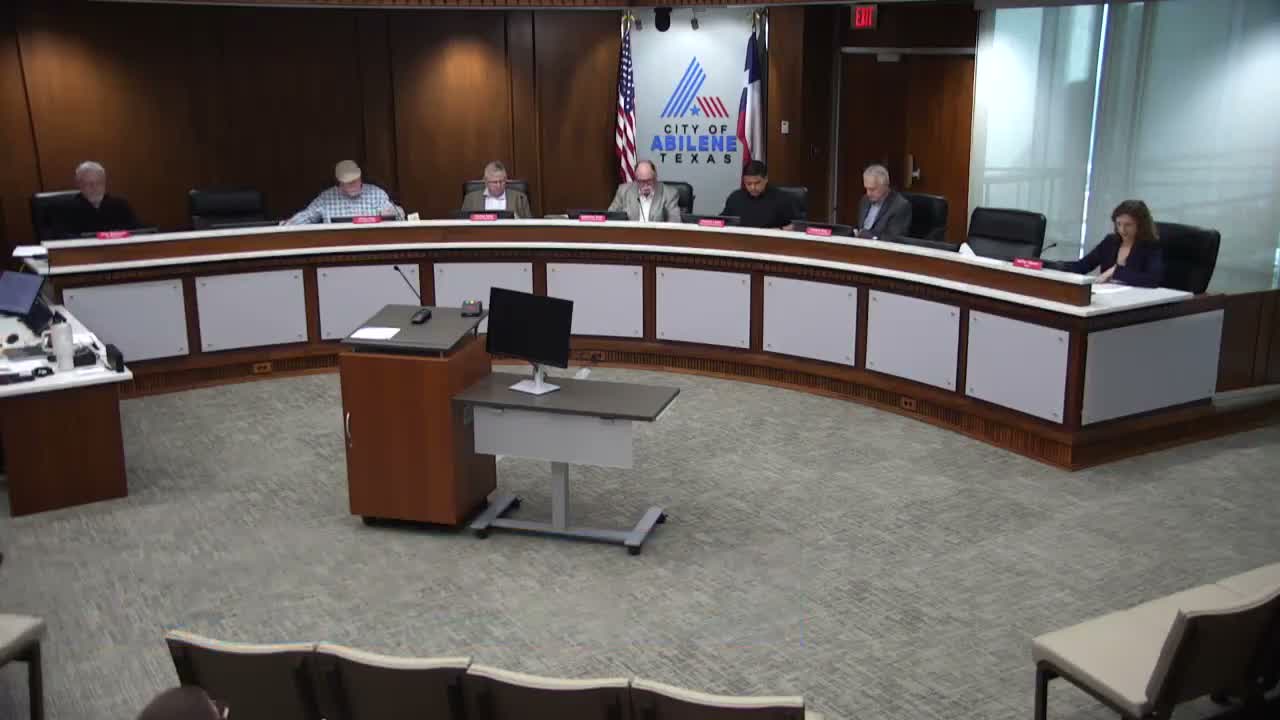
9-1-1 board weighs budget models and targets a 10% dispatch allocation cut while staff negotiates with city and county
Summary
The Taylor County 9‑1‑1 board reviewed FY2026 forecasts showing a roughly $800,000 shortfall under current trends and debated three FY2027 budget models; the chair proposed a 10% cut to the dispatch allocation for FY27 and directed staff to negotiate with Abilene and Taylor County officials and return recommendations by May.
The Taylor County 9‑1‑1 board reviewed budget forecasts and debated proposals to close a growing revenue gap, with the chair proposing a 10% cut to the dispatch allocation for fiscal 2027 and staff instructed to negotiate terms with the city and county ahead of a May deadline.
Troy Swanson, the board’s presenter, told members the FY2026 pro forma shows realized revenues through period five of roughly $2.3 million against a budget of about $3.5 million, driven primarily by an accelerated decline in wireline remittances. He warned that, under current assumptions, the district could draw roughly $800,000 from fund balance this year. “We’re going to have to look at the real numbers month to month,” Swanson said, urging the board to use FY27 to mitigate fund‑balance consumption and inform decisions for FY28.
The board discussed three modeling alternatives Swanson presented: (1) a rollover/status‑quo approach that yields a projected fund balance near $1.7 million if expenses remain unchanged; (2) a heavier, immediate 25% reduction in dispatch allocation (presenters estimated about $550,000 in aggregate savings split roughly $375,000 city / $175,000 county) that narrows but does not eliminate a shortfall against a $2.0 million revenue baseline; and (3) a hybrid that pairs a modest dispatch allocation reduction with rate changes that the presenter projected would bring the fund balance nearer $1.62 million.
Board members pressed staff on how the current dispatch allocation was computed. Staff said the district has run a flat allocation since 2023 based on an older analysis that used a 63% loaded‑salary share applied to headcounts (packet figures showed about $1,490,000 allocated to the city and about $727,075 allocated to the county). The district’s finance director cautioned that those flat amounts have not kept pace with salary and benefit growth and recommended negotiations to identify a more sustainable and predictable approach.
Marjorie Knight, director of finance for the city, briefed the board on the limits imposed by Senate Bill 2, telling members that recent sales‑tax windfalls are largely one‑time receipts and that SB2 constrains property‑tax revenue growth over the long term. "It is one‑time money," Knight said, urging the board to plan for sustainable revenue rather than rely on temporary gains.
Chair opened the floor to a range of member views and proposed an initial 10% dispatch allocation cut for FY27 as the least disruptive starting point. Several members argued for more aggressive reductions (25% or greater) to avoid a steeper adjustment in FY28 if wireline losses persist. The board settled on direction rather than a final vote: staff will convene city and county leadership (including the county judge, commissioners, sheriff and dispatch chiefs), negotiate possible disparate split models, and return a recommended action for board approval by May.
The board also discussed adopting an explicit fund‑balance target (for example, coverage equal to six months of expenses) to guide future rate and allocation decisions and to protect the district’s cushion while pursuing cost reductions.
Next steps: staff will brief Abilene and Taylor County stakeholders in joint and follow‑up meetings, then present a negotiated budget recommendation and any proposed ordinance or allocation adjustments to the board in May for formal action.
The board acknowledged the FY2026 pro forma and directed staff to return with recommendations; no final budget vote was taken at this meeting.