
Petersburg board reviews stricter attendance rules, task force urges recovery and support options
Get AI-powered insights, summaries, and transcripts
Subscribe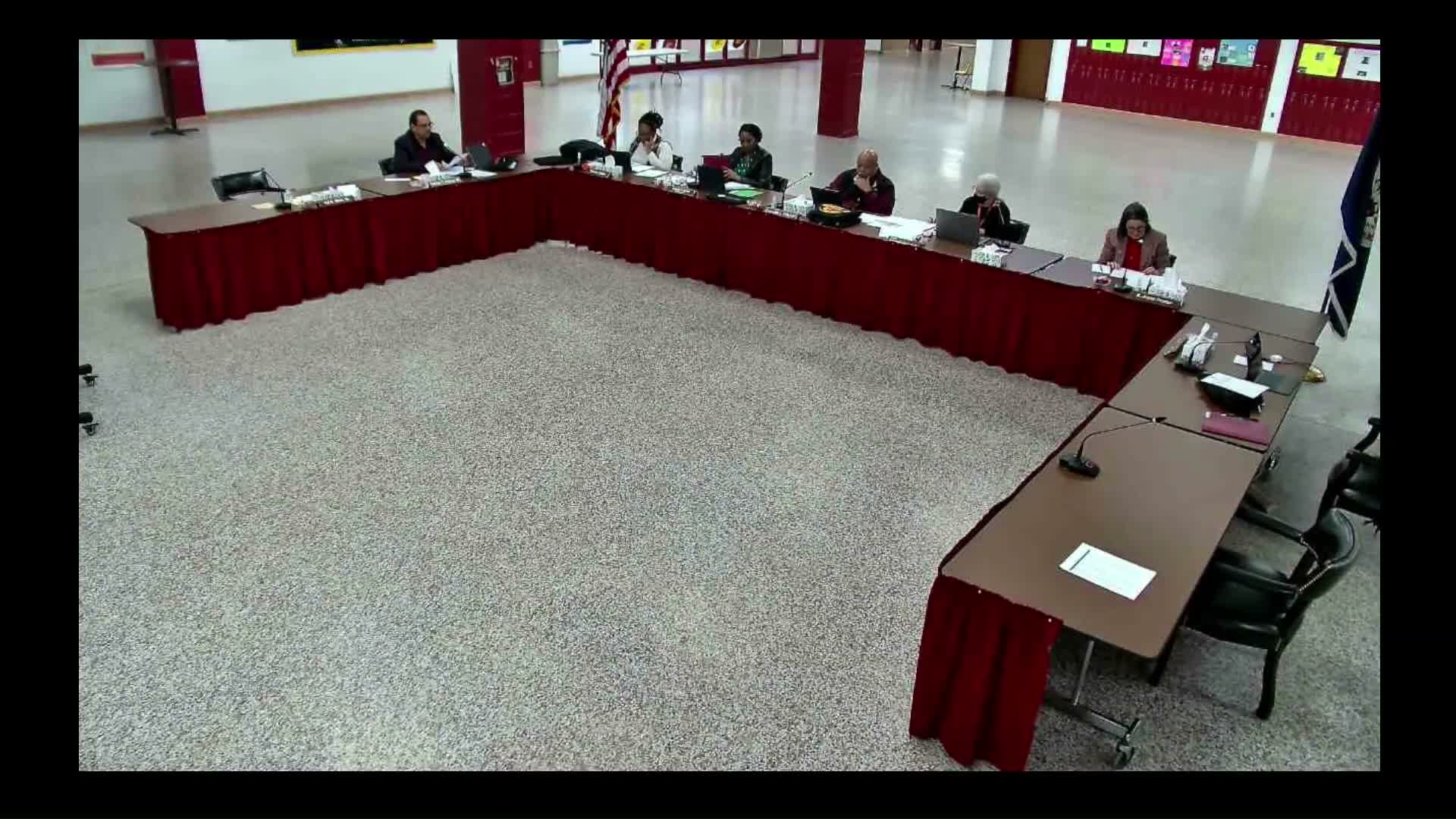
Summary
The Petersburg City School Board reviewed task-force recommendations to strengthen attendance regulations, including automatic addition to attendance teams after five absences, a recovery-time policy (three hours recoup one day) and potential denial of credit for excessive absences. Members pressed staff for clearer implementation steps and safeguards for students.
The Petersburg City School Board heard a detailed presentation March 4 on proposed revisions to the district’s attendance regulations that would give schools new tools to address chronic absenteeism while also offering recovery options for students.
Superintendent Brown said the attendance task force recommended changes intended to reduce the district’s chronic-absence rate by 3 percent by the end of the school year. "Petersburg City Public Schools is very serious and very focused on chronic absenteeism," Brown told the board during the presentation and introduced a set of regulatory changes for the board's consideration.
The administration’s proposals included several concrete steps: students who are absent five consecutive or nonconsecutive days would be added to a school attendance team caseload for individualized intervention; schools must implement an attendance-recovery strategy, and the district would count three hours of recovery time as recoupment for one day of absence; and the regulations would allow for suspension days to be recouped at approved partner locations. The recommendation also includes academic consequences in some cases: a high-school student who misses more than five days in a nine-week grading period for a daily class (or more than three for alternate-day classes) could receive a failing grade unless the absence is documented and justified, and annual caps were discussed (for example, 18 days for daily classes).
Board members pressed for clarity about how the new rules would be applied. "You could have a kid that missed five days in a grading period, didn't miss a day all year long and end up failing the class," said Hal Miles, who urged caution and asked for more nuance in the regulation. Miles and other members asked staff to define more precisely what constitutes "justifiable documentation," who serves on each school’s attendance team and to provide a uniform attendance-recovery protocol rather than allowing separate approaches at each school.
Staff responded that the regulation change is intended to add "teeth" while preserving supports. A district administrator said students would not be failed automatically: documentation, attendance-team referral, and recovery options (including Edgenuity and summer-credit recovery) would be available. Director of special education (substituting for an absent staffer) described the typical attendance team composition as family engagement staff, school social workers, behavior interventionists, administrators, teachers, truancy staff and a McKinney-Vento liaison.
Vice Chair Tucker, who served on the task force, urged the board to keep flexibility and to remember the practical realities that families face. "It is not just a policy that is designed to fail our kids," Tucker said, adding that some students who meet academic expectations nonetheless exceed state thresholds for chronic absence and need targeted supports.
Where members identified gaps — for example, specifying which job titles must sit on each school's attendance team and the exact recovery procedures — staff committed to revise the regulation and return it for action ahead of the 2026–27 school year. The board did not take a final vote on the policy that night and directed staff to refine the language, confirm legal review, and present consistent implementation tools to ensure equitable application across schools.
Next steps: staff will draft a revised regulation that lists required attendance-team roles, defines "justifiable documentation," and outlines standardized recovery procedures for board review before implementation next school year.