
Judge Tim O'Malley urges independent oversight, tech upgrades in roadmap to curb fraud
Get AI-powered insights, summaries, and transcripts
Subscribe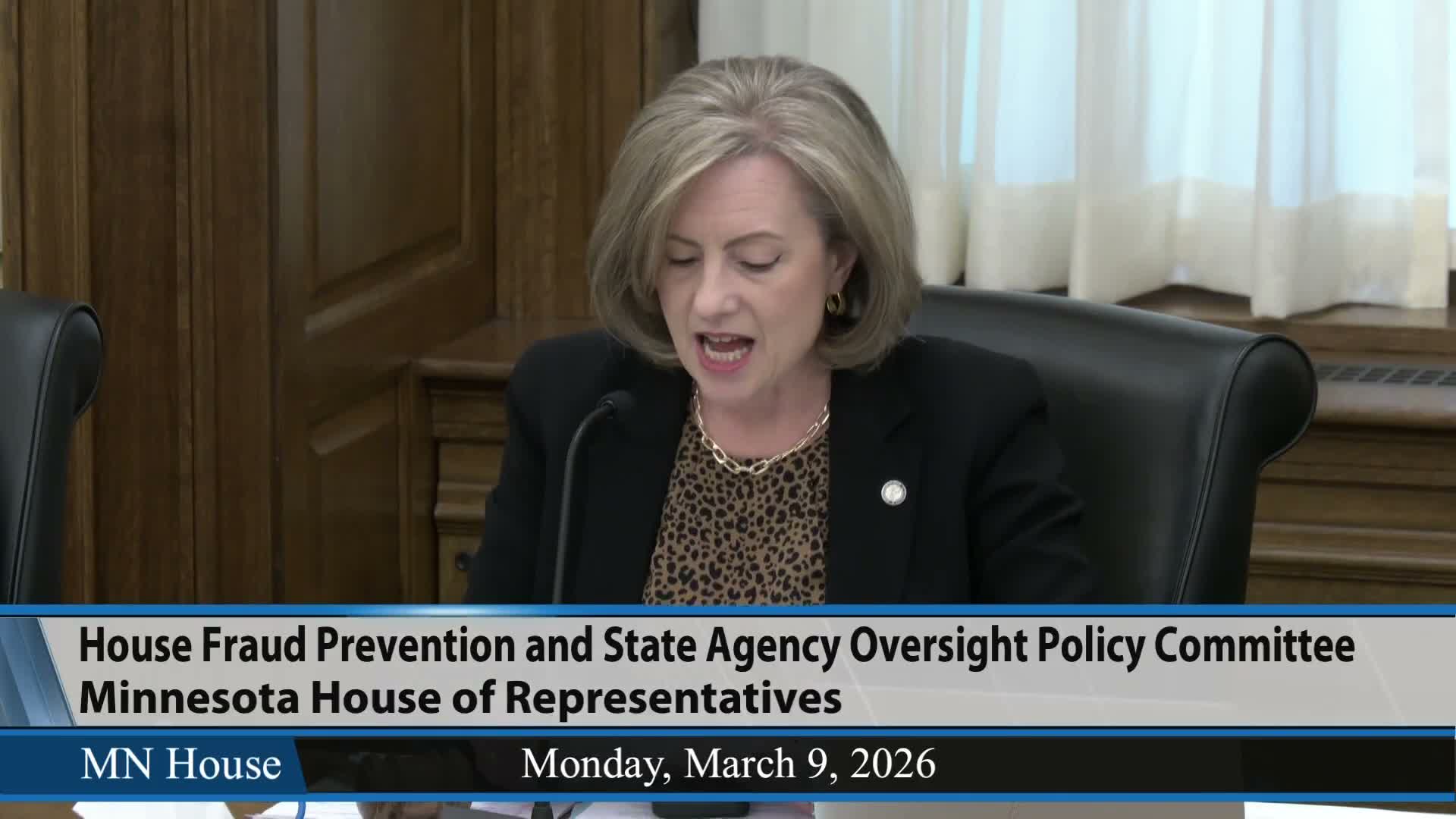
Summary
Judge Tim O'Malley presented a nine‑pillar roadmap urging stronger leadership accountability, data modernization and independent oversight to prevent fraud in Minnesota's benefit programs; DHS whistleblower Faye Bernstein testified about retaliation and called for leadership changes.
Judge Tim O'Malley, director of program integrity for the state of Minnesota, told the House Prevention and State Agency Oversight Committee that Minnesota has experienced "extensive well documented fraud" that has wasted taxpayer dollars and eroded public confidence, and outlined a roadmap of nine areas to strengthen the state's approach to preventing and detecting fraud.
O'Malley said the roadmap, released two weeks earlier, identifies interrelated reforms including leadership and accountability, program processes and controls, centralized investigative coordination, training, legislative action, technology and data modernization, independent oversight, stakeholder engagement and resource and capacity building. "Everybody has a role to play in combating fraud," he said, urging better front‑end enrollment checks and improved provider screening.
The director singled out technology and oversight as near‑term priorities. "Using modern technology is a must," he said, urging real‑time data sharing, analytics and monitoring tools. He also recommended an independent monitoring function or point person to hold agencies accountable and report publicly on progress: "Point person should be identified and held responsible for effective implementation and execution."
The committee also heard testimony from Faye Bernstein, a 20‑year Department of Human Services compliance manager who described retaliation after she raised contract irregularities. Bernstein said she was "walked out of the building" and "banned from all DHS owned and licensed property" and called for "dramatic change at the Department of Human Services in our leadership." She told the panel she had been investigated for raising concerns and that the Office of Legislative Auditor report echoed issues she had reported years earlier.
Lawmakers pressed O'Malley on causes and consequences. Representative Will Hudson asked whether fraud stemmed chiefly from sophisticated criminals or systemic oversight weaknesses; O'Malley replied, "both," saying organized groups exploit longstanding vulnerabilities and data‑sharing shortfalls. Several members asked what enforcement or personnel consequences he recommended for supervisors who failed to act; O'Malley said responses should be case specific and could range from coaching to termination after factual review.
Committee members also debated institutional design for oversight. O'Malley said he supported creating a truly independent monitor—whether an inspector general office or another model—with bipartisan legislative input and external membership, so the public can see progress and hold leaders to deadlines. "If the person is not given that independence, it'll be on the front page and they'll probably walk," he said.
Chair Robins and members noted frustration that DHS did not have staff present to answer questions, and several lawmakers urged immediate legislative and budget steps to implement the roadmap's technology and monitoring recommendations.
The committee did not take formal action on the recommendations during the hearing; members said they would pursue legislative language and follow‑up testimony.