
Bill to require intelligent speed‑assist devices for repeat speeders stalls on tie vote
Get AI-powered insights, summaries, and transcripts
Sign Up Free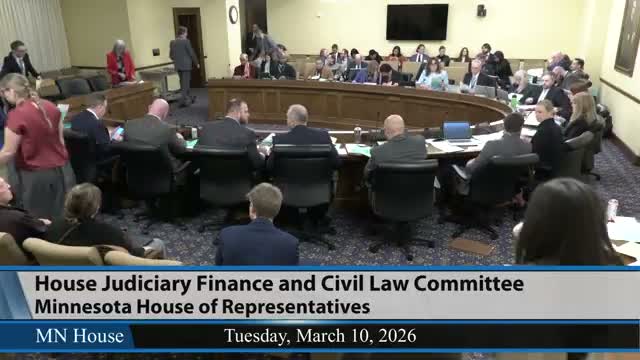
Summary
Representative Kraft’s bill would have required installation of intelligent speed‑assist devices for certain repeat or egregious speeders and included data‑privacy provisions for providers; emotional victim testimony and technical questions preceded a 7‑7 tie in committee, so the bill did not advance.
Representative Kraft presented House File 3429 on March 10, proposing that drivers convicted for repeated or egregious speeding offenses be required to install intelligent speed‑assist devices as a condition of restored driving privileges.
Kraft said commercial fleets have used the technology for decades and described the bill’s A3 amendment as clarifying device definitions, notice requirements, and moving some override rules to administrative rulemaking. Julie Risser, who testified for the bill, detailed several fatal and serious speed‑related crashes in her community and urged passage of the measure to reduce roadway deaths.
Members raised questions about data privacy, noting the bill exempts providers from the Government Data Practices Act but includes statutory constraints on use and sale of location data. Counsel said the commissioner would approve providers and could decertify a provider who violated statutory data and quality standards. Lawmakers also questioned potential costs to individuals (comparing the device to ignition‑interlock fees) and how GPS and speed‑limit mapping would operate in rural areas with sparse signage.
A requested roll call resulted in a 7‑7 tie on the motion to re‑refer HF3429 to Transportation Finance & Policy; on a tie the bill did not advance out of committee.
What’s next: The author said she would follow up on members’ concerns about penalties for improper disclosures, cost discounts for low‑income participants, and technical mapping issues if the bill is reintroduced or considered in another forum.