
Bill would broaden domestic-violence reporting and remove 72‑hour arrest window; family testimony urges change
Get AI-powered insights, summaries, and transcripts
Subscribe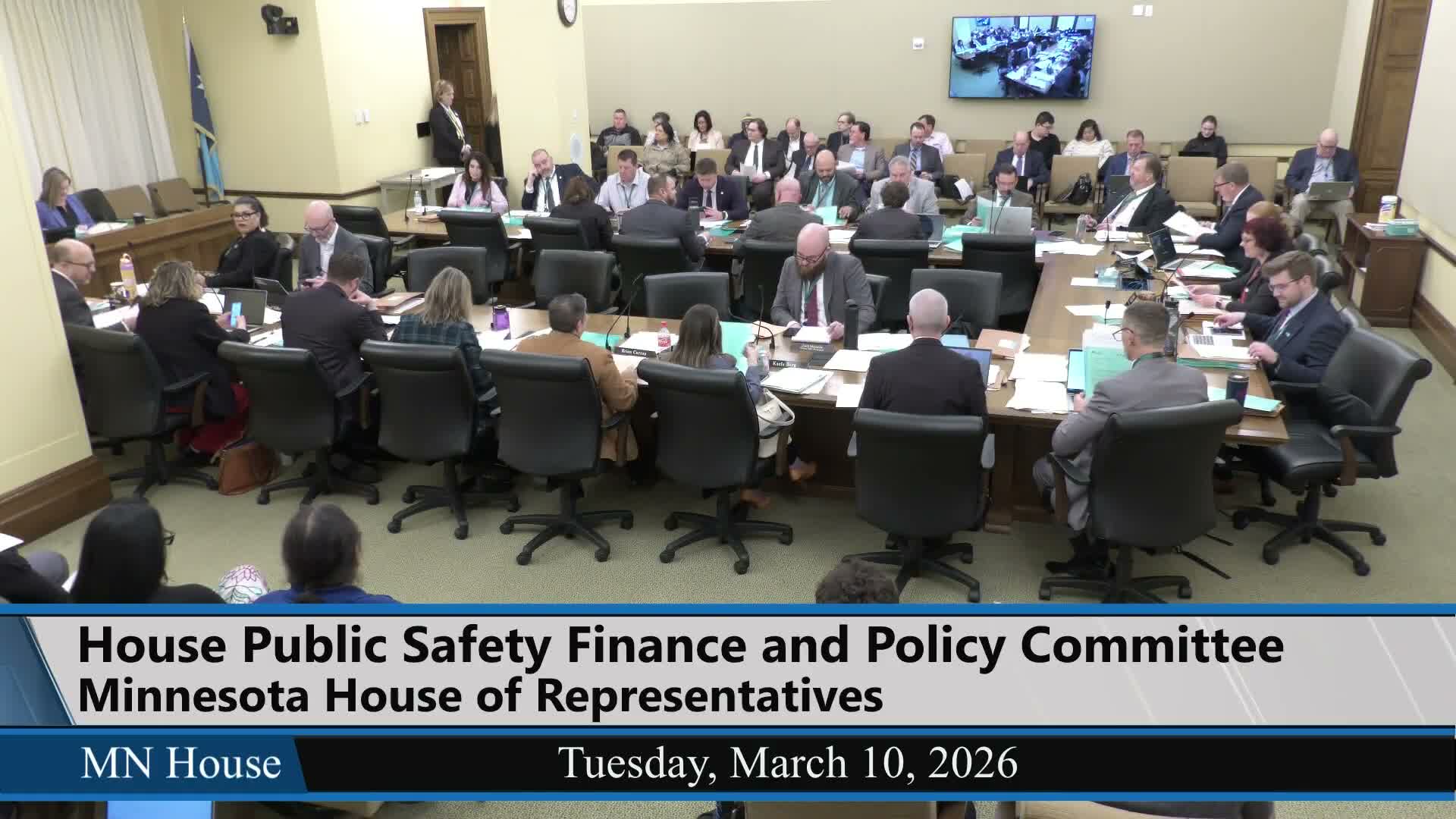
Summary
The bill would expand data reporting to DPS/BCA, broaden covered offenses and remove the 72‑hour limitation on probable‑cause arrests so officers retain authority beyond that window (staff said the change preserves the existing 'may' arrest discretion); a family member described how confusion about the 72‑hour rule contributed to a niece’s death and urged reform. The committee re‑referred the bill as amended to judiciary.
A multi-part bill discussed in the committee would change reporting, arrest and court procedures for domestic‑violence incidents and create a task force to standardize lethality assessments.
Chair Miller (presented by Chair Mueller) said the measure would require law enforcement agencies to report additional information to the Department of Public Safety (DPS) for inclusion in a BCA summary report, broaden the statutory definition of domestic abuse for prosecutor policies, and remove a statutory 72‑hour limitation that some officers interpret as restricting arrest authority after the fact. The bill would also require proof of transfer filings for firearms‑surrender orders, authorize holding arrestees until they see a judge in some circumstances, and create a task force to recommend statewide lethality-assessment practices.
Janet Williams testified about her niece, Allison Lusher, whose attacker was not arrested after officers believed the 72‑hour probable‑cause window had expired; Williams said that confusion meant the suspect was allowed to leave and that the niece was killed the following day. "No family should have to stand where mine stands today," she told the committee, urging lawmakers to eliminate time limits that she said allow dangerous suspects to go free.
Nonpartisan staff told members that the change to the statute would preserve the discretionary nature of arrests — the existing "may" language remains — but would ensure officers retain authority beyond the previous 72‑hour interpretation; chairs said they would work with county attorneys and chiefs on practical guardrails and implementation. The committee adopted amendments and re‑referred the bill as amended to the judiciary, finance and civil law committee.
What happens next: language will be further vetted in judiciary; chairs signaled willingness to refine implementation details with stakeholders including county attorneys and chiefs.