
New Castle County HR reports progress on workforce diversity but flags leadership gaps
Get AI-powered insights, summaries, and transcripts
Subscribe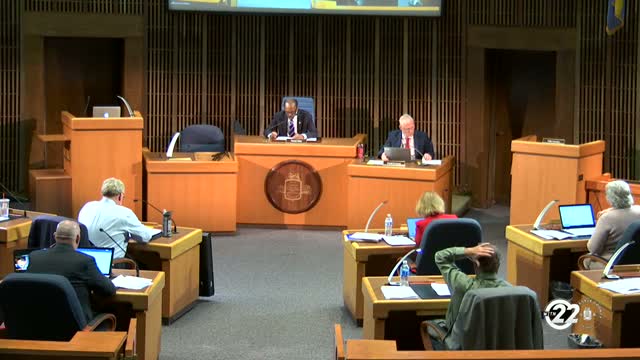
Summary
County HR presented its 2026 diversity report showing near gender parity, incremental increases in minority hires since 2019 and a roughly 10% overrepresentation of white employees relative to county population; HR plans a new HRIS for deeper unit-level analysis and councilors pressed for data on leadership diversity and pathways from seasonal work to permanent roles.
New Castle County—s chief human resources officer, Dr. Dustin Blakely, told the Executive Committee on March 10 that the county has made measurable progress on workforce diversity but still faces gaps at senior levels.
"We've cut that down from an average of 147 days to 55 days now to fill vacancies," Dr. Blakely said, citing process changes such as online onboarding and a new digital ticketing system intended to speed hiring and improve retention. He also said the county will replace its legacy PeopleSoft system with a modern HRIS to enable more detailed reporting.
The report, compiled from county HR data for 2025 (with small early-2026 records included), shows near gender parity across the workforce and incremental growth in minority female employees since 2019. Data presenter Yanis Floropoulos said the county "overrepresents white employees relative to the population by almost 10%" while African American employees make up about 25% of the workforce versus roughly 27—29% of the county population.
Those high-level results, Blakely and Floropoulos said, mask considerable variation across work units: public safety and public works remain male-dominated, while administrative offices and community services have higher female and racial diversity. Floropoulos told council members that unit- and department-level reports will be needed to understand representation in leadership and professional ranks.
Council members used the Q&A to press for specifics. Council President Monique Williams Johns asked whether the report differentiates people-of-color representation at the management and supervisory levels; Blakely said that level of breakdown requires the new HRIS and unit-level analysis and that "the higher up you go ... the less diverse" the employee population generally becomes.
A council member asked whether Indian (South Asian) groups are being tracked distinctly from the "Asian" category; Blakely and Floropoulos confirmed the charting reflected self-identification and said staff would consider more granular tracking next year for fast-growing subgroups. Another councilmember asked how many full-time employees began as seasonal or part-time hires and whether diversity criteria apply to seasonal recruitment; HR said the hiring process is similar for seasonal roles and that the county is developing "career ladders" and reviewing collective-bargaining agreements to create clearer pathways from casual to permanent positions.
During a pointed exchange, Councilman Street criticized the long-vacant diversity commission and urged faster action. Blakely said a diversity commission is being assembled and names will be presented soon; Street said he has "been screaming about this for a couple years" and described the vacancy as unacceptable.
The presentation and council discussion concluded with a plan for departments and general managers to include unit-level demographic detail in upcoming budget presentations so members can follow up on leadership composition and recruitment strategies. There were no ordinances or formal policy votes associated with the presentation; the committee approved prior minutes by voice and then adjourned.
The committee asked HR to return with more finely grained data on leadership and supervisory representation, a timeline for the diversity commission appointments and additional details on career-ladder proposals so council members can evaluate whether staffing and budget requests align with equity goals.