Get Full Government Meeting Transcripts, Videos, & Alerts Forever!
Get email alerts on the Mining Borrow Pit topic
No spam. Unsubscribe anytime.
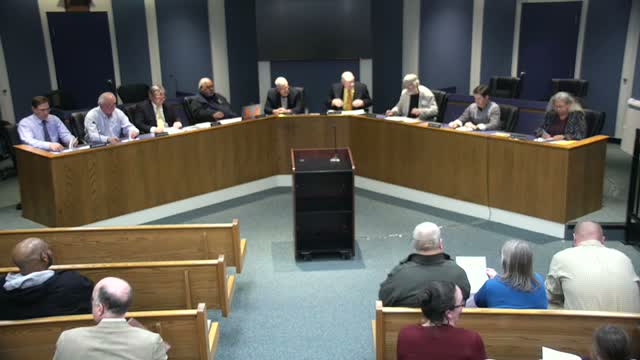
Planning commission recommends approval of Gray family sand pit after heated public comment and proffers
Summary
After hours of testimony from residents and applicants, the Southampton County Planning Commission recommended approval of a conditional‑use permit for a Gray family sand borrow pit with proffers including a 100‑foot minimum buffer, managed loblolly‑pine screening and emergency‑only extended hours; the vote was contentious with multiple commissioners and residents opposed.
The Southampton County Planning Commission voted Tuesday to recommend approval of a conditional‑use permit for a borrow‑pit sand extraction operation proposed by brothers Mitchell B. Gray and Alex J. Gray, after an hours‑long public hearing that featured forceful opposition from neighbors and multiple proffers from the applicants.
Planning staff read application 2025‑02 for a 155‑acre parcel with an initial mining area of roughly 15–20 acres and a 65‑acre reserve area. Applicants said the plan calls for a new entrance, earthen berms and a 100–200‑foot wooded buffer to shield neighbors, phased reclamation to a recreational pond, and limited truck movements tied to local contracts for road‑traction sand. Applicants estimated roughly 28 truckloads per day in routine operations, far fewer than the very large operations cited by a resident who presented an academic study quantifying property‑value declines near gravel pits.
Neighbors described concerns about property values, dust, noise, traffic safety on U.S. Route 258, and floodplain impacts. One resident who said a 2008 study showed a 20% reduction in adjacent property sale prices asked the commission to delay action so more neighbors could review materials. Several speakers said the affected neighborhood is long established and predominantly African American and urged prioritizing residents’ quality of life.
Applicant Mitchell Gray said his company has operated pits in the county for years, has received reclamation awards and performs quarterly inspections with the state Division of Mines and Minerals (now part of Virginia Energy). Gray offered commitments on managed loblolly‑pine planting between the pit and houses, a minimum 100‑foot buffer on the north, south and west property lines, a gated entrance and signage, a looped loading area to minimize truck backing, the use of lower‑decibel “white‑noise” backup alarms on equipment and a proffer allowing emergency‑only extended hours to serve VDOT or municipal needs.
Commission debate focused on balancing local jobs and the applicants’ record against neighborhood impacts. Commissioners discussed minimum buffers, noise mitigation, truck routing and limited hours; staff and the applicant agreed to text changes clarifying a 100‑foot minimum buffer, managed loblolly planting as the screening standard and hours extended only for emergency municipal calls.
After an initial motion to deny the application was moved and discussed, commissioners took a second motion to recommend approval with the 12 proffers offered by the applicant and the clarifications agreed in deliberations. That recommendation will be forwarded to the Board of Supervisors for final action; the planning commission’s recorded roll‑call showed opposition from multiple members and at least one abstention during the final recommendation vote.
Next steps: Staff will transmit the record of the hearing and the commission’s recommended proffers to the Board for a public hearing in March.
Proffers and conditions of note from the planning commission recommendation include a minimum 100‑foot buffer on the north, south and west property lines (or greater, if Virginia Energy requires a larger setback), managed loblolly‑pine screening, restriction of regular mining hours to weekdays (with limited Saturday work) and an explicit emergency exception for hours based on municipal or VDOT needs. The commission also requested documentation of planned reclamation and the applicants’ monitoring commitments.