Get Full Government Meeting Transcripts, Videos, & Alerts Forever!
Get email alerts on the Strategic Planning topic
No spam. Unsubscribe anytime.
Abilene budget retreat produces five strategic priorities: infrastructure, housing, economic development, public safety and engagement
Summary
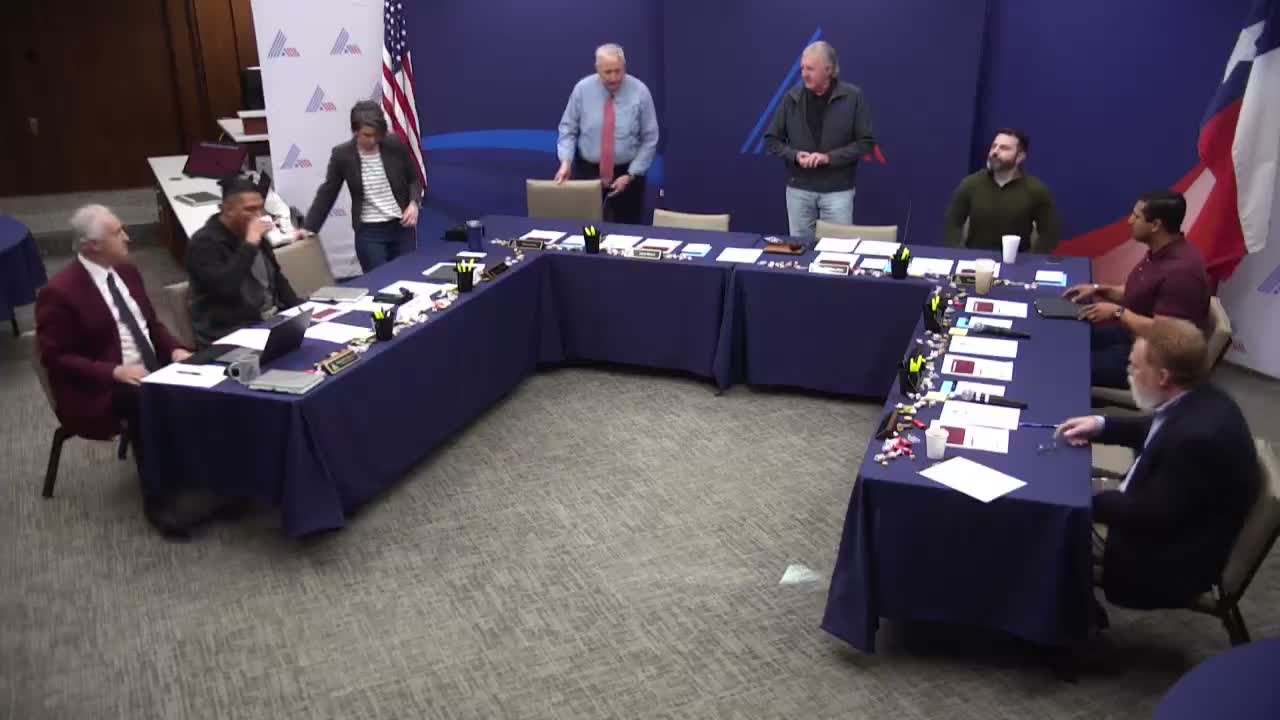
At a budget retreat facilitated by Mike Mowery, Abilene city council and staff spent a day setting a five‑year strategic direction and drafting objectives on infrastructure funding, housing supply, diversified economic growth, public safety/organizational capacity and stepped‑up community engagement.
Abilene city leaders and staff used a daylong budget retreat to translate rapid local growth into five strategic priorities and a set of near‑term objectives to guide the coming budget cycle. The meeting, led by a private facilitator, focused council attention on infrastructure, housing, diversified economic development, public safety and community engagement, and directed staff to convert those priorities into a strategic work plan and budget recommendations.
The retreat opened with public comment. "Abilene did obtain that building from the Abilene Independent School District," Northside resident Shontae Fleming told the council about an effort to revitalize the former Fannin Elementary and invited the council and staff to a ribbon cutting. Tammy Fogel, another resident, urged more transparency in budget materials and pressed the council to prioritize resolving a roughly "$70,000,000" shortfall in the firefighters' retirement fund so public safety is not left behind.
Mike Mowery, the facilitator and president of Leadership and Strategic Foresight with SGR, set the session's tone by distinguishing strategic vision (direction and priorities for elected officials) from a strategic plan (staff implementation and budgets). "For me, that's become my big metaphor for strategic visioning," he said, describing the need to "pick a fence post" and keep staff on a predictable course so city systems can function. The group used small‑group exercises, a SWOT review and a "blue‑sky" 2040 headline exercise to surface options and align council and staff thinking.
From those conversations the facilitator synthesized five priorities that repeatedly surfaced across tables: 1) infrastructure — preserve and expand streets, water, sewer, stormwater and facility assets and re‑establish a rolling five‑year capital improvement program; 2) organizational capacity and public safety — develop coordinated hiring and training plans, a technology CIP, and competitive compensation to recruit and retain essential staff; 3) economic development — pursue diversification, public‑private tech and energy partnerships, and revenue options to lessen reliance on a single tax source; 4) housing — speed housing supply by optimizing zoning and development regulations, mapping "infrastructure‑ready" parcels to guide builders, hosting builder engagement, and assessing floodplain constraints; and 5) community engagement — create proactive, multi‑channel public education and outreach so residents understand tradeoffs and benefits of large planning decisions.
Council and staff discussed concrete objectives under each priority. On infrastructure, the group recommended funding replacements at a rate that exceeds asset deterioration, prioritizing preventive maintenance and continuing planning for a long‑term water supply (a new reservoir was explicitly referenced). On housing, council members proposed a neutral, developer‑focused engagement process and an infrastructure‑ready map to speed construction in areas where sewer, water and roads already exist. For public safety and organization, teams emphasized a coordinated hiring plan, department‑level workforce metrics and investments in technology to preserve service levels as the community grows.
Council members repeatedly returned to the effect of local growth — including multiple data centers and defense‑related expansion — on housing and services. "We're in the throes of we need housing now," one council member said during the housing discussion, urging a balance between rapid supply and long‑term quality. Staff said they already are pursuing Texas Water Development Board support for water projects and that a return to a structured CIP is needed to move beyond reactive maintenance.
City Manager Emily Crawford and staff signaled they can convert the priorities and objectives into a strategic work plan and align budget recommendations. Facilitator Mowery said he will synthesize the day's work into a concise report and send it to the city manager, then recommended council consider formally adopting a strategic vision at a regular meeting so staff can proceed with implementation and budgeting. The meeting closed with an instruction to produce 3–5 measurable objectives per priority over a roughly five‑year horizon.
What happens next: staff will receive the facilitator's synthesis and will draft objectives and implementation steps tied to the budget. Council members expect follow‑up with clearer milestones and proposed funding paths for the council to review and—if satisfied—adopt as a guide for the city’s coming budget and work plan.