Get Full Government Meeting Transcripts, Videos, & Alerts Forever!
Get email alerts on the Public Comment topic
No spam. Unsubscribe anytime.
Public commenters press Williamson County on tax abatements for data centers and growth of private police forces
Summary
During the public‑comment period March 3, residents criticized proposed tax‑abatement incentives for large technology projects and raised concerns about growing numbers of private police forces and school‑district police; speakers called for more transparency and questioned who benefits from incentives.
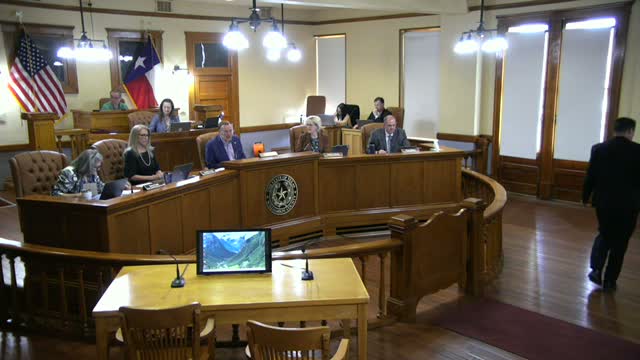
Several members of the public used the March 3 Williamson County Commissioners Court public‑comment period to criticize incentives and policing arrangements they said merit closer scrutiny.
Jim Dillon, who was introduced by the judge, told the court that multibillion‑dollar corporations receiving tax abatements "are rich enough to pay taxes instead of shifting the tax burden onto the working people." He repeatedly characterized the projects under consideration as data centers that "gobbl[e] up enormous amounts of electricity and water" and said the county should reconsider exemptions that he said allow such facilities to avoid paying their share of taxes.
Dillon also criticized a listed agreement described in the agenda as an "information technology staff augmentation agreement, ERP developer level 3, GTS technology solutions," saying the item’s language was vague and that he could not determine "who they are or why we need them. They don't have any solutions." Those comments were framed as objections rather than formal evidence presented to the court.
Bill Coverlaw (introduced as a Williamson County resident and retired Navy captain) expanded on the criticism of incentives. Coverlaw identified the company named in the agenda as Compal/Compile USA (stated in the transcript as located in Indiana and owned by a Taiwanese company) and called the proposed incentives "corporate welfare." He also expressed concern about the proliferation of private police and questioned whether school‑district policing aligns with constitutional principles. During his remarks, Coverlaw asserted that an Obama administration executive order gave Interpol immunity; that claim was stated as his view and was not developed or corroborated during the public comments.
Speakers directed their remarks to specific numbered agenda items (public commenters were assigned to items 10, 11, 14, 20 and 24 in the sign‑up list) and urged greater clarity on what the incentives cover and who ultimately benefits. The court did not debate these public comments on the record during the meeting; multiple subsequent agenda items involving contracts and MOUs were approved by the court without recorded opposition.
The public comments recorded during the meeting are summarized from the transcript of the March 3 public‑comment period.