
Worcester County moves effective date on short‑term rental parking rule after heated hearing; amendment passes 6‑1
Get AI-powered insights, summaries, and transcripts
Subscribe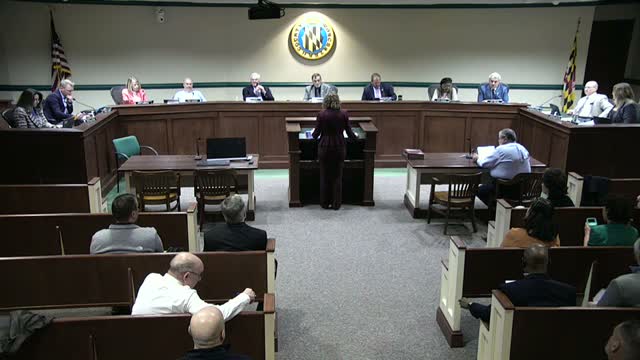
Summary
After hours of public comment from homeowners and residents, Worcester County Commissioners approved a text amendment to move the short‑term rental third‑space parking requirement effective date, amending it to take effect April 17, 2026; the measure passed 6‑1. Residents who said they relied on county guidance clashed with neighbors who warned of added parking pressure.
Worcester County Commissioners voted 6‑1 on March 3 to approve a text amendment changing the effective date for an extra off‑street parking space required of short‑term rentals. The board amended the proposal to set the effective date at April 17, 2026 (45 days from the meeting), an approach the county attorney had suggested as an administrable alternative to a specific statutory‑date fix.
The amendment responded to an internal enforcement error county staff said occurred under a former rental license coordinator. County staff told commissioners an internal audit found 447 active short‑term rental licenses countywide and noted local concentrations — for example, 25 active short‑term licenses in The Landings as of January 2026 and 10 townhome licenses in Seaside Village. Staff said the issue began to surface after a site meeting in August 2025 and that some licenses had been revoked when reviewers determined required parking was not documented on site plans.
At the public hearing, homeowners who said they purchased and upgraded properties after being told short‑term rentals were allowed urged commissioners to move the effective date forward so those owners would be grandfathered. “I respectfully urge you to reject the proposal to retroactively shift the 3‑space parking requirement from 01/01/2020 to 01/01/2026,” said Jason Beach, a Landings resident, who said his family relied on the 2020 standard when they bought their home and that the community already faces peak‑season parking strain.
Legal counsel for affected owners, Mark Spencer Cropper, told the board his clients had paid to make units ready for short‑term rental and that his clients would dismiss an appeal of license revocations if the amendment passed. “I did not draft this text amendment, but I fully support the text amendment,” Cropper said.
Opponents, including several full‑time residents and HOA representatives, argued the county should not lower standards for rentals because the neighborhoods’ engineering and parking capacity were designed around the present requirements. “By lowering the standards to two spaces, you will inevitably overwhelm our streets and our parking,” said Charles Crawford, a Landings resident, describing how clubhouse and common‑area allocations leave little overflow capacity.
Several commissioners acknowledged the county’s role in the confusion. “We failed you all, and I want to apologize,” Commissioner Fiore said during debate and moved the measure. Fiore’s amended motion — setting the effective date to April 17 to cover properties permitted between the original passing and the new effective date — was seconded and carried with one dissenting vote recorded.
The board’s action will affect how staff processes renewals and appeals: staff said it has instructed reviewers to check every renewal and that it is working with the county’s Tyler permitting system to add data points that will make construction‑date queries possible going forward.
The decision does not change HOA rules. Commissioners and staff clarified that homeowners remain subject to homeowners‑association covenants, which can be more restrictive than county code and are enforced by HOAs. Several speakers asked the county to coordinate with HOAs and with lenders and real‑estate professionals to ensure clearer guidance in future permitting.
Next steps: the county will implement the amended effective date and continue system changes to improve permit review and recordkeeping; several revocations and appeals are on hold pending this ordinance change and may be dismissed or proceed depending on each case.