
Amira Learning pitches statewide K–3 screening and outcomes-based tutoring to Michigan lawmakers
Get AI-powered insights, summaries, and transcripts
Subscribe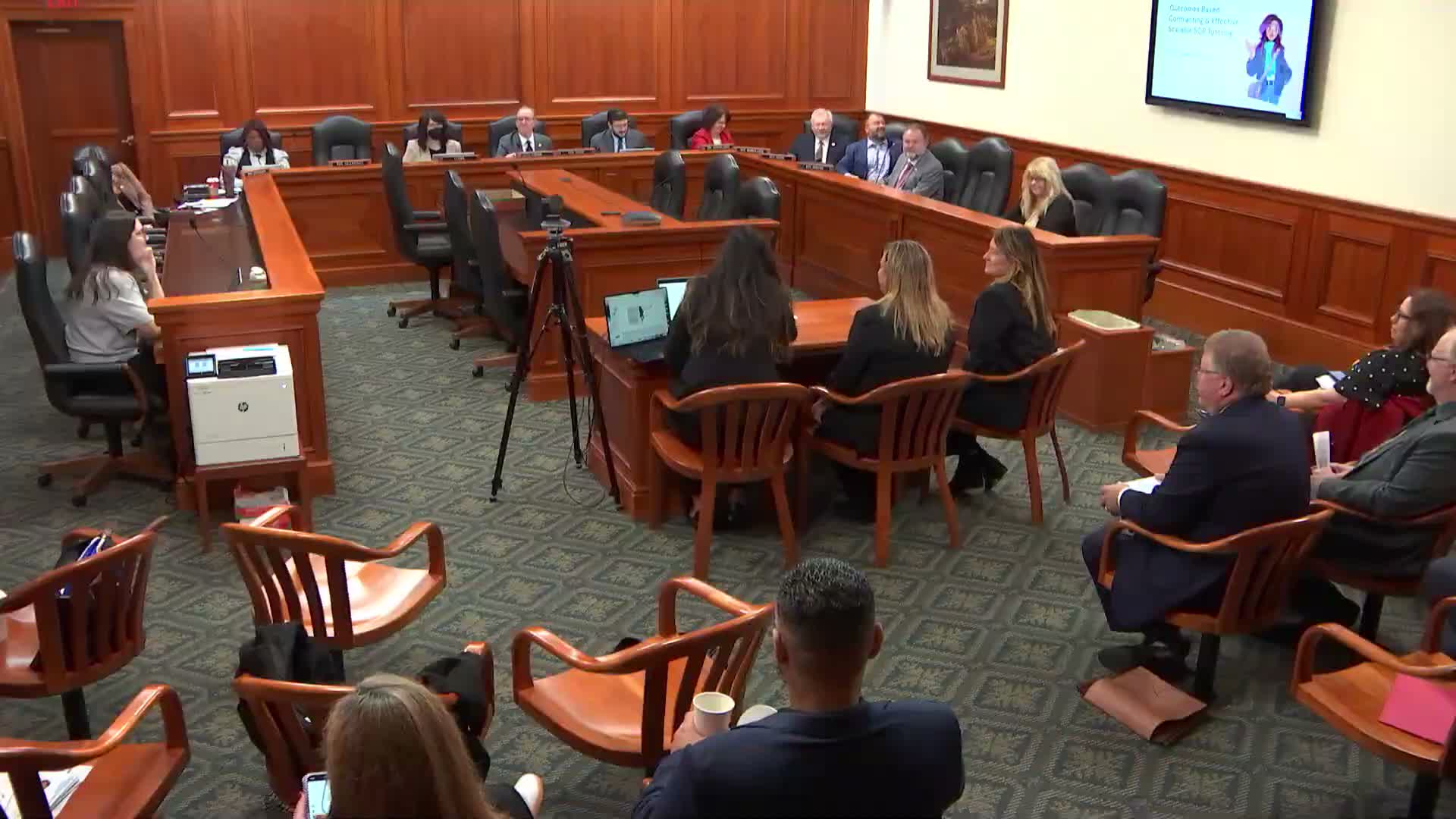
Summary
Amira Learning told the House Appropriations subcommittee that its voice-enabled screener and tutoring tool, approved by MDE for K–3 screening, could scale statewide via outcomes-based contracts and at roughly $20 per student could extend supports beyond the highest-need students.
Molly Avella, vice president of Amira Learning, told the House Appropriations Subcommittee on School Aid that Michigan’s upcoming K–3 universal screening requirement and the governor’s tutoring proposal create both an opportunity and a funding gap for districts.
"Starting in the school year of ’27–’28, your LEAs will be required to screen all K–3 students for reading difficulties," Avella said, noting MDE has approved two screening instruments and that Amira was one of them. She said the screening mandate is unfunded and warned districts will face competing assessment choices unless state policy and procurement align.
Avella urged lawmakers to consider outcomes-based contracting as a way to scale screening and tutoring while reducing risk for districts, saying such contracts typically cap up-front payments ("about 40%"), pay for demonstrated results and include implementation supports. "You don't pay if there are no results and if it's not implemented," she said.
Drawing on district examples, Avella said Amira's tool is voice-enabled, provides real-time data to teachers, and can screen whole classes without pulling students out of instruction; she estimated per-student licensing at around $20 and said that approach could allow broad access "for less than 10%" of the governor’s proposed tutoring budget. Avella cited independent research and claimed substantial reading gains, saying the product had been used at scale in other states and that Amira works with publishers and can align to statewide summative assessments.
Lori France, humanities instructional support specialist at Bay City Public Schools, described her district’s experience using Amira since 2020. "We have found great success with some of our most at-risk readers," France said, reporting the district had completed more than 110,000 assessments and logged over 664,000 minutes of student reading. France said teachers can review student recordings to track progress and shape instruction.
Committee members pressed presenters on implementation fidelity, local support and vendor competition. Avella said Amira maintains "pods" of state-based support staff, offers in-person and virtual training, and provides publisher alignment services so teachers can link Amira data to curricular materials. On competitors, Avella described Amira as "in a class of our own" because it is voice-enabled and claims independent research backing.
The committee did not take action on procurement policy during the hearing; members asked staff to continue working with MDE on how to fund screening and tutoring and on options for statewide approaches.