Get AI Briefings, Transcripts & Alerts on Local & National Government Meetings — Forever.
Rep. Lee asks committee to raise renter’s credit; members debate income cutoff
Loading...
Summary
Representative Lee’s House File 24‑99 to bring renter’s credit toward parity with homestead credits was laid over after testimony from tenant advocates and budget analysts; members debated income cutoff levels and policy tradeoffs.
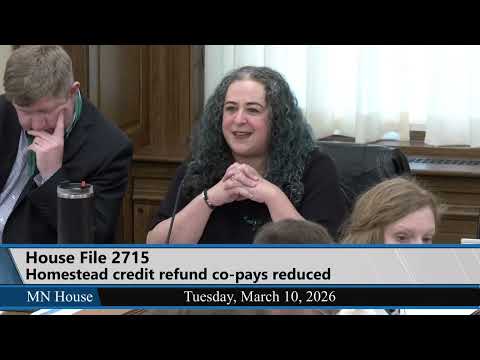
House File 24‑99, introduced by Representative Lee and amended by DE1, was laid over by the House Taxes Committee on March 10 after a series of organizational and expert witnesses testified on the proposal to expand and simplify the renter’s credit.
Representative Lee told the committee HF 24‑99 would "nearly double the income cutoff" for the renter's credit (raising the threshold from about $75,000 to roughly $145,740) and would raise the maximum credit to $3,560, changes she said would extend meaningful assistance to more renters and close parity gaps with homeowner programs.
Michael Dahl, public policy director at Homeline, testified the renter's credit is a critical support for low‑income tenant households and cited a Minnesota Housing Partnership estimate that roughly 97,500 additional affordable homes are needed. Dahl applauded the proposal’s potential to deliver an average of about $500 in relief to renters who rely on credits for basics such as school supplies and medical bills.
Nan Madden of the Minnesota Budget Project said more than 310,000 Minnesota households received the renter's credit in tax year 2023, and that the 2024 filing changes (claiming the renter's credit through state income tax using AGI) boosted participation, often helping seniors and people with disabilities.
During member debate, Representative Roach criticized the bill as a short‑term “band aid,” arguing that mandates and other pressures on counties are primary drivers of rising property taxes. Other members, including Representative Anderson, raised policy‑value questions about where to target limited resources and whether higher cutoffs would dampen incentives toward homeownership.
Representative Lee said the bill’s design prioritizes helping struggling households and cited Department of Revenue estimates showing significant increases in participation following last session’s changes. After discussion the author renewed her motion and HF 24‑99, as amended, was laid over for possible inclusion in the 2026 omnibus tax bill.
What’s next: The committee will hold the bill as negotiators work on the larger 2026 tax package; final fiscal impacts will be defined in upcoming revenue notes and budget negotiations.