
Panel debates plan to eliminate registration stickers as deputies warn of revenue loss
Get AI-powered insights, summaries, and transcripts
Sign Up Free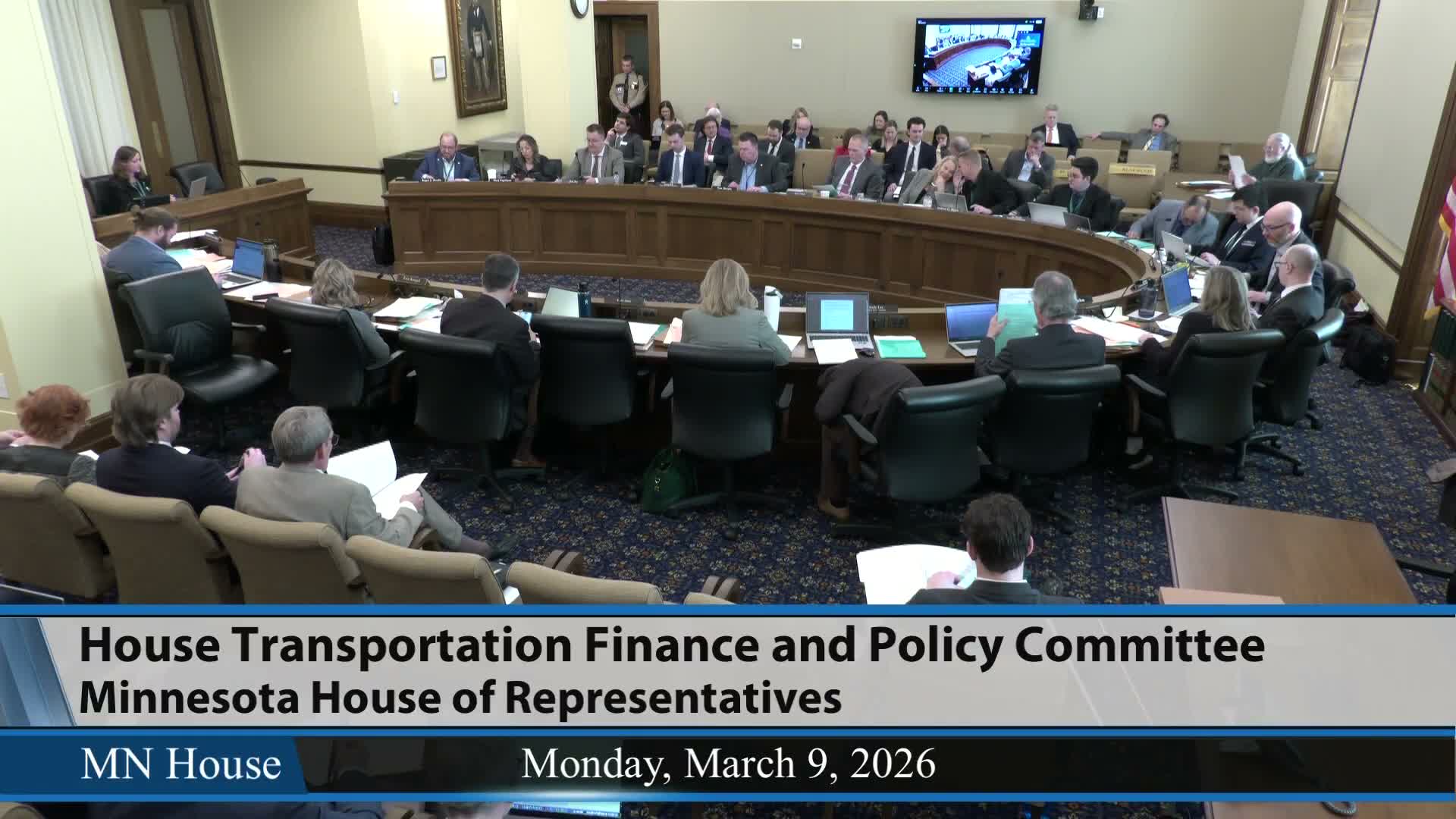
Summary
Representative Lugar Nikolai’s HF3864 would end year/month plate stickers for standard vehicles to save printing/shipping costs; deputy registrars and private deputies warned of compliance, liability and revenue impacts and urged robust revenue‑sharing. Multiple amendments on camera enforcement and officer scanning were debated; committee did not refer the bill today.
Representative Lugar Nikolai introduced House File 3864 to eliminate standard registration stickers that indicate year/date, arguing it would save production and shipping costs and not affect public safety because annual registration would still be required.
Deputy registrars, represented by Jim Hurst and Sam Krieger, opposed aspects of the draft and warned that removing a visible sticker would reduce compliance and foot traffic to offices, imperiling revenue‑sharing and many private deputy offices. Hurst asked that liability and enforcement implications be addressed if the state moves to electronic or camera‑based verification.
Committee members debated several amendments. Chair Koznick brought an amendment to require pilot traffic‑safety cameras to have plate‑reading ability to help enforce registrations; Representative Olson proposed an amendment to provide peace officers with scanning tools and reimbursement; proponents argued improved plate‑reading could increase citation rates and enforcement, opponents flagged surveillance and privacy concerns. Fiscal staff presented preliminary figures showing implementation costs for DVS and potential printing savings and modest effects on general fund revenue; members disagreed on whether similar changes in other states produced net revenue losses and whether enforcement tools would replace on‑the‑ground policing.
After debate and testimony, the committee did not agree to re‑refer HF3864 to Public Safety and no final referral occurred at today’s hearing; the bill remained under committee consideration.