
Digital ID and e‑title provisions face privacy and eligibility fights in committee
Get AI-powered insights, summaries, and transcripts
Subscribe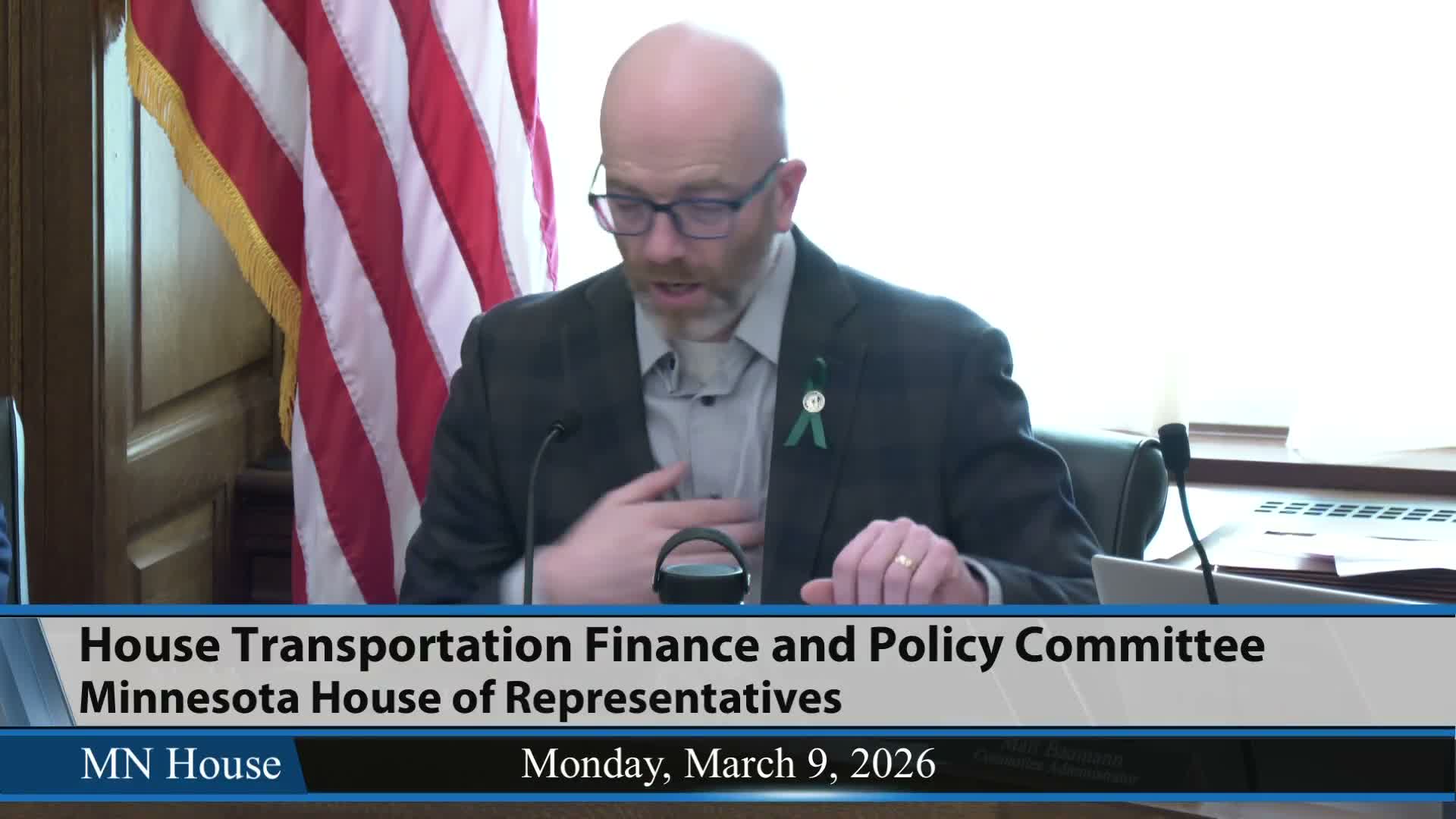
Summary
Committee heard hours of testimony on HF1335, a bill to authorize mobile driver’s licenses, esignatures and steps toward e‑titling. Supporters said digital IDs boost security and convenience; opponents raised privacy, fee‑setting and revenue‑sharing concerns. An amendment to bar electronic IDs for people not lawfully present failed on a 7–8 roll call. The bill was laid over for further work.
Chair Tabke and bill author introduced House File 1335 as a package of digital‑ID and modernization changes including optional mobile driver’s licenses, esignature authority and incremental steps toward electronic title processing. The author framed the bill as an optional convenience that would improve security by allowing a user to show only an age‑verification token rather than handing over a physical license with an address.
Industry witnesses spoke in favor of incremental modernization. Brian McDaniel of the Minnesota Licensed Beverage Association said the hospitality industry supports efforts that make it harder for minors to obtain alcohol and that members want to help shape implementation. Amanda Dewar, director of government affairs for the Minnesota Automobile Dealers Association, told the committee she supported the A3 author’s amendment as a practical incremental step toward e‑titling and electronic documents.
Deputy registrar representatives raised concerns about liability for deputies if electronically submitted documents prove fraudulent and about potential revenue and operational impacts. Jim Hurst (Deputy Registrars Association) and Sam Krieger (representing private deputy owners) asked the committee to protect deputies through clear liability language and to consider revenue‑sharing if online transactions reduce in‑office volume.
Representative Olson and others questioned fee language that adds a notwithstanding clause to a general statute limiting agency fee increases; the chair and staff explained that the bill includes authority for the department to set fees and the amendment clarifies that authority. Representative Anderson offered A5, which would prevent issuing electronic driver’s licenses to people who are not citizens or not lawfully present; proponents said it would protect security and allow database checks, while opponents said it would create a two‑tier system and could exclude lawful refugees or others. The committee took a roll‑call vote on A5; the amendment failed 7–8 with one member excused.
Committee members also debated A3/A4 author’s amendments (e‑signature/e‑title and revenue/funding mechanics), and chairs indicated some amendments would be withdrawn or continued later. After extended testimony and amendment debate, HF1335 was laid over for further consideration; committee members asked departments and house research for clarifications on verification processes, fees and statutory cross‑references.