
DEED briefing: how Minnesota’s unemployment insurance tax structure and assessments work
Get AI-powered insights, summaries, and transcripts
Subscribe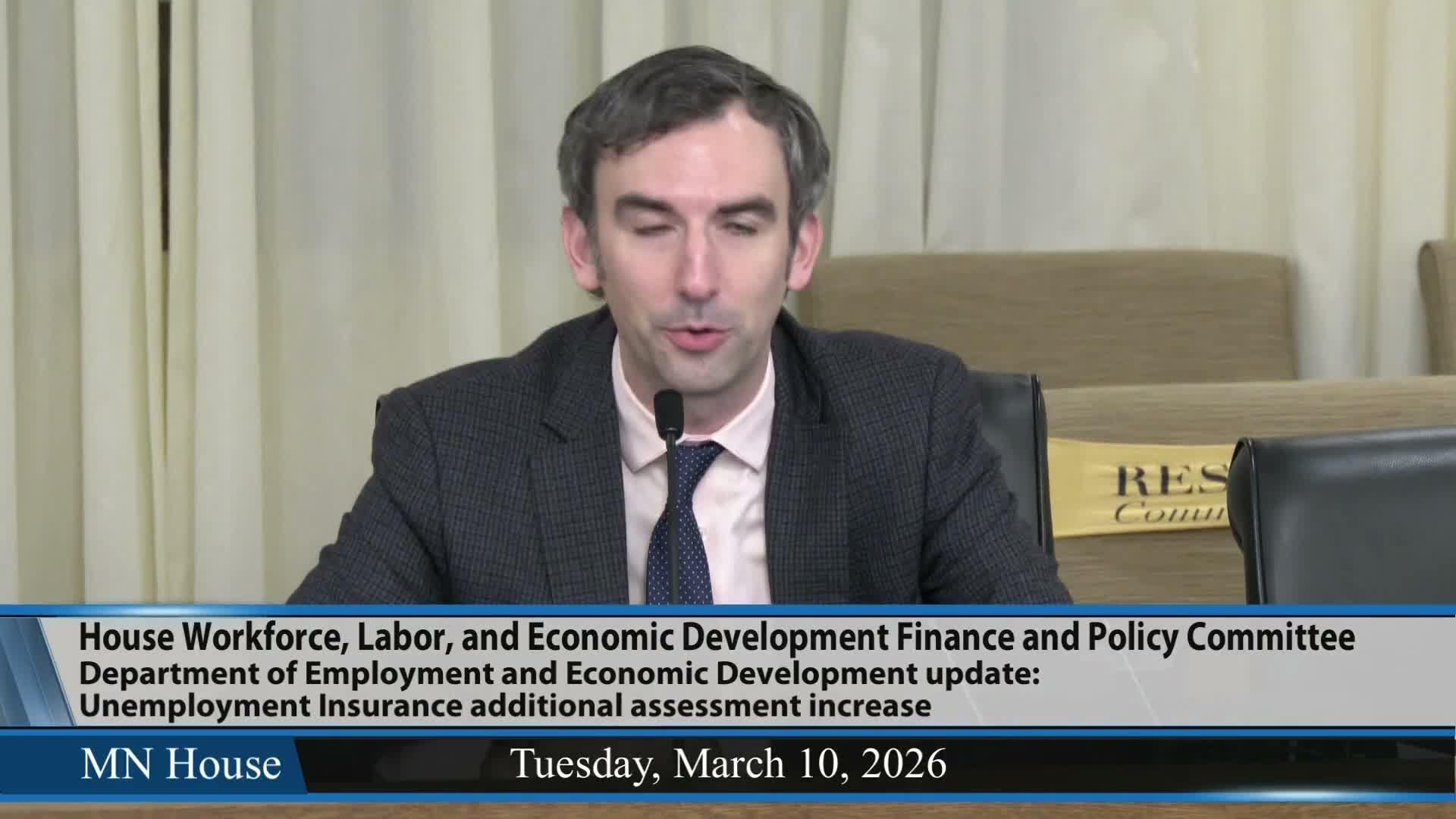
Summary
Evan Rowe of DEED explained UI tax mechanics to a House committee, including experience rates, base tax, surtaxes triggered by low trust‑fund balance, and a 2026 taxable wage base of $44,000; members questioned past replenishment and policy choices that affect current assessments.
Evan Rowe, deputy commissioner at the Department of Employment and Economic Development, walked House committee members through the mechanics of Minnesota’s unemployment-insurance (UI) tax structure on March 10, 2026, explaining why employers may see higher assessments and how pandemic-era policy choices interact with current balances.
Rowe described the UI experience rate, the program’s principal tax component, which is calculated on a rolling four‑year lookback of benefits charged to employers, and the base tax, which applies to all employers. He emphasized that surtaxes (assessments of up to 14%) can be triggered when the trust fund balance falls below statutory thresholds and that the 2026 taxable wage base is $44,000, on which employers pay their UI taxes.
On legislative history, Rowe noted the 2022 trust‑fund replenishment enacted after the pandemic; members asked why additional general‑fund transfers were not used later to avoid triggering the 14% assessment. Rowe said 2023–24 increases in benefit payments and wage growth altered the fund balance and that the statutory, self‑correcting formula plus past policy choices explain the current environment.
Members pressed about pandemic-era charges, experience-rate freezes and earlier tax cuts; some argued those policy choices shifted burdens to employers now. Rowe answered that pandemic-related layoffs were excluded from employer experience-rate calculations under the 2022 law, and present experience rates reflect post‑pandemic layoffs and claims patterns.
The committee concluded the briefing with additional questions reserved for a future hearing; members said they expect to revisit UI rate drivers and policy options in subsequent committee work.