
Minnesota Chamber survey: small employers report administrative strains from paid family & medical leave
Get AI-powered insights, summaries, and transcripts
Subscribe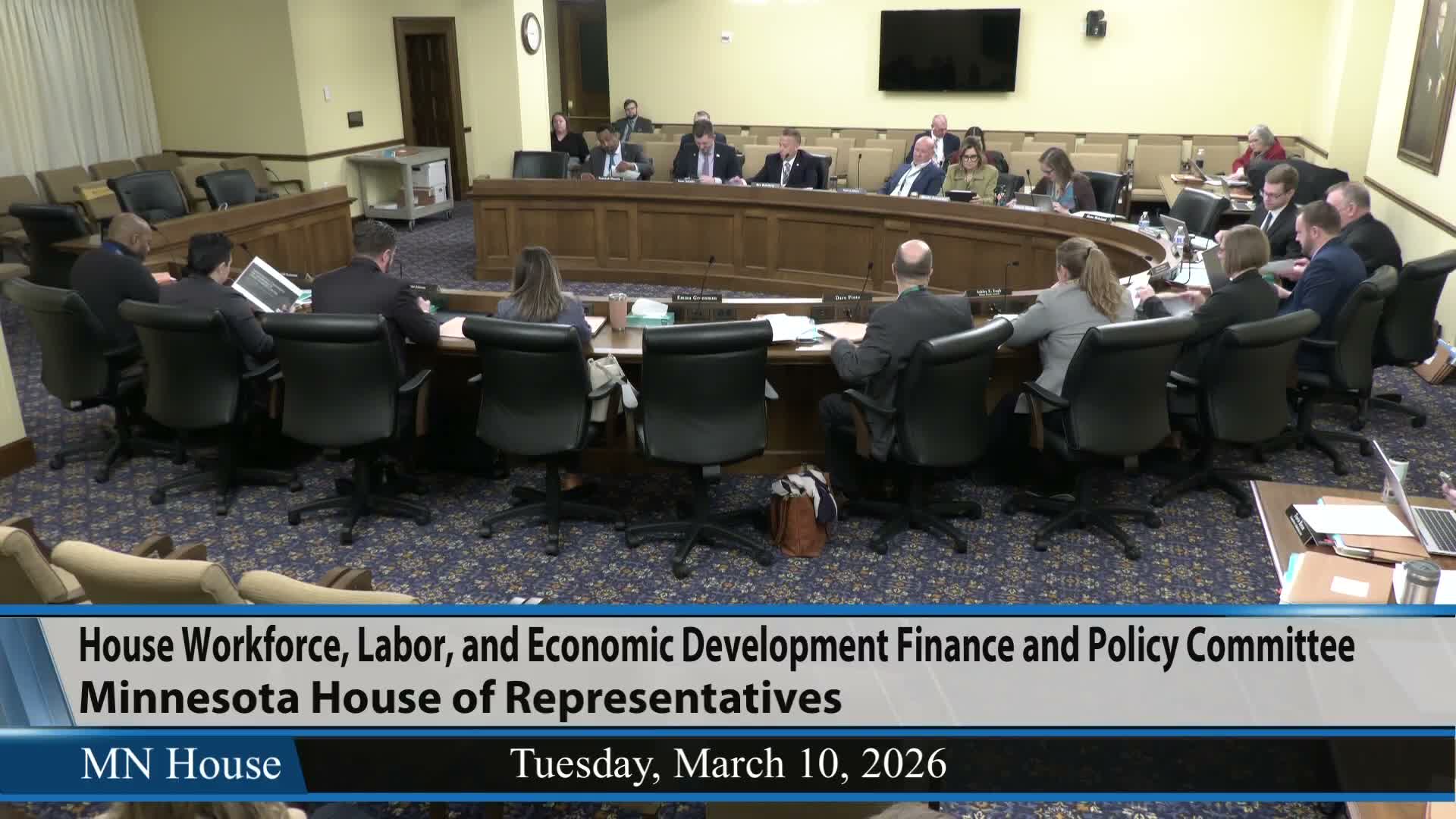
Summary
The Minnesota Chamber told a House committee that nearly 700 respondents (mostly small businesses) reported administrative burdens, staffing strains from multiple claims, and concerns about program scope; repeal was the most common single response but many respondents suggested targeted refinements.
The Minnesota Chamber of Commerce presented the results of a two‑month user‑experience survey on March 10, 2026, telling the House Workforce Committee that most respondents are small employers and that many reported administrative burdens and operational strain from the state’s paid family and medical leave program.
"We just conducted a robust survey over the past two months focusing on the user experience," Lauren Schadhorst, director of workplace management and workforce development policy at the Minnesota Chamber, said. She reported nearly 700 business and employee responses, with 78% representing firms with fewer than 100 employees and 40% from employers with fewer than 10 employees.
The Chamber said 42% of respondents reported at least one filed claim in the program’s early months, and many employers reported multiple claims; a subset reported double‑digit claim counts. Respondents raised concerns that overlapping claims could suspend revenue generation for small workplaces and that administrative burdens, inconsistent communications, and timing issues were common. The Chamber’s presentation also included verbatim comments from members noting the operational disruption and the disproportionate impact on seasonal, lean‑staffed, and cross‑border employers.
Survey participants suggested policy options including refining the mandate’s scope (reducing weeks, narrowing eligible family-member definitions), targeted exemptions for small or seasonal businesses, simplifying claim flows, and improving coordination with other state programs such as sick and safe time. "Employers aren't debating the idea of paid leave as a benefit to offer, but as a one‑size‑fits‑all state‑run mandate," Schadhorst said.
In committee Q&A, members asked about possible impacts on health care services, ER wait times, and staffing ratios in long‑term‑care settings; Schadhorst said her organization had received anecdotal reports and suggested industry‑specific research would be needed for causal findings. The Chamber said it will continue to work with the administering department on improvements that might not require legislative changes; some members said legislative refinements may be warranted.