
Witness says Khanna—Massie resolution would bar Trump from deploying forces to confront Iran; cites 60-day Article II window
Get AI-powered insights, summaries, and transcripts
Subscribe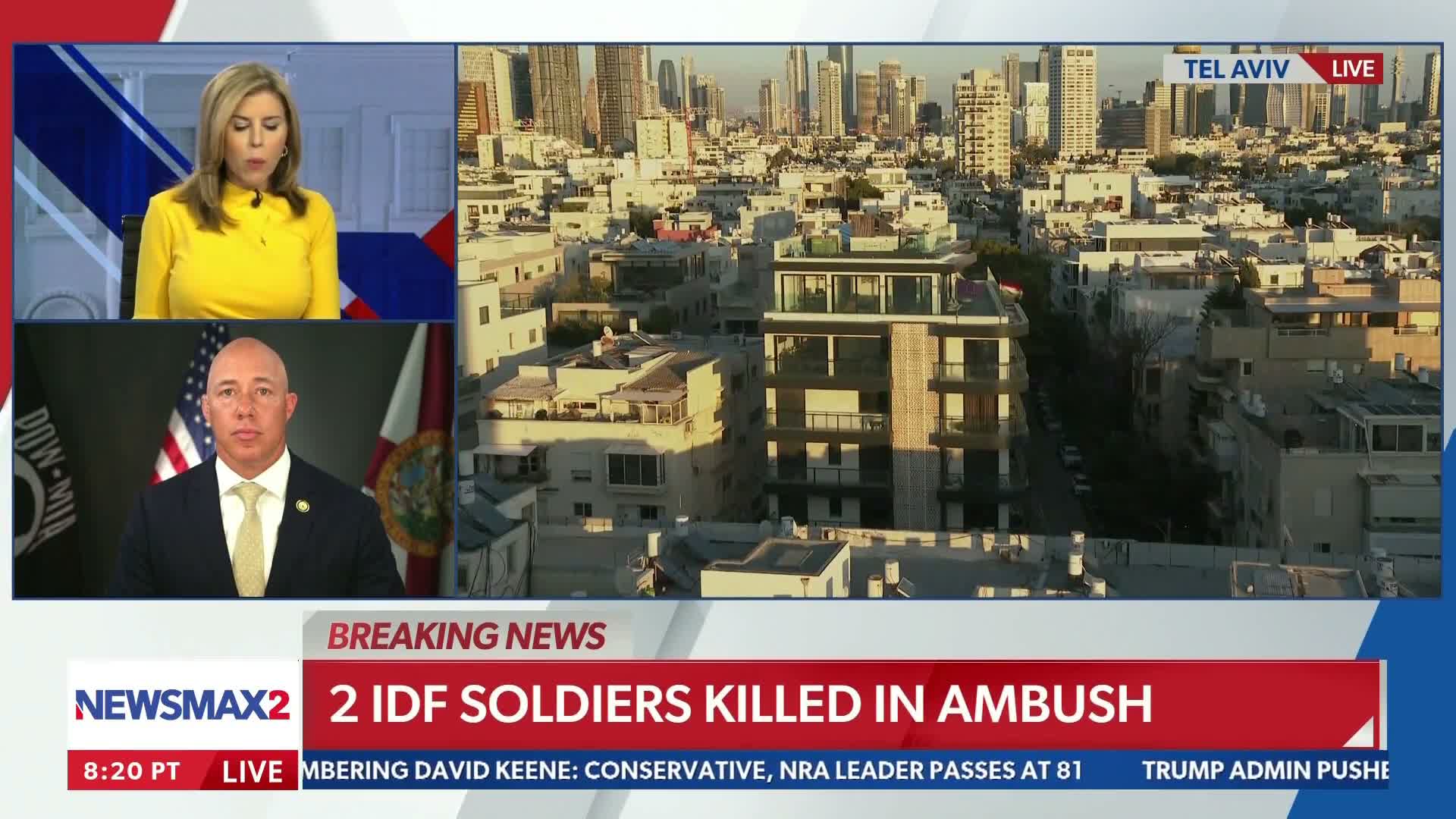
Summary
In an interview, a witness described a Khanna—Massie measure as removing presidential authority to engage U.S. forces with Iran and explained that Article II typically allows a 60-day deployment with a possible 30-day extension, leaving Congress options to revisit oversight.
A witness said the Khanna—Massie proposal would strip the president of authority to deploy U.S. forces to confront Iran and described the limits of presidential war powers under Article II.
The interview opened with the reporter noting that "There are a lot of Iranians that are supporting this operation here," then asked whether Congress still has a real role after the House and Senate rejected a war powers resolution. The witness responded by characterizing the Khanna—Massie measure and explaining constitutional constraints on military deployments.
"This bill or this resolution offered by Ro Khanna and Thomas Massie said president Trump has 0 authority to go out there and defend The United States Of America against Iran," the witness said, describing the proposal as one that would, in their words, require U.S. forces engaged with Iranian forces to "pack up, turn around, and come back to The United States." The witness added, "It wasn't a war power resolution," arguing the measure would function differently than a conventional authorization.
On the scope of presidential powers, the witness explained that the president acts under Article II authority to deploy troops for emergencies or imminent threats. "That gives him a 60 day authority with an additional 30 days," the witness said, noting that the clock on that authority is already running in current operations. The witness framed this as a distinct legal and political question from the Khanna—Massie text, saying the timing and legal basis for deployments could prompt future congressional action.
The exchange did not record a legislative outcome; the matter was described as a topic for potential future congressional consideration rather than a decision taken during the interview. The reporter's framing also referenced that the House and Senate had rejected a war powers resolution, which provided context for the witness's explanation.
What happens next will depend on whether members of Congress introduce or revive specific measures; the exchange closed without a formal vote or directive.