
Rep. Brian Mast: Iran has ground capabilities; U.S. boots would have to be 'Iranians'
Get AI-powered insights, summaries, and transcripts
Subscribe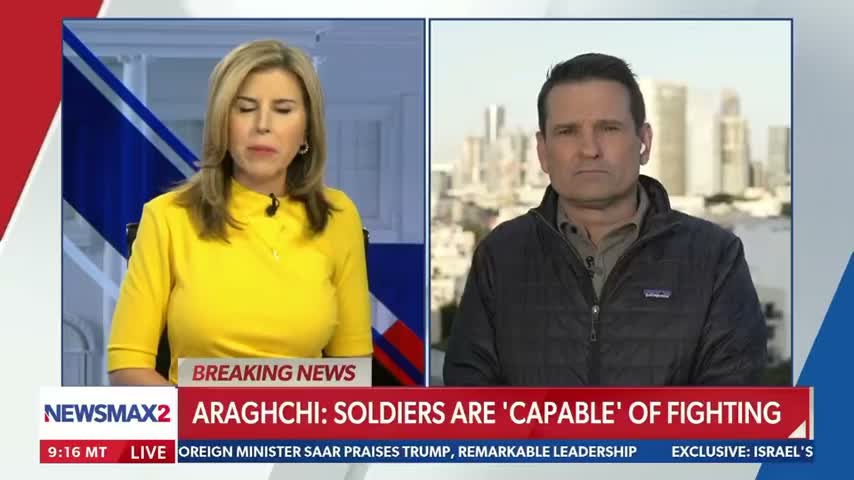
Summary
Rep. Brian Mast, chairman of the House Committee on Foreign Affairs, told an interviewer that Iran possesses forces capable of fighting on the ground but said any effective 'boots on the ground' would have to be Iranians seeking regime change; he also warned that Tehran's new leadership appears likely to continue hostile actions at sea and by proxy forces.
Rep. Brian Mast, R-Fla., chairman of the House Committee on Foreign Affairs, said Iran possesses forces able to fight on the ground but argued that any U.S. ground intervention would ultimately depend on internal Iranian change.
"Of course, they have soldiers that are capable of fighting on the ground," Mast said, naming the IRGC, the Quds Force and proxy groups such as Hezbollah and the Houthis. He added: "the boots on the ground have to be 90,000,000 Iranians that want a change, that wants a new Iran."
The comments came after the program aired a clip of what the host identified as Iran's foreign minister, Abbas Aragonchi, saying: "We continue to resist as long as it takes. We continue to defend ourselves, and we are defending our territory, our people, and our dignity." The host asked Mast whether Tehran's statements could presage a ground campaign.
Mast said Tehran's recent naming of a successor to Iran's top leadership — referred to in the interview as 'Mujtabi Khomeini' — signals that hard-line clerics remain influential in Tehran. He warned that, absent a leadership explicitly willing "to say, we surrender" and change course, Iran will continue actions he described as hostile: launching drones or ballistic missiles, targeting Gulf states, or striking merchant ships transiting the Straits of Hormuz.
Mast framed his view as both a capability assessment and a political assertion: Iran "has those capabilities," he said, but "they have to be the boots on the ground" for change to be realized internally. He did not lay out specific U.S. policy measures or describe any current congressional action tied to the remarks.
The interview provided no independent confirmation of the identities or spellings of the Iranian officials named during the broadcast; the program introduced the foreign minister as Abbas Aragonchi and referenced a successor name as Mujtabi Khomeini. Mast's statements reflect his assessment and were presented as his commentary during the interview.