
Utah Senate finishes final day of 2026 session, passes wide slate of bills
Get AI-powered insights, summaries, and transcripts
Subscribe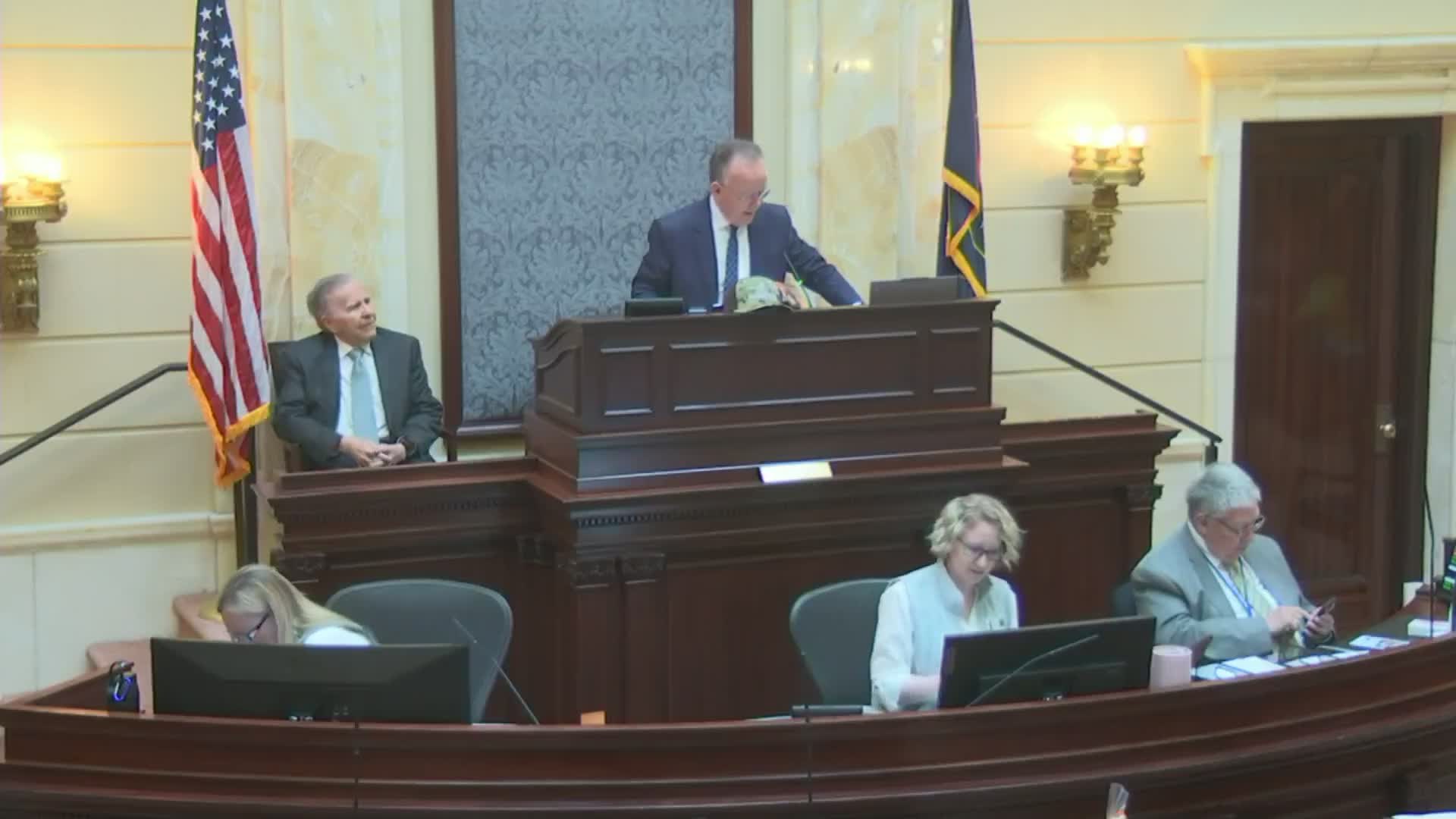
Summary
On the 45th and final day of the 2026 Utah Legislature, the Senate cleared a long concurrence and consent calendar, appointed conference committees with the House, and passed bills on topics from geothermal and education to the Great Salt Lake and capital-felony procedure.
The Utah Senate convened on the final day of the 2026 legislative session and moved quickly through a lengthy concurrence and consent calendar, approving a large number of bills and sending them back to the House for final signatures.
President Adams opened the session, introduced guest former Senate President Wayne Niederhauser and called for roll, establishing a quorum. The Senate first addressed interchamber communications, including a House refusal to concur on third substitute House Bill 507 and the appointment of a Senate conference committee to meet with the House on the matter.
The floor then moved through a long list of concurrence items and votes. Among votes recorded on the floor: third substitute S.B. 183 (surveillance-camera amendments) passed 27–0 (President Adams announced the tally after the roll call), S.B. 288 (Medicaid provider amendments) passed 25–0, and a series of other concurrence motions cleared the body with recorded roll-call tallies. The Senate also handled conference committee reports and adopted the fourth substitute S.B. 254 (natural resources) after a committee report was read and adopted.
Senators took up a set of high-profile and substituted measures later in the morning and early afternoon. The Senate passed substitute language on measures addressing education, elections, and resource issues and debated a set of bills related to health coverage and school policy on the consent calendar.
Two of the more consequential floor items drew extended attention: a substitute to H.B. 247 addressing Great Salt Lake funding and brine-shrimp-related revenue was debated and passed after negotiation (the fifth substitute passed), and H.B. 495, a set of capital-felony case amendments intended to expedite certain parts of the capital-case process and coordinate court-rule changes, drew substantial discussion before passage. On procedural business, the body voted to reconsider actions on S.B. 12 after recognizing the House still had the bill circled and later moved it back into House possession for further consideration.
After adopting conference committee reports and placing several bills at the bottom of the calendars for later consideration, the Senate recessed to continue its remaining consent and second-reading work later in the day.
Votes at a glance (selected floor tallies reported on the record): S.B. 183 (surveillance) — 27 yay, 0 nay, 2 absent; S.B. 288 (Medicaid provider amendments) — 25 yay, 0 nay, 4 absent; fifth substitute H.B. 247 (Great Salt Lake-related amendments) — 21 yay, 0 nay, 8 absent; H.B. 495 (capital felony case amendments) — 20 yay, 6 nay, 3 absent. Each measure will be returned to the House as appropriate for the speaker’s signature or further action.
The Senate's proceedings were primarily procedural and marked by a high volume of concurrence and consent votes typical of a final day in a two-chamber legislature, with several items drawing substantive debate and amendment negotiation before final passage.