
Senate concurs on vape/nicotine retail regulation amendments, permits licensed vending with age verification
Get AI-powered insights, summaries, and transcripts
Subscribe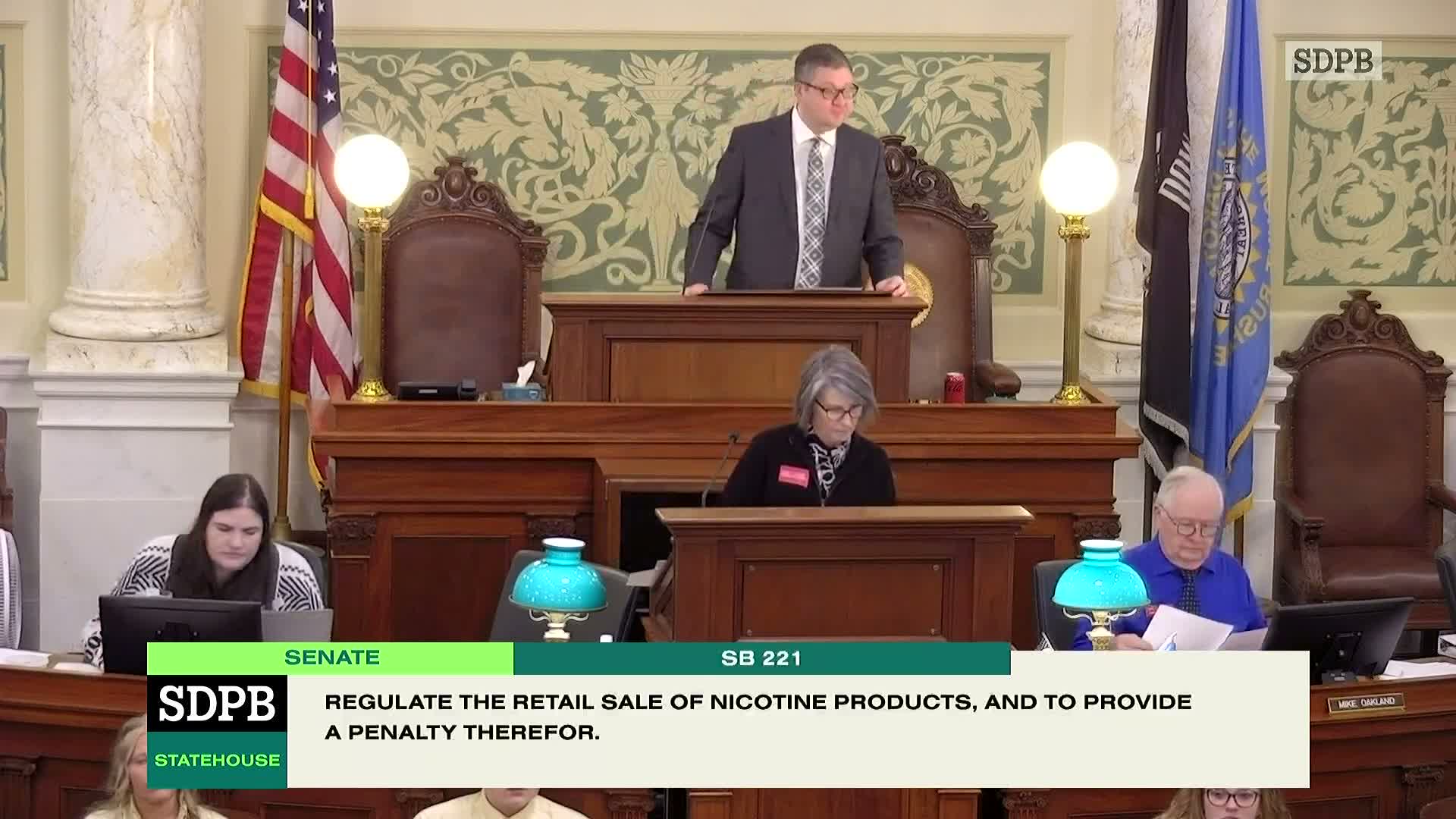
Summary
Senators voted to concur in House amendments to Senate Bill 221, which aligns nicotine product definitions with HB1220, requires licensed retailers to buy from licensed distributors, sets license fees, and allows licensed vending machines with age verification; proximity-to-school restrictions were removed from the bill per sponsor remarks.
Senator Carr moved that the Senate concur in House amendments to Senate Bill 221, explaining the bill aligns the definition of nicotine products with HB 1220, requires licensed retailers to obtain product from licensed distributors, sets a license fee to help fund enforcement without overburdening retailers, and allows vending machines if they are licensed and have age verification.
Carr said the amendment removed a mandatory inspection requirement by the Department of Revenue and instead relies on local law enforcement to check for underage sales. He also said eligibility provisions related to recent felony records had been narrowed. When Senator Pyshke asked about vending machines that had previously been grandfathered and proximity to schools, Carr responded that the proximity provision is no longer in the bill and that stakeholders, including a vending‑machine retailer, have given their support.
The roll call recorded 29 yays, 5 nays and 1 excused; the president declared the motion carried and the amendments concurred in.
Why it matters: The changes create a state‑level retail licensing and distribution framework for nicotine products and permit regulated vending machines with age verification. Sponsors said the changes harmonize definitions with a companion House bill and narrow eligibility restrictions; a stakeholder (retailer) reportedly supported the approach.