
Witness and congresswoman clash over whether U.S. is 'at war' during testimony
Get AI-powered insights, summaries, and transcripts
Subscribe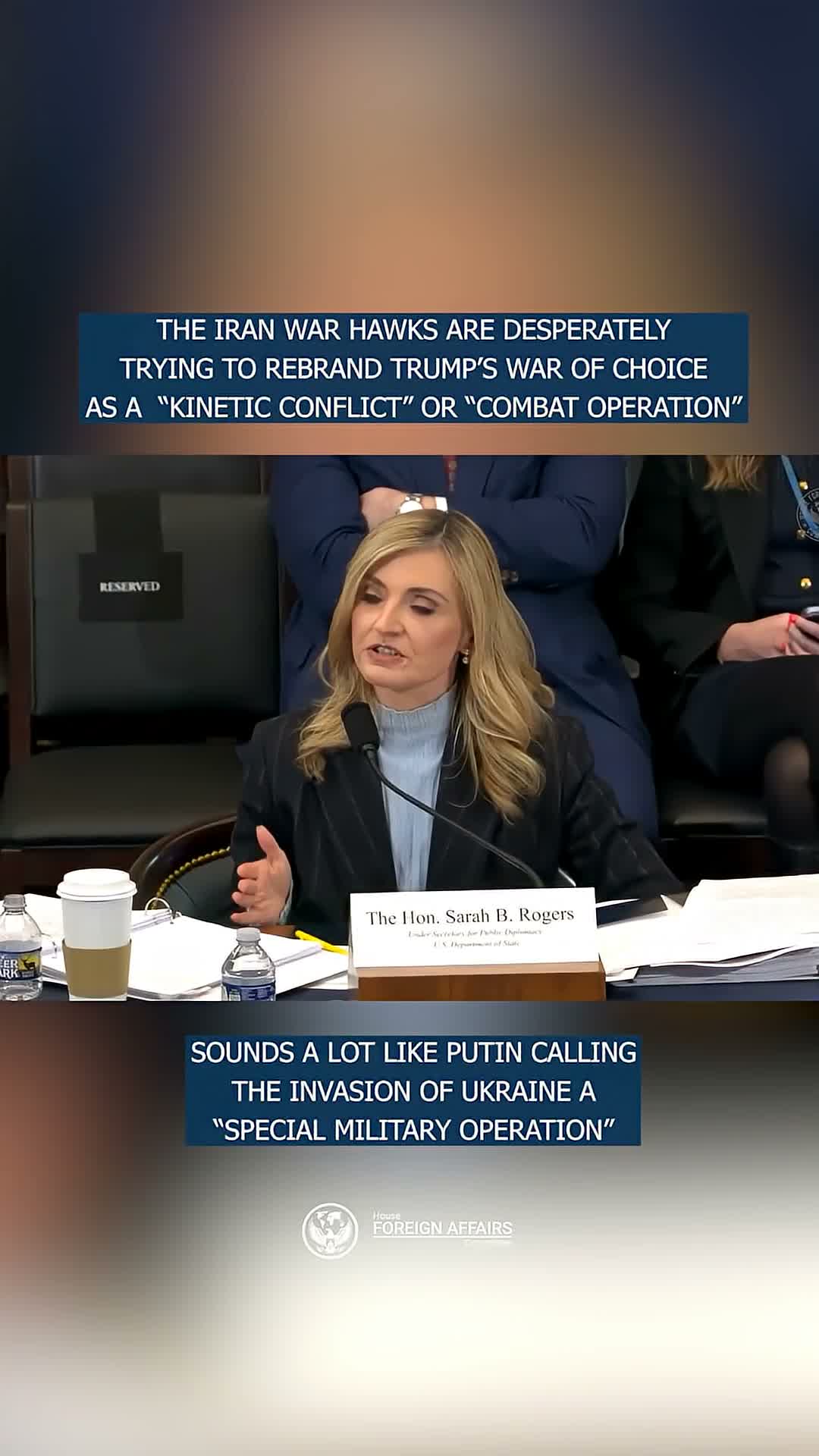
Summary
A witness and a congresswoman sparred over whether U.S. language should describe current hostilities as a war, with the witness calling the situation a "kinetic" or "armed" conflict and the congresswoman pressing for clearer, unambiguous phrasing amid reported service-member casualties.
A witness and a congresswoman engaged in a heated exchange during testimony about whether the United States should describe recent hostilities as a war.
The witness said that public statements and international signals suggested escalation, arguing that Iran "would not say the magic words" and that, while chants of "death to America" were heard, Iran "wouldn't say, no. We don't want a nuclear weapon." The witness also said reports indicated a possible Israeli strike and that "they've shot 6 of our boys and women," framing the situation as a direct, violent conflict.
The congresswoman challenged those assertions, saying the claims had been "rebutted by numerous sources" and pressing whether the witness was asserting the country was "at war." "Are we at war or not?" she asked repeatedly, urging plain language and warning against euphemisms that could confuse the public and foreign audiences.
The witness defended describing the situation as a "kinetic conflict," saying other terms such as "armed conflict" or "violent conflict" could also apply. The congresswoman drew an analogy to Russia's early phrasing of the invasion of Ukraine as a "special military operation," saying such labels can obscure the reality of casualties and the scope of military action.
Both speakers emphasized the stakes of public messaging. The congresswoman said uncertainty about plans and outcomes—"We don't know what's going on"—undermined reassurance for allies, the public and Congress. The witness said foreign audiences had been "more receptive to our position." The exchange concluded with the witness saying, "that's my testimony publicly I can't hear," and no formal action or vote recorded in the transcript.
The transcript captures a disagreement over terminology and the clarity of public communications rather than a formal policy decision; the record does not show any vote, motion, or enacted change in policy.