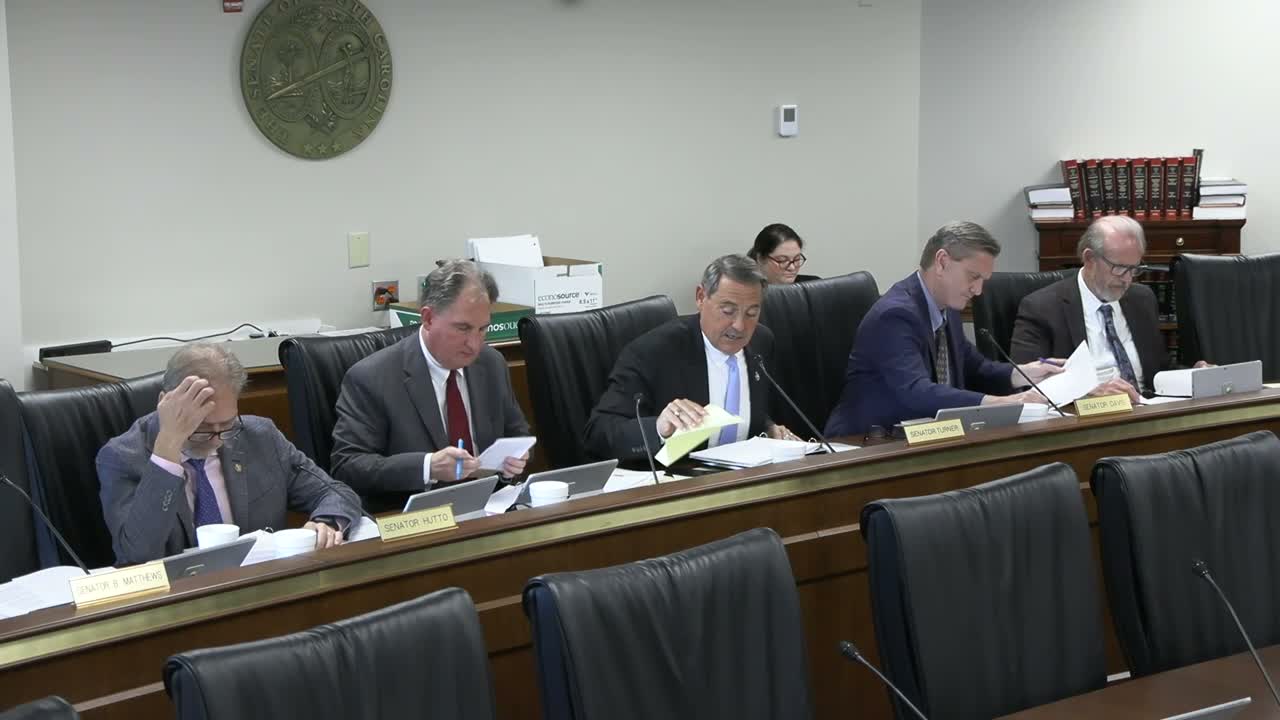
Subcommittee advances 'American Heroes' bingo bill amid video-poker concerns
Loading...
Summary
A bill to create a new G-license for 'American Heroes' bingo and route revenue to the Veterans Trust Fund cleared the subcommittee after amendment; proponents say it will boost grants to veterans, while bingo operators warn the new game resembles video poker and could undercut traditional bingo laws.
The Senate subcommittee forwarded legislation to create an "American Heroes" G-license for charitable bingo after hearing extensive testimony from veterans advocates, bingo operators and the Department of Veterans Affairs.
Todd McCaffrey, South Carolina’s secretary of Veterans Affairs, said the bill’s intent to supply funds to the Veteran Trust Fund is welcome but flagged a drafting inconsistency: current code makes the secretary a nonvoting, ex officio member of the board, while the bill’s language would require the secretary to approve disbursements. "We welcome the added authority to have more control over the veteran trust fund disbursements," McCaffrey said, but he suggested options including running separate books or changing the existing code to resolve the inconsistency.
Opponents framed the proposal as a thinly disguised move toward slot-style gaming. Tommy Erwin, a long-time charitable-bingo promoter, told the panel the proposed G-license game uses a 30-number, server-driven format that resembles a single-player slot or video-poker machine rather than traditional multi-player bingo. "Everything I'm describing to you is a slot machine," Erwin said, warning the bill could open the door to prohibited gaming.
Proponents and industry representatives said the amendment clarified mechanics and distribution. The amendment would allow existing B, C or F license holders to apply for a G license, set a payout structure with an example 93% player payout, and allocate remaining net hold with 15% to the veterans trust and 10% to the license holder, with the balance covering operations and vendor/lease costs. Testimony emphasized DOR oversight, server connectivity requirements, payout kiosks with tax-reporting triggers and a quorum requirement to ensure bingo mechanics.
The committee adopted the amendment by voice vote and reported the bill favorably to the full committee, but senators noted continuing concerns — particularly over whether the game resembles prohibited video poker and whether venues and age restrictions are adequate.