Get Full Government Meeting Transcripts, Videos, & Alerts Forever!
Get email alerts on the Budget topic
No spam. Unsubscribe anytime.
Montoursville board hears budget that projects $578,989 shortfall; health insurance and wages cited as main drivers
Summary
The district’s business manager presented a proposed 2026–27 budget that currently shows a $578,989 deficit, driven by a 9.9% rise in health-insurance costs and roughly $588,000 in wage increases; the presentation also included a proposed $100,000 curriculum-director position and a $2.1 million PA block grant in revenues.
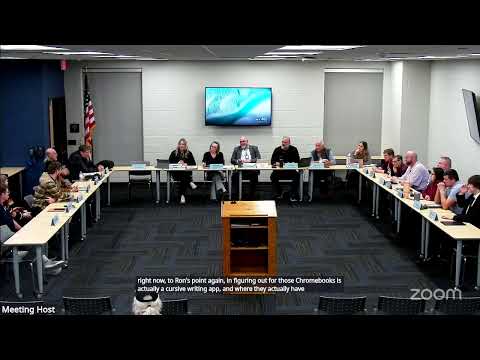
The business manager presented the district’s draft 2026–27 budget on March 10, saying the current working estimate shows a projected deficit of $578,989.
The business manager said the gap is driven chiefly by rising personnel and benefit costs: she reported a 9.9% increase in health-insurance premiums and roughly $588,000 in increased wages, and noted a new position for a curriculum director has been budgeted at $100,000. She also described revenue assumptions that include a full $2,100,000 PA block grant and proposed state basic instructional funding in the board’s packet.
Why it matters: School budgets determine local tax and program choices. Board members pressed the business manager for detail on items that materially affect the shortfall, including insurance and investment-earnings assumptions, cyber-charter costs and special-education placements.
Details from the presentation: The business manager said she used five-year historical patterns from Lycoming County assessment data for real-estate projections and increased some line items conservatively (for example, raising public-utility and PILOT receipts modestly and projecting modest gains in investment earnings). She reported last year’s IDEA allocation was about $396,000 and proposed increasing IDEA by $12,000 in the draft budget. She said delinquent real-estate-tax collections appear stronger in recent years and that she increased that revenue estimate to reflect better collections.
Board reaction and follow-up: Board members repeatedly asked for more line-item detail. One member pressed for a breakdown of insurance costs for a specific building; the business manager agreed to provide a more detailed expenditure schedule and follow-up data on investment-earnings assumptions before the next meeting. Members noted that while the state has added some special-education funds, the increase does not match the district’s special-education cost growth, shifting pressure to local budgets.
Next steps: The business manager said she will return with more granular expenditure details and clarifications on several line items, including insurance and investment-earnings history, to help the board consider options ahead of final adoption.